
When choosing wellington boots, the most critical elements to consider about the sole are its material, tread pattern, and overall construction. These features directly determine the boot's grip, stability, comfort, and durability, ensuring it performs correctly for your intended activity, from a muddy field to a stable yard.
The ideal sole is not about a single "best" feature, but about matching the right combination of grip, support, and flexibility to the specific demands of your environment and activity.
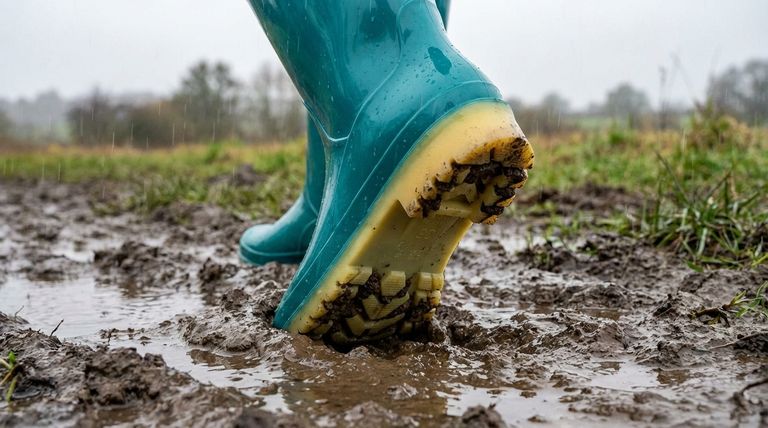
Deconstructing the Sole: Key Components
The sole unit is the functional core of any wellington boot. It's the interface between you and the ground, responsible for traction, shock absorption, and stability. Understanding its components is key to making an informed choice.
The Foundation: Sole Material
The material dictates the sole's fundamental properties. Rubber is the traditional choice, valued for its natural waterproofing, durability, and slip-resistance.
For more demanding applications, look for specialized compounds like Vibram. These advanced sole units are engineered for outstanding grip, enhanced stability, and optimal traction across challenging terrain.
The Grip Factor: Tread Pattern
The tread pattern, or the arrangement of lugs and channels on the outsole, is crucial for traction. A deep, aggressive tread is designed to bite into soft ground like mud or snow, providing excellent grip.
Conversely, a shallower tread may be lighter and more comfortable on flat, hard surfaces. The key is to match the tread depth to the terrain you will encounter most often.
The Comfort Equation: Cushioning and Support
Modern wellingtons often incorporate advanced features for comfort. Look for tri-density rubber soles that use different layers of material to provide both support and shock absorption.
Cushioned insoles can also be added or may come integrated, providing significant comfort during extended periods of wear, such as long walks or standing all day.
A Special Case: Soles for Horse Riding
Equestrian use demands a unique sole design for safety. Riding boots require a smooth, continuous sole with no deep treads or breaks from heel to toe.
This design, combined with a heel of at least half an inch, prevents the boot from catching or getting stuck in the stirrup, which is a critical safety consideration.
Understanding the Trade-offs
Choosing the perfect sole involves balancing competing priorities. An improvement in one area can often mean a compromise in another.
Grip vs. Long-Term Comfort
A sole with deep, widely spaced lugs offers exceptional grip in mud. However, these same lugs can feel unstable or create uncomfortable pressure points when walking on hard, flat surfaces like pavement for long periods.
Durability vs. Flexibility
Thicker, more rigid soles offer superior durability and protection from sharp objects underfoot. This rigidity provides excellent support for hiking over uneven ground.
The trade-off is a loss of flexibility and an increase in weight. For casual use, like at a festival, a more flexible and lightweight sole offers far greater comfort for all-day wear.
Matching the Sole to Your Goal
Your primary activity should be the deciding factor. Use these guidelines to select the right sole unit for your specific needs.
- If your primary focus is long walks or hiking: Prioritize a supportive, durable sole with a deep tread and good shock absorption, such as a Vibram unit.
- If your primary focus is casual wear or festivals: Opt for a lightweight and flexible rubber sole that prioritizes comfort for standing and walking on mostly flat ground.
- If your primary focus is work on slippery or uneven terrain: Select a sole with an aggressive, multi-directional tread pattern for maximum grip and stability.
- If your primary focus is horse riding: Insist on a smooth, continuous sole with a defined heel specifically designed to prevent catching in a stirrup.
Ultimately, choosing the right sole transforms a simple rubber boot into a purpose-built tool for your environment.
Summary Table:
| Feature | Why It Matters | Ideal For |
|---|---|---|
| Material (e.g., Vibram) | Determines durability, flexibility, and grip. | Hiking, demanding work. |
| Tread Pattern | Provides traction on specific terrains (mud, hard surfaces). | Slippery or uneven ground. |
| Cushioning/Support | Ensures comfort during long periods of wear. | Long walks, standing all day. |
| Specialized Designs | Addresses specific safety needs (e.g., smooth sole for riding). | Equestrian activities. |
Ready to Source High-Performance Wellington Boots?
As a large-scale manufacturer, 3515 produces a comprehensive range of footwear for distributors, brand owners, and bulk clients. Our production capabilities encompass all types of durable and comfortable wellington boots, from rugged hiking soles to specialized equestrian designs.
We ensure:
- Superior Grip & Stability: Advanced sole compounds and tread patterns for any environment.
- All-Day Comfort: Engineered cushioning and support for long-term wear.
- Bulk Order Expertise: Reliable supply and consistent quality for your business.
Let's discuss your specific needs. Contact our team today to get a quote and find the perfect sole solution for your market.
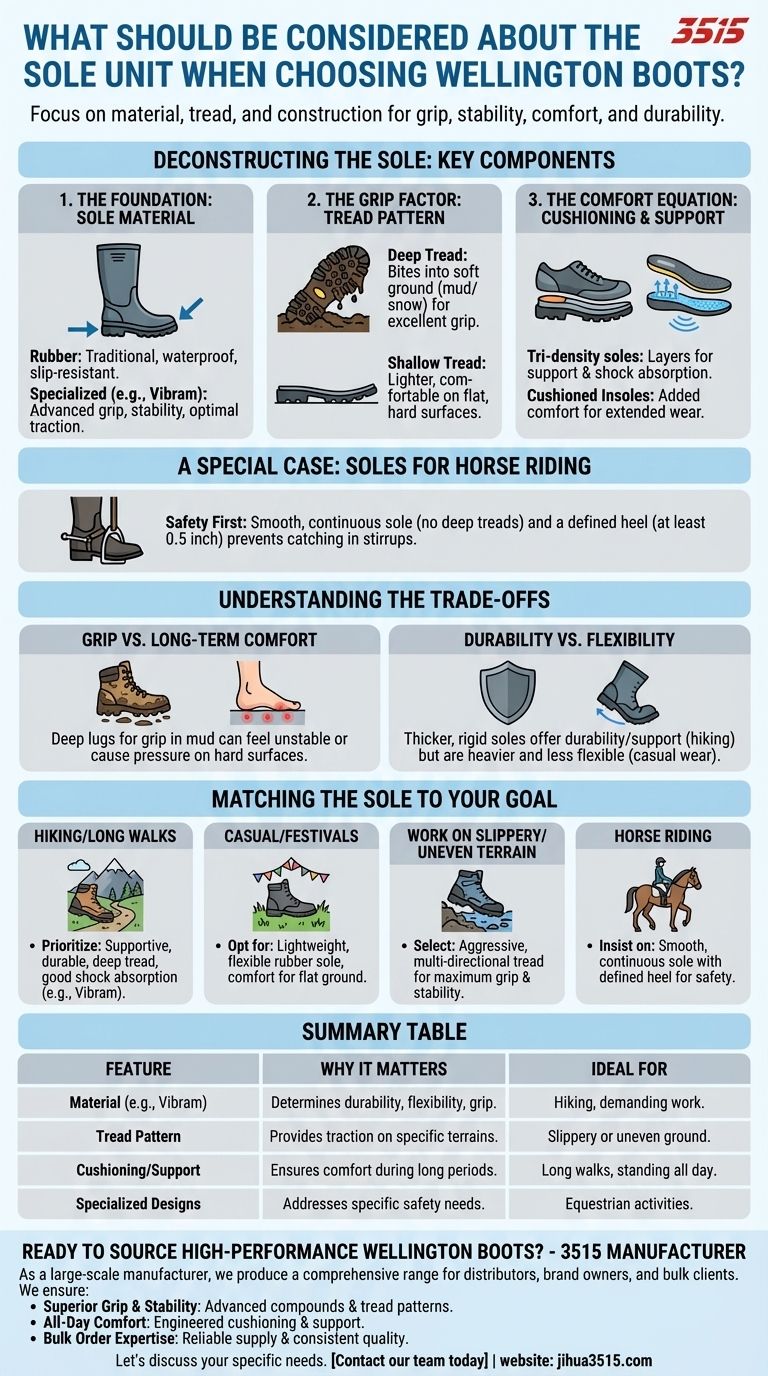
Visual Guide
Related Products
- Durable Waterproof Rain Boots | Custom Manufacturer for Wholesale & Brands
- Wholesale Waterproof Tactical Boots Custom Suede & High-Traction Soles
- Wholesale Leather Work Boots with Customizable Wedge Sole for Brands
- Wholesale Leather Ankle Boots with Lug Soles for Custom Brand Manufacturing
- Durable Moc-Toe Wedge Work Boots | Wholesale Manufacturing for Brands
People Also Ask
- What are the main materials for waterproof rain boots? Choose the Right Material for Durability & Comfort
- What is the overall recommendation for choosing rain boot materials? A Guide to Rubber vs. PVC
- How does boot height affect waterproofing? Choose the Right Height for Ultimate Protection
- Why are rain boots more flexible and comfortable than snow boots? The Key Differences Explained
- What are the best types of shoes for different gardening conditions? Find Your Perfect Match.










