
The sustainability of a wellington boot is determined by two key factors: the materials it's made from and what happens to it at the end of its life. Truly eco-friendly wellies utilize renewable resources like certified natural rubber. Critically, their environmental contribution is maximized when they are kept out of landfills through recycling, donation, or creative repurposing.
A wellington boot's true contribution to environmental sustainability is not a single feature, but a full lifecycle commitment—from its creation with renewable materials to its responsible disposal through recycling or reuse.
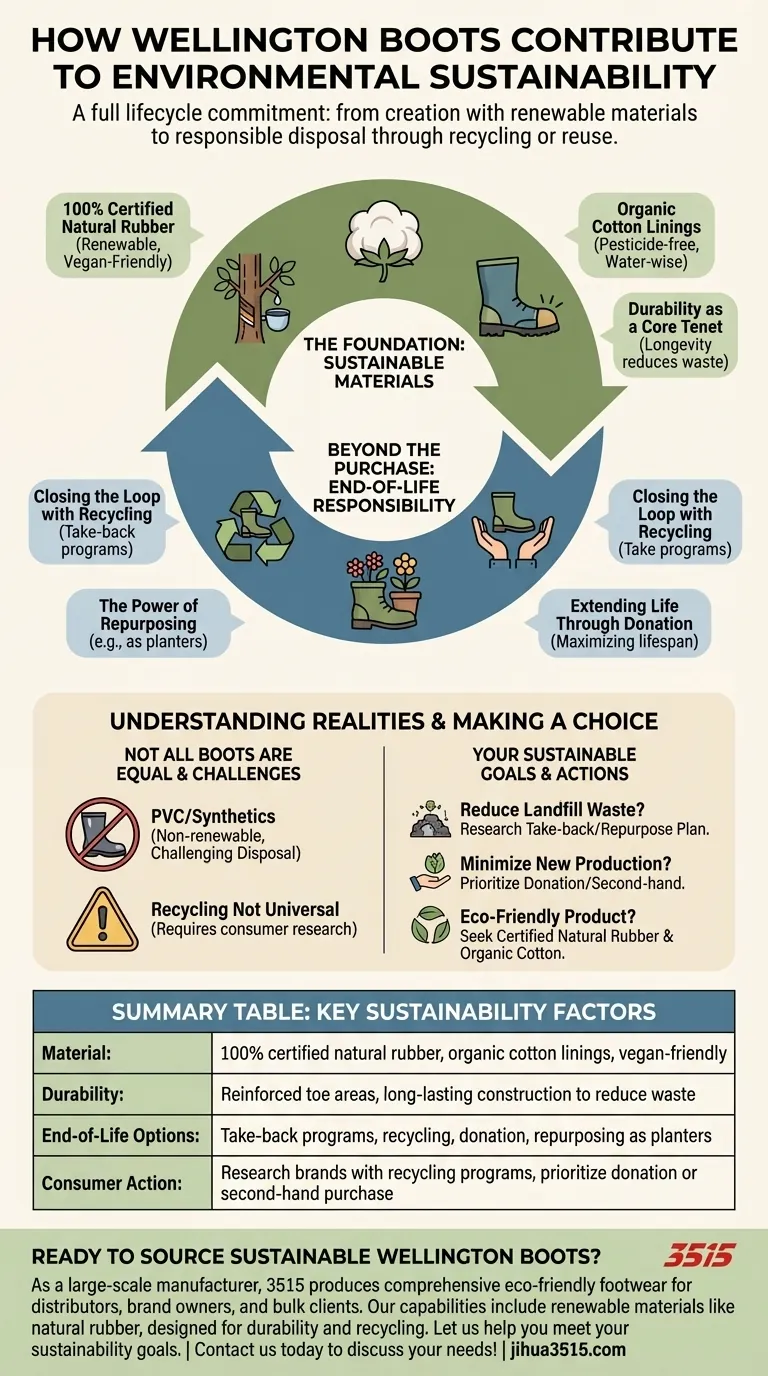
The Foundation: Sustainable Materials
The journey to a sustainable boot begins with its core components. The choice of material has the most significant initial impact on its environmental footprint.
The Role of Natural Rubber
Many eco-conscious wellington boots are made from 100% certified natural rubber. Unlike synthetic alternatives derived from petroleum, natural rubber is a renewable resource harvested from trees.
This plant-based origin makes the material inherently more sustainable and also vegan-friendly.
Beyond the Boot: Eco-Friendly Linings
The interior of the boot also matters. High-quality sustainable wellies often feature linings made from materials like organic cotton, which avoids the pesticides and intensive water use associated with conventional cotton farming.
Durability as a Core Tenet
Sustainability is intrinsically linked to longevity. A boot that lasts longer reduces waste and the need for new consumption.
Features like reinforced toe areas and high-quality construction are not just for performance; they are essential for extending the product's usable life, making durability a key environmental benefit.
Beyond the Purchase: End-of-Life Responsibility
What happens to a pair of wellies after they've been worn through is a critical, and often overlooked, aspect of their environmental impact.
Closing the Loop with Recycling
Forward-thinking manufacturers offer take-back programs that allow customers to return old boots. These programs ensure the materials are properly recycled, reducing the demand for virgin resources and preventing the boots from ending up in a landfill.
The Power of Repurposing
Instead of being discarded, old wellies can be given a new purpose. Their waterproof nature makes them excellent, quirky planters for a garden or balcony. This creative reuse turns potential waste into a functional item.
Extending Life Through Donation
If a pair of boots is still in serviceable condition but no longer needed, donating them is an excellent option. Organizations can pass them on to others, maximizing the product's lifespan and reducing overall consumption.
Understanding the Trade-offs and Realities
While it's possible to choose a sustainable wellington boot, it's important to recognize the potential pitfalls and the realities of the market.
Not All Boots Are Created Equal
Many inexpensive wellington boots are made from PVC or other synthetic plastics. These petroleum-based materials are not renewable and present significant environmental challenges in both production and disposal. A boot is not sustainable simply by being a welly; its material composition is what matters.
The Recycling Challenge
Manufacturer take-back and recycling programs are a fantastic solution, but they are not yet universally available. This places the responsibility on the consumer to research a brand's end-of-life options before making a purchase. Without a clear disposal plan, even a natural rubber boot can end up in a landfill.
Making a Sustainable Choice
To ensure your choice aligns with your environmental goals, consider your primary motivation.
- If your primary focus is reducing landfill waste: Research brands that offer a clear recycling or take-back program before you buy, and have a plan to repurpose your boots when they wear out.
- If your primary focus is minimizing new production: Prioritize donating your old boots if they are still usable or seek out a quality second-hand pair before purchasing new ones.
- If your primary focus is purchasing an eco-friendly product: Look for boots explicitly made from certified natural rubber with organic cotton linings.
Ultimately, a wellington boot's contribution to sustainability depends on conscious choices made throughout its entire lifecycle.
Summary Table:
| Sustainability Factor | Key Features |
|---|---|
| Material | 100% certified natural rubber, organic cotton linings, vegan-friendly |
| Durability | Reinforced toe areas, long-lasting construction to reduce waste |
| End-of-Life Options | Take-back programs, recycling, donation, repurposing as planters |
| Consumer Action | Research brands with recycling programs, prioritize donation or second-hand purchase |
Ready to source sustainable wellington boots? As a large-scale manufacturer, 3515 produces a comprehensive range of eco-friendly footwear for distributors, brand owners, and bulk clients. Our production capabilities include boots made from renewable materials like natural rubber, designed for durability and end-of-life recycling. Let us help you meet your sustainability goals with high-quality, environmentally responsible footwear. Contact us today to discuss your needs!
Visual Guide
Related Products
- Durable Waterproof Rain Boots | Custom Manufacturer for Wholesale & Brands
- Durable Moc-Toe Wedge Work Boots | Wholesale Manufacturing for Brands
- Durable Goodyear Welt Leather Work Boots for Wholesale & Private Label
- Durable High-Ankle Tactical Boots for Wholesale & Custom Manufacturing
- Durable Leather High-Ankle Tactical Boots for Wholesale & Custom Manufacturing
People Also Ask
- What are the main materials for waterproof rain boots? Choose the Right Material for Durability & Comfort
- What is the overall recommendation for choosing rain boot materials? A Guide to Rubber vs. PVC
- How does boot height affect waterproofing? Choose the Right Height for Ultimate Protection
- Why are rain boots more flexible and comfortable than snow boots? The Key Differences Explained
- What are the best types of shoes for different gardening conditions? Find Your Perfect Match.

















