
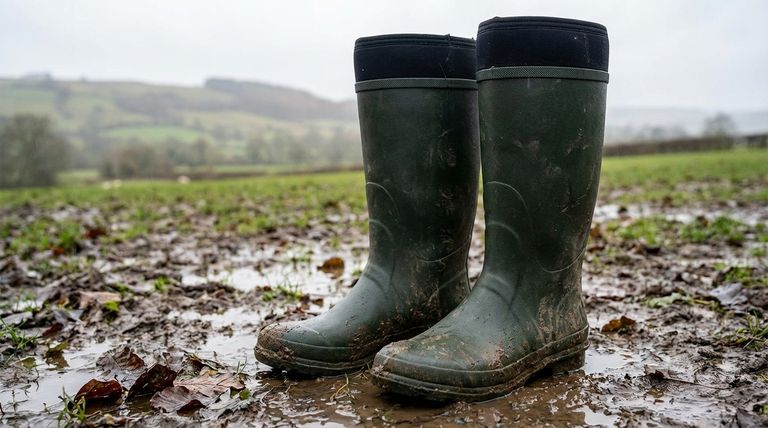
At their core, premium Wellington boots are constructed from two primary materials: natural rubber and neoprene. Natural rubber forms the main waterproof shell, prized for its flexibility and durability, while neoprene is typically used as a lining to provide critical thermal insulation and a comfortable, snug fit against the leg.
The defining characteristic of a premium Wellington boot is its reliance on natural rubber over synthetic plastics like PVC. This choice delivers superior durability, flexibility, and user comfort, with neoprene added for essential warmth in cold and wet conditions.
The Foundation of Quality: Natural Rubber
The choice of natural rubber is the single biggest differentiator between a standard boot and a premium one. Its inherent properties are perfectly suited for creating high-performance, comfortable waterproof footwear.
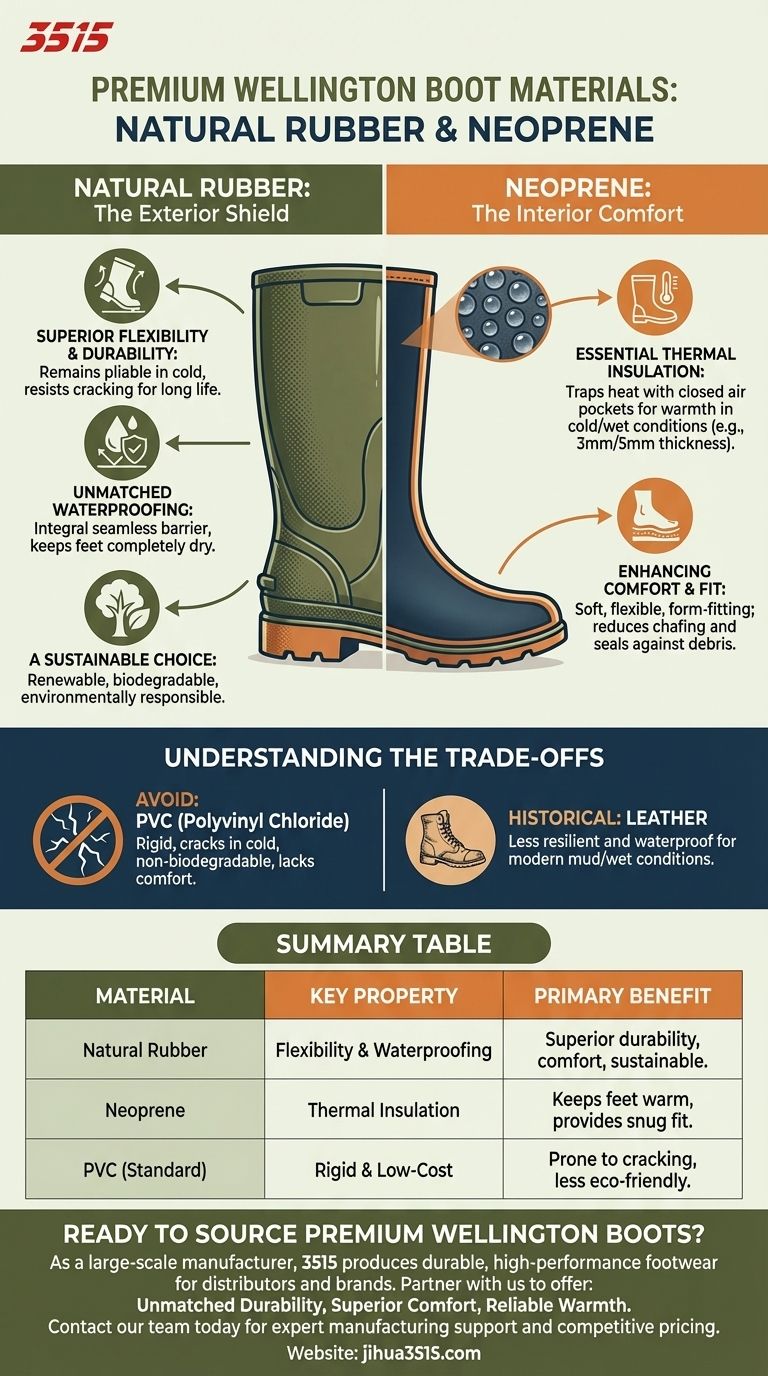
Superior Flexibility and Durability
Natural rubber has a significant advantage over cheaper synthetic plastics. It remains flexible in cold temperatures, reducing the risk of cracking.
This pliability allows the boot to move with your foot and leg, providing greater comfort during extended wear and preventing the splits that often plague lower-quality boots.
Unmatched Waterproofing
Unlike coated fabrics, the waterproofing in a natural rubber boot is integral to the material itself. It creates a seamless, impenetrable barrier against water.
This ensures your feet stay completely dry, which is the fundamental purpose of a Wellington boot.
A Sustainable Choice
Sourced from rubber trees, natural rubber is a renewable and biodegradable material. This makes it a more environmentally responsible choice compared to petroleum-based plastics.
For those concerned with environmental impact, high-quality natural rubber offers performance without the long-term ecological cost of materials like PVC.
The Role of Neoprene in Premium Design
While rubber provides the external protection, neoprene is the key to interior comfort, especially in challenging weather. It's the same material trusted for wetsuits.
Essential Thermal Insulation
Neoprene contains small, closed air pockets that trap heat effectively. This makes it an excellent insulator, keeping your feet warm even when standing in cold water or mud.
Premium cold-weather Wellingtons will often specify the thickness of the neoprene lining (e.g., 3mm or 5mm), with thicker linings offering more warmth.
Enhancing Comfort and Fit
Neoprene is soft and flexible, providing a cushioned, form-fitting feel around the foot and calf.
This snug fit not only improves comfort and reduces chafing but also helps seal the top of the boot, preventing water and debris from entering.
Understanding the Trade-offs: Premium vs. Standard Materials
The materials to avoid are just as important as the ones to seek out. Understanding these distinctions is key to identifying true quality.
The Problem with PVC (Polyvinyl Chloride)
Most standard, low-cost Wellington boots are made from PVC. While waterproof, it is a rigid synthetic plastic that lacks the comfort and durability of natural rubber.
PVC is prone to cracking, especially in the cold, and it does not biodegrade, releasing potentially harmful chemicals into the environment as it slowly breaks down.
Why Not Leather?
The very first Wellington boots, designed for the Duke of Wellington in the early 19th century, were made of treated calfskin leather.
However, for the modern boot's purpose of absolute waterproofness in wet and muddy conditions, vulcanized natural rubber proved to be a functionally superior and more resilient material, eventually replacing leather almost entirely.
Making the Right Choice for Your Needs
Selecting the right boot means matching its material composition to your intended use.
- If your primary focus is all-day comfort and durability: Choose a boot constructed from high-quality natural rubber for its superior flexibility and resistance to cracking.
- If your primary focus is warmth in cold climates: Prioritize a boot with a significant neoprene lining of at least 3mm to ensure proper thermal insulation.
- If your primary focus is environmental sustainability: Insist on boots made from natural, biodegradable rubber and explicitly avoid any made from PVC.
Ultimately, choosing a premium Wellington boot is an investment in the functional superiority of natural materials for lasting performance and comfort.
Summary Table:
| Material | Key Property | Primary Benefit |
|---|---|---|
| Natural Rubber | Flexibility & Waterproofing | Superior durability, comfort, and a sustainable choice. |
| Neoprene | Thermal Insulation | Keeps feet warm in cold conditions and provides a snug fit. |
| PVC (Standard Boots) | Rigid & Low-Cost | Prone to cracking and less environmentally friendly. |
Ready to Source Premium Wellington Boots?
As a large-scale manufacturer, 3515 produces a comprehensive range of durable, high-performance footwear for distributors, brand owners, and bulk clients. Our production capabilities encompass all types of premium Wellington boots crafted from superior natural rubber and neoprene.
Partner with us to offer your customers:
- Unmatched Durability: Boots that resist cracking and last longer.
- Superior Comfort: Flexible designs for all-day wear.
- Reliable Warmth: Effective insulation for cold environments.
Let's discuss your specific needs and how we can help you build a successful product line. Contact our team today for expert manufacturing support and competitive pricing.
Visual Guide
Related Products
- Premium Wholesale Tactical Style Safety Shoes Boots with Quick Lacing
- Durable Waterproof Rain Boots | Custom Manufacturer for Wholesale & Brands
- Premium Wholesale Waterproof Safety Boots High Performance Protection for Industrial Markets
- Premium Waterproof High-Cut Industrial Safety Boots for Wholesale and Bulk Orders
- Durable Goodyear Welt Leather Work Boots for Wholesale & Private Label
People Also Ask
- How are gait analysis research findings applied to the functional design of safety shoes and tactical boots?
- How can specialized footwear mitigate safety risks? High-Volume OEM/ODM Solutions since 1951
- How does anthropomorphic design influence material selection? Enhance Footwear Performance through Biological Alignment
- Why is the synchronization of craftsmanship and UX development emphasized for bulk customization of safety shoes?
- How do quality certification standards for safety shoes reduce perceived risk? Buy Online with Technical Certainty

















