
To understand footwear related to women's wellington boots, you must look at other types of functional, outdoor-oriented shoes. The most closely related categories are snow boots, walking or hiking boots, and versatile casual shoes, with functional socks serving as an essential complement across all types.
Wellington boots are a specialized tool for waterproof protection. Related footwear options are not replacements but rather different tools designed to solve distinct environmental challenges, from deep snow and rugged trails to everyday comfort.
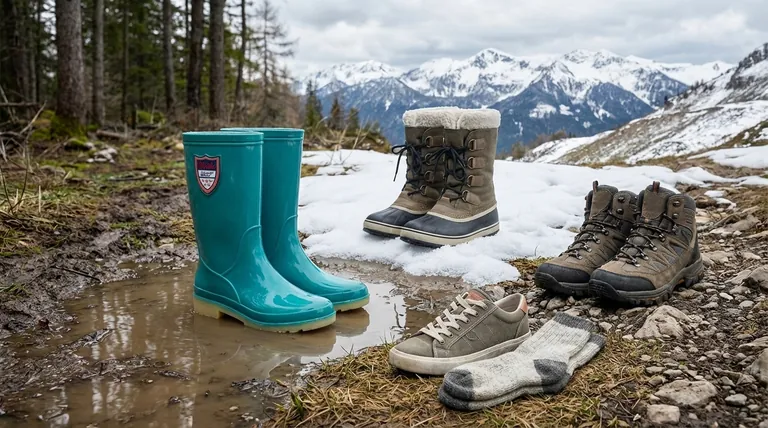
A Guide to Functional Footwear
Wellington boots, or "wellies," are masters of a specific domain: keeping your feet dry in wet and muddy conditions. Their related footwear categories each address a different set of needs for outdoor and practical use.
For Harsh Cold: Snow Boots
Snow boots are engineered specifically for snow and freezing temperatures. Their primary features are heavy insulation to retain warmth and deep, aggressive treads for grip on ice and snow.
While wellingtons are waterproof, most lack the insulation needed for prolonged exposure to cold, making snow boots the superior choice for winter conditions.
For Rugged Terrain: Walking & Hiking Boots
Walking and hiking boots are built for stability and support on uneven ground. They typically feature rigid ankle support, durable materials, and specialized soles designed for traction on rock and dirt.
Wellingtons, with their flexible construction and simpler soles, are excellent for flat, muddy ground but lack the support required for serious trail walking.
For Everyday Versatility: Casual Shoes
Casual shoes represent the baseline for daily comfort when specialized protection isn't necessary. This broad category includes everything from sneakers to flats.
They are the go-to option when the primary requirements are comfort and style for urban or indoor environments, where the ruggedness of a boot is unnecessary.
The Essential Complement: Socks
Socks are not merely an accessory but a critical component of your footwear system. The right pair enhances comfort, manages moisture, and provides insulation.
Choosing appropriate socks—such as thick wool for warmth in snow boots or moisture-wicking synthetics for hiking—directly impacts the performance and comfort of any shoe or boot you wear.
Understanding the Trade-offs
Choosing the right footwear means understanding the limitations of each type. Wellingtons are highly effective but have clear trade-offs that make other boots a better choice in certain situations.
The Limit of Insulation
The core function of a wellington is to be waterproof, not warm. Standard rubber or PVC construction offers very little insulation, making them a poor choice for deep cold unless paired with heavily insulated socks.
The Lack of Breathability
A perfectly waterproof barrier also means no air can escape. During strenuous activity, this lack of breathability can trap sweat, leading to discomfort and potentially cold feet once you stop moving.
The Support Gap
Wellingtons are designed with a flexible structure for comfort in gardens or on simple walks. They offer minimal ankle support, making them unsuitable and potentially unsafe for hiking on uneven or steep terrain where a dedicated walking boot is needed.
Making the Right Choice for Your Activity
Your specific goal and environment should always dictate your footwear choice.
- If your primary focus is navigating wet, muddy, or rainy conditions on flat ground: A classic wellington boot is the perfect tool for the job.
- If your primary focus is staying warm and secure in snow or freezing weather: Choose a dedicated, insulated snow boot for its thermal properties and grip.
- If your primary focus is stability and safety on long walks or uneven trails: Select a proper walking or hiking boot for its essential ankle support and durable sole.
- If your primary focus is everyday comfort for urban or indoor wear: A versatile casual shoe is the most practical and comfortable option.
Ultimately, selecting the correct footwear is about matching the design of the shoe to the demands of your environment.
Summary Table:
| Footwear Type | Primary Use | Key Features |
|---|---|---|
| Snow Boots | Harsh cold, snow | Heavy insulation, deep treads for ice/snow grip |
| Walking & Hiking Boots | Rugged terrain, trails | Rigid ankle support, durable materials, specialized soles |
| Casual Shoes | Everyday urban/indoor wear | Comfort, style, versatility |
| Socks (Essential Complement) | All footwear types | Moisture management, insulation, comfort enhancement |
Need the Perfect Footwear Solution? Partner with 3515, Your Trusted Manufacturer
As a large-scale manufacturer, 3515 produces a comprehensive range of footwear for distributors, brand owners, and bulk clients. Our production capabilities encompass all types of shoes and boots, including:
- Women's Wellington Boots: Durable, waterproof protection for wet conditions.
- Snow Boots: Insulated designs for extreme cold.
- Hiking & Walking Boots: Supportive footwear for rugged terrain.
- Versatile Casual Shoes: Comfortable options for everyday wear.
We help you deliver the right footwear for every environment. Let's discuss your specific needs — contact us today to explore our catalog and manufacturing solutions!
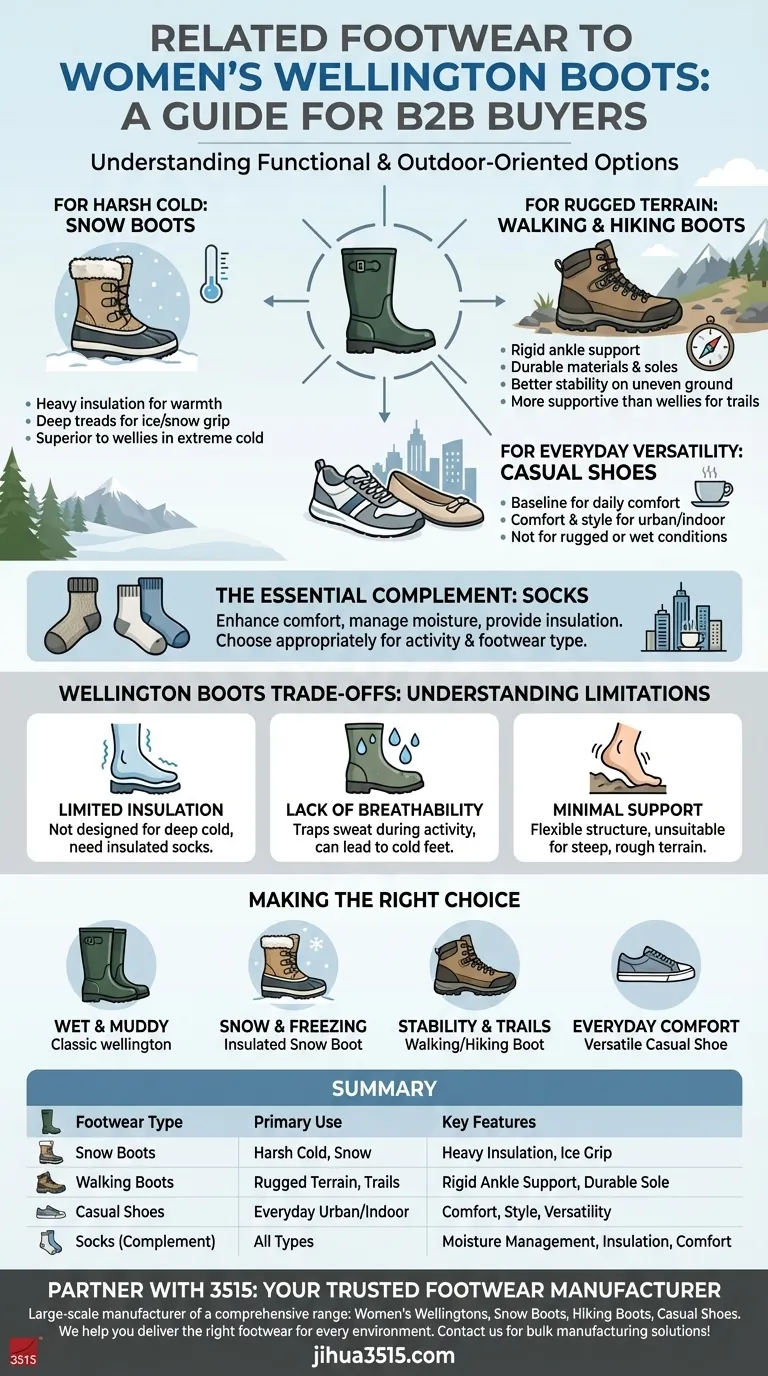
Visual Guide
Related Products
- Durable Waterproof Rain Boots | Custom Manufacturer for Wholesale & Brands
- Wholesale Women's Leather Derby Shoes Custom Factory Production
- Wholesale Classic Leather Lace-Up Ankle Boots for Brand Manufacturing
- Durable Goodyear Welt Leather Work Boots for Wholesale & Private Label
- Durable Moc-Toe Wedge Work Boots | Wholesale Manufacturing for Brands
People Also Ask
- What are the main materials for waterproof rain boots? Choose the Right Material for Durability & Comfort
- What is the overall recommendation for choosing rain boot materials? A Guide to Rubber vs. PVC
- How does boot height affect waterproofing? Choose the Right Height for Ultimate Protection
- Why are rain boots more flexible and comfortable than snow boots? The Key Differences Explained
- What are the best types of shoes for different gardening conditions? Find Your Perfect Match.



















