
In principle, yes, most Wellington boots are designed to be true to size. However, many brands intentionally build them with a slightly generous fit to accommodate thicker socks and ensure comfort for extended wear. This means your "true size" in a Wellington might feel roomier than in a standard shoe.
The most reliable way to get the right fit is to ignore universal sizing rules and instead consult the specific size chart provided by the manufacturer for the exact style you are considering.
The "True to Size" Paradox: Intentional Roominess
The core purpose of a Wellington boot is functional outdoor use, which dictates its design. The fit is engineered for practicality, not just foot length.
Why Many Wellingtons Are Slightly Oversized
Unlike a casual shoe, Wellington boots are often built with extra space. This isn't a sizing error; it's a deliberate feature to allow room for insulation, thicker socks, and removable insoles without feeling restrictive.
This design ensures your feet remain comfortable and warm in various weather conditions.
What the Perfect Fit Feels Like
A well-fitting Wellington boot should feel secure, not sloppy. Look for a snug grip around the ankle to prevent your foot from sliding excessively, which can cause blisters.
You should have enough space to wiggle your toes, and the fit around your calf should be secure but flexible, allowing for natural movement.
Does the Lining Affect the Size?
No, the choice of lining—whether it's neoprene for warmth or jersey for lighter wear—does not change the manufacturer's stated size. The boot is built to accommodate the lining while adhering to its intended sizing.
Navigating Sizing Across Different Brands
The single biggest variable in Wellington boot sizing is the brand itself. Each manufacturer uses its own lasts and specifications.
The Golden Rule: Always Check the Size Chart
The manufacturer's size chart is your most accurate tool. Never assume your standard shoe size will translate perfectly without checking their guide first.
Measure your foot length and compare it directly to the brand's specific chart for the most reliable results.
When You're Between Sizes
If your measurement places you between two sizes, the overwhelming consensus is to size up.
This provides a safer margin for comfort, especially if you plan to wear the boots in colder weather with heavy socks.
Addressing Calf Fit and Wider Feet
Standard Wellingtons can be restrictive for those with wider calves. For a more accommodating fit, look for styles that feature an adjustable gusset strap or have panels made from stretchy neoprene.
Understanding the Trade-offs
Choosing a size often involves balancing comfort with stability.
The Case for Sizing Up
Opting for the larger size when in doubt provides versatility. It ensures you have enough room for winter socks or custom insoles, preventing a fit that is too tight and restrictive.
The Risk of a Boot That's Too Large
While a little extra room is good, a boot that is excessively large can be a problem. Too much movement can cause your foot to slide, leading to chafing and blisters. It also reduces stability on uneven terrain.
Making the Right Choice for Your Needs
Base your final decision on how you primarily intend to use the boots.
- If your primary focus is cold-weather use with thick socks: Trust your regular size if the brand is known for a generous fit, but do not hesitate to size up if you are between sizes.
- If your primary focus is warm-weather use with standard socks: Stick closely to your measured size according to the brand's chart to avoid a loose, unstable fit.
- If you have wider calves or feet: Prioritize finding a boot with an adjustable gusset or flexible neoprene panels over simply sizing up your foot.
By focusing on the manufacturer's specific guide rather than a general rule, you can confidently select the perfect Wellington boot fit.
Summary Table:
| Sizing Factor | Key Consideration | Recommendation |
|---|---|---|
| General Fit | Most are true to size but designed with extra room for socks. | Check the brand's specific size chart. |
| Between Sizes | Your foot measurement falls between two sizes. | Size up for comfort and versatility. |
| Calf Width | Standard boots may be restrictive. | Look for adjustable gussets or stretchy neoprene panels. |
| Intended Use | Cold vs. warm weather wear. | Cold: consider sizing up; Warm: stick to measured size. |
Need Wellington Boots in Bulk? Get a Perfect Fit, Every Time.
As a large-scale manufacturer, 3515 produces a comprehensive range of durable Wellington boots for distributors, brand owners, and bulk clients. Our expertise ensures every pair is crafted to precise specifications, combining comfort, functionality, and consistent sizing.
We help you:
- Source with Confidence: Avoid sizing inconsistencies and customer returns with our reliable manufacturing standards.
- Customize for Your Market: From adjustable calf fits to specific linings, we tailor boots to meet your customers' needs.
- Scale Efficiently: Benefit from our high-volume production capabilities for all types of footwear.
Let's discuss your requirements and how we can deliver the perfect Wellington boots for your business.
Contact our team today for a consultation
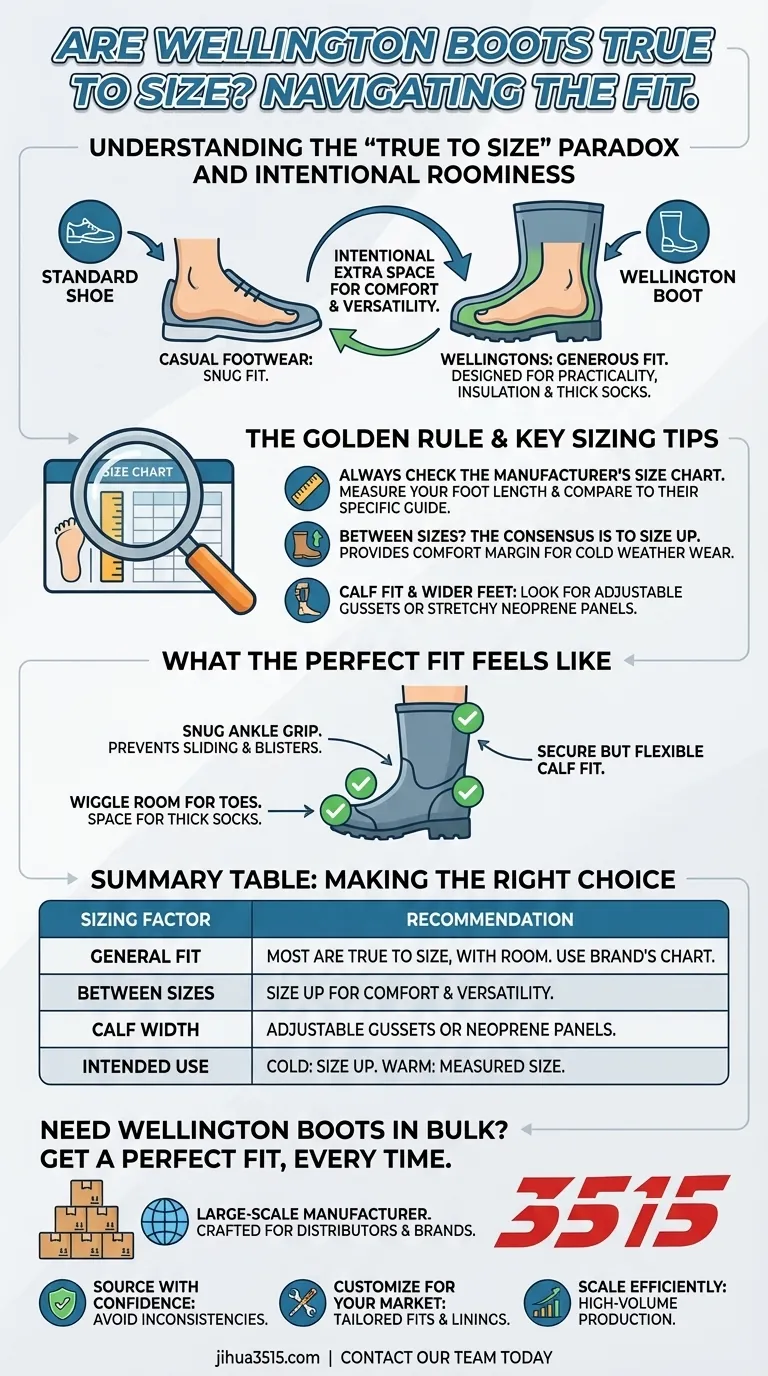
Visual Guide
Related Products
- Durable Waterproof Rain Boots | Custom Manufacturer for Wholesale & Brands
- Durable Goodyear Welt Leather Work Boots for Wholesale & Private Label
- Wholesale Durable Leather Work Boots | 8-Inch Goodyear Welt Manufacturer
- High-Traction Suede Tactical Boots Wholesale & Custom Manufacturing
- Premium Wholesale Tactical Style Safety Shoes Boots with Quick Lacing
People Also Ask
- What are the main materials for waterproof rain boots? Choose the Right Material for Durability & Comfort
- What is the overall recommendation for choosing rain boot materials? A Guide to Rubber vs. PVC
- How does boot height affect waterproofing? Choose the Right Height for Ultimate Protection
- Why are rain boots more flexible and comfortable than snow boots? The Key Differences Explained
- What are the best types of shoes for different gardening conditions? Find Your Perfect Match.



















