
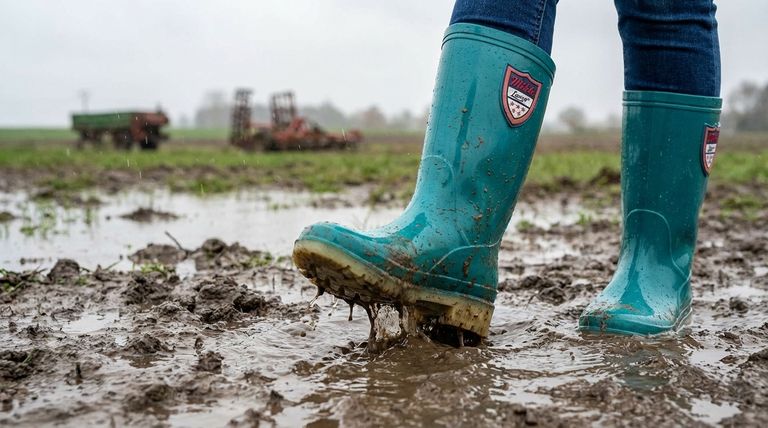
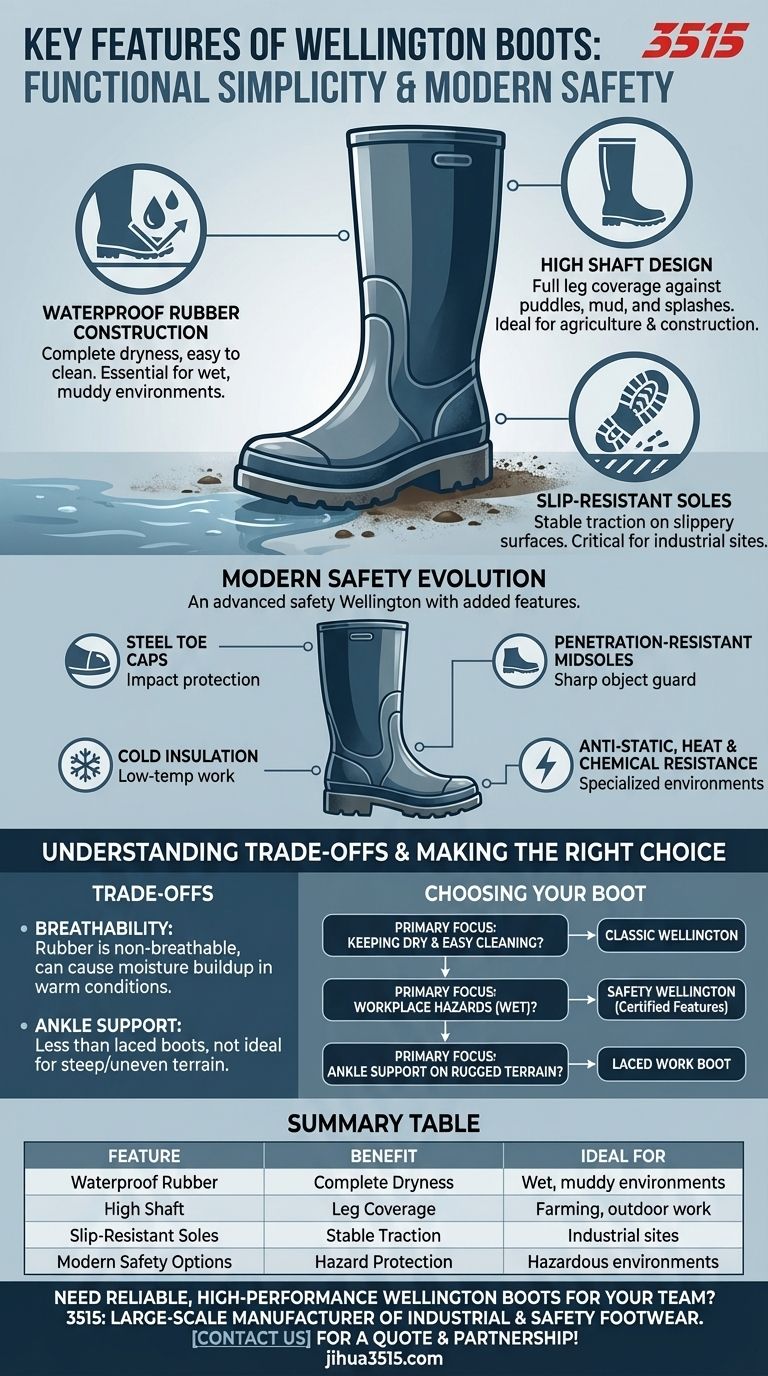
At their core, Wellington boots are defined by three key features. They are constructed from high-quality rubber to be completely waterproof, feature a high shaft for comprehensive leg coverage, and are built with slip-resistant soles to ensure stable traction in wet and muddy environments.
The fundamental purpose of a Wellington boot is to provide simple, robust, and total waterproof protection. While modern variations add specialized safety features, their primary identity remains rooted in keeping the wearer's feet and lower legs dry and clean in the most challenging wet conditions.
The Anatomy of a Classic Wellington
The traditional design of the Wellington boot is a masterclass in functional simplicity. Every feature serves a distinct, practical purpose centered around protection from the elements.
Waterproof by Design
The defining characteristic of a Wellington is its material. Being made from high-quality rubber makes the boot inherently and completely waterproof, unlike materials that rely on a membrane or coating.
This seamless rubber construction is also what makes them exceptionally easy to maintain. Mud and dirt can be rinsed off completely, a significant advantage in messy environments.
High Shaft for Maximum Coverage
Wellington boots feature a high-cut design that extends well up the calf. This provides a crucial barrier against deep puddles, mud, and splashes, ensuring the entire lower leg stays dry and protected.
Slip-Resistant Soles for Stability
The outsoles are engineered with deep treads to provide reliable traction on slippery surfaces. This is critical for maintaining footing in mud, on wet concrete, or across uneven, soggy terrain.
A Focus on Practical Comfort
While rugged, quality Wellingtons are designed for extended wear. They often include cushioned insoles and supportive arches to reduce fatigue during long days on your feet.
The Evolution into a Modern Safety Boot
The classic Wellington has evolved far beyond its agricultural roots. Today, specialized versions are engineered to meet stringent safety standards in various industrial and hazardous environments.
Beyond Basic Waterproofing
Modern safety Wellingtons integrate advanced protective elements directly into the classic waterproof design. This creates a single piece of footwear that can handle both environmental and workplace hazards.
Specialized Protective Features
These advanced boots may include features such as steel toe caps for impact protection, cold insulation for low-temperature work, and penetration-resistant midsoles to guard against sharp objects.
Other specializations include anti-static properties, heat protection, and soles resistant to fuel and oil, making them suitable for a wide range of demanding industries.
Understanding the Trade-offs
No single boot is perfect for every task. The Wellington's specialized design comes with inherent compromises that are important to understand.
The Breathability Compromise
The same rubber that makes a Wellington boot completely waterproof also makes it non-breathable. In warm conditions or during strenuous activity, this can lead to moisture buildup from sweat, a contrast to leather work boots that often feature moisture-wicking linings.
Ankle Support Limitations
The classic slip-on design of a Wellington offers less ankle support compared to high-cut, laced boots like packer or tactical boots. For work on steep or uneven terrain where ankle twists are a concern, a laced boot provides superior stability.
Not a Universal Solution
While versatile, Wellingtons are purpose-built. They lack the lightweight flexibility of a tactical boot needed for patrolling or the abrasion-resistant reinforcements and bracing of a dedicated racing boot.
Making the Right Choice for Your Needs
Selecting the correct footwear requires matching the boot's features to your primary goal.
- If your primary focus is keeping dry in wet, muddy conditions: A classic rubber Wellington is the ideal, easy-to-clean choice for general outdoor use, gardening, or farming.
- If your primary focus is safety in a hazardous, wet environment: Seek out a specialized safety Wellington with certified features like steel toes, chemical resistance, or anti-static properties.
- If your primary focus is ankle support on rugged terrain: A tightly laced work or packer boot will provide the stability that a slip-on Wellington cannot.
Ultimately, choosing the right boot is about understanding that its design is a direct solution to a specific set of problems.
Summary Table:
| Key Feature | Primary Benefit | Ideal For |
|---|---|---|
| Waterproof Rubber Construction | Complete dryness, easy to clean | Wet, muddy environments, agriculture |
| High Shaft Design | Full leg coverage from deep puddles | Farming, construction, outdoor work |
| Slip-Resistant Soles | Stable traction on slippery surfaces | Industrial sites, uneven terrain |
| Modern Safety Options (e.g., steel toe) | Protection from workplace hazards | Hazardous industrial environments |
Need reliable, high-performance Wellington boots for your team or business?
As a large-scale manufacturer, 3515 produces a comprehensive range of industrial and safety footwear for distributors, brand owners, and bulk clients. Our production capabilities encompass all types of waterproof boots, including specialized safety Wellingtons with steel toes, insulation, and chemical-resistant soles.
We provide durable, cost-effective solutions tailored to your specific needs. Contact us today for a quote and discover how 3515 can be your trusted footwear manufacturing partner!
Visual Guide
Related Products
- Durable Waterproof Rain Boots | Custom Manufacturer for Wholesale & Brands
- Durable Goodyear Welt Leather Work Boots for Wholesale & Private Label
- Wholesale Durable Leather Work Boots | 8-Inch Goodyear Welt Manufacturer
- High-Traction Suede Tactical Boots Wholesale & Custom Manufacturing
- Premium Wholesale Tactical Style Safety Shoes Boots with Quick Lacing
People Also Ask
- What are the main materials for waterproof rain boots? Choose the Right Material for Durability & Comfort
- What is the overall recommendation for choosing rain boot materials? A Guide to Rubber vs. PVC
- How does boot height affect waterproofing? Choose the Right Height for Ultimate Protection
- Why are rain boots more flexible and comfortable than snow boots? The Key Differences Explained
- What are the best types of shoes for different gardening conditions? Find Your Perfect Match.



















