
Beyond simply keeping your feet dry, the sole of a Wellington boot is a highly engineered foundation responsible for your safety, comfort, and stability. It provides critical traction on hazardous surfaces, absorbs shock to reduce fatigue, and supports your foot throughout a long day of wear.
The sole is not a single component but a system. Its primary role is to provide a stable, high-traction connection to the ground while absorbing impact and supporting the foot, making it the most critical element for performance and all-day comfort.
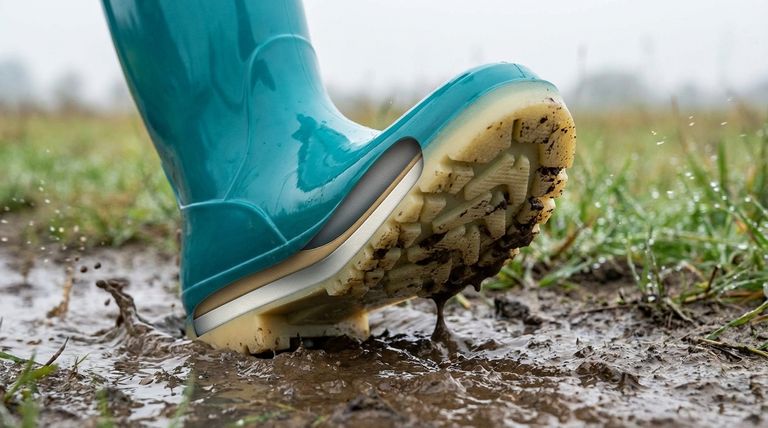
The Core Functions of the Wellington Sole
A well-designed sole performs three essential jobs simultaneously. The quality of a boot is often defined by how well its sole accomplishes these tasks.
Providing Unwavering Traction
The most obvious function is traction, or grip. The sole is your only point of contact with potentially wet, muddy, or slippery ground.
Deep treads and specialized patterns are designed to channel water and mud away, ensuring the rubber maintains a firm hold on the surface.
Delivering All-Day Comfort
Standing or walking for extended periods creates significant impact on your joints. A good sole acts as a suspension system for your body.
It features materials designed for shock absorption, which dissipates the energy from each step, reducing strain on your feet, knees, and back.
Ensuring Stability and Support
Uneven or rugged terrain challenges your balance. The sole provides a wide, stable platform that prevents your ankle from rolling.
Internally, it offers crucial arch support, which is vital for proper foot alignment and preventing fatigue over hours of use.
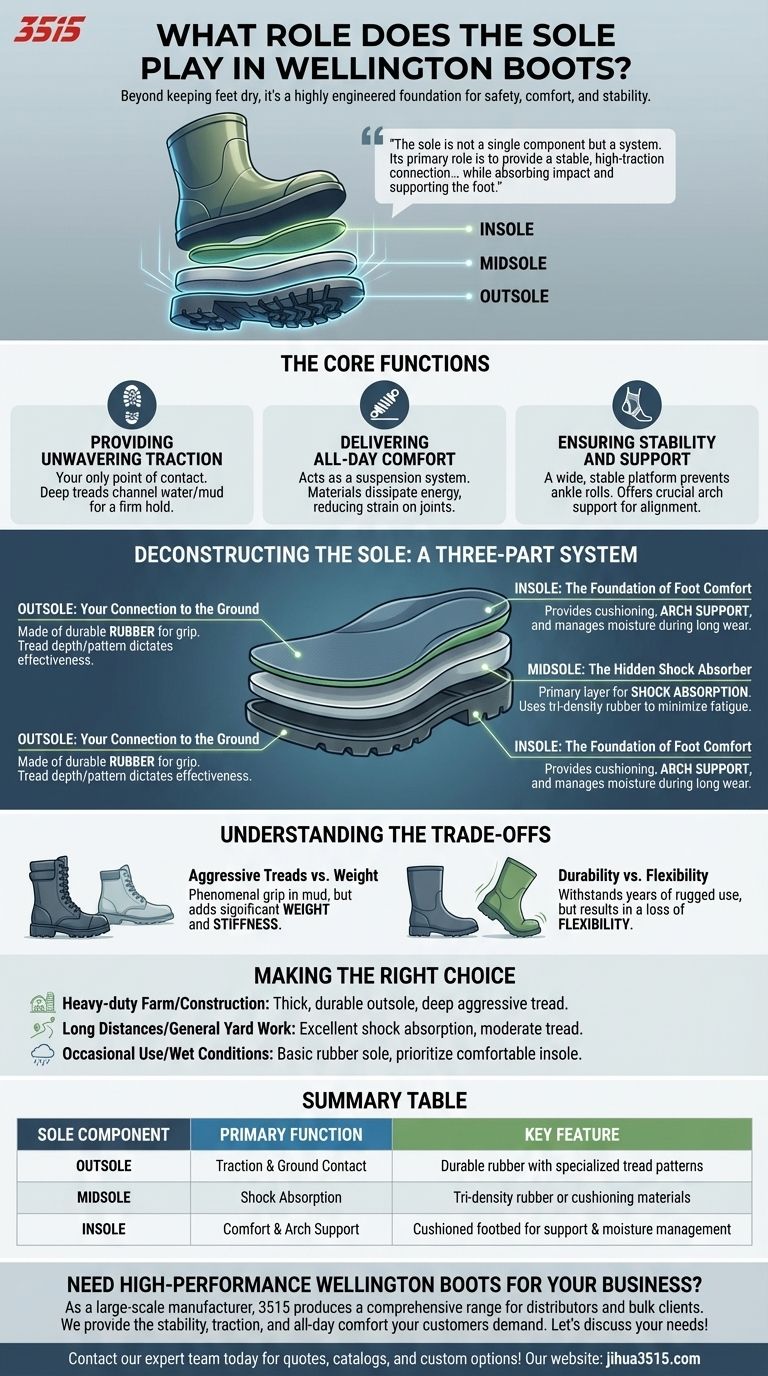
Deconstructing the Sole: A Three-Part System
To understand how a sole works, you must see it as three distinct layers, each with a specific purpose.
The Outsole: Your Connection to the Ground
This is the outermost layer that touches the ground. It is almost always made of durable rubber on a Wellington boot because of its excellent grip on wet and cold surfaces.
The outsole's design, particularly its tread depth and pattern, dictates its effectiveness in mud, on wet concrete, or across grassy fields.
The Midsole: The Hidden Shock Absorber
Sandwiched between the outsole and your foot, the midsole is the primary layer for shock absorption.
High-quality boots may use tri-density rubber or other cushioning materials here to reduce the impact of walking on hard surfaces and minimize fatigue.
The Insole: The Foundation of Foot Comfort
The insole, or footbed, is the part your foot rests on directly. It provides the final layer of cushioning and is critical for arch support.
Because rubber boots are not breathable, the insole also plays a key role in managing moisture and perspiration, enhancing overall comfort during long periods of wear.
Understanding the Trade-offs
Choosing the right sole involves balancing competing priorities. There is no single "best" design for every situation.
Aggressive Treads vs. Weight
A deep, aggressive tread offers phenomenal grip in thick mud and on slippery inclines.
However, these robust outsoles add significant weight and stiffness to the boot, which can cause fatigue during long walks on flat ground.
Durability vs. Flexibility
A thick, hard sole will withstand years of use on rugged terrain like gravel and rock.
The trade-off is a loss of flexibility. A less flexible boot can feel clunky and may not be as comfortable for tasks that require frequent kneeling or crouching.
Making the Right Choice for Your Work
Evaluate the sole based on your most common environment and tasks to ensure you get the performance you need.
- If your primary focus is heavy-duty farm or construction work: You need a thick, durable outsole with a deep, aggressive tread for maximum grip and protection.
- If your primary focus is walking long distances or general yard work: Prioritize a sole with excellent shock absorption and a more moderate tread to balance grip with flexibility and lighter weight.
- If your primary focus is occasional use in wet conditions: A basic rubber sole will suffice, but look for a comfortable, cushioned insole to maximize comfort.
Ultimately, the right sole transforms a simple rubber boot into a specialized tool for your specific environment.
Summary Table:
| Sole Component | Primary Function | Key Feature |
|---|---|---|
| Outsole | Traction & Ground Contact | Durable rubber with specialized tread patterns |
| Midsole | Shock Absorption | Tri-density rubber or cushioning materials |
| Insole | Comfort & Arch Support | Cushioned footbed for support and moisture management |
Need High-Performance Wellington Boots for Your Business?
As a large-scale manufacturer, 3515 produces a comprehensive range of durable and comfortable footwear for distributors, brand owners, and bulk clients. Our production capabilities encompass all types of Wellington boots, engineered with soles designed for specific work environments—from heavy-duty farm and construction to long-distance walking.
We provide the stability, traction, and all-day comfort your customers demand. Let's discuss your specific needs and how we can deliver the right boot solution for your market.
Contact our expert team today for quotes, catalogs, and custom manufacturing options!
Visual Guide
Related Products
- Durable Waterproof Rain Boots | Custom Manufacturer for Wholesale & Brands
- Durable Moc Toe Wedge Sole Work Boots for Wholesale and Private Label
- Wholesale Leather Work Boots with Customizable Wedge Sole for Brands
- Wholesale Waterproof Tactical Boots Custom Suede & High-Traction Soles
- Durable Moc-Toe Wedge Work Boots | Wholesale Manufacturing for Brands
People Also Ask
- What are the main materials for waterproof rain boots? Choose the Right Material for Durability & Comfort
- What is the overall recommendation for choosing rain boot materials? A Guide to Rubber vs. PVC
- How does boot height affect waterproofing? Choose the Right Height for Ultimate Protection
- Why are rain boots more flexible and comfortable than snow boots? The Key Differences Explained
- What are the best types of shoes for different gardening conditions? Find Your Perfect Match.











