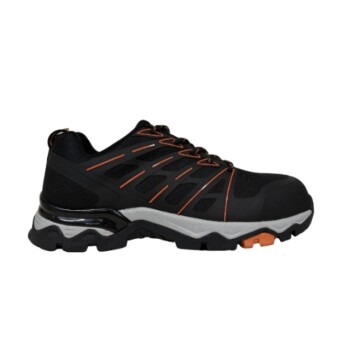
The core value of non-Newtonian fluid polymers in footwear manufacturing lies in their ability to dynamically adapt to physical stress. Unlike traditional static materials, these polymers remain soft and pliable during normal movement, offering superior comfort. However, they instantly rigidify upon sudden impact to absorb and dissipate force, solving the historical trade-off between flexibility and heavy-duty protection.
Non-Newtonian polymers function as an "intelligent" barrier; they provide the all-day comfort of a flexible sneaker but automatically harden into a protective shield the exact moment a safety hazard occurs.
The Mechanics of Adaptive Protection
Behavior Under Normal Conditions
Under standard wearing conditions, non-Newtonian fluid polymers maintain a relaxed molecular structure. This allows the material to remain soft and flexible, mimicking the feel of standard comfort foams.
For the wearer, this translates to unrestricted movement and reduced fatigue. This flexibility is essential for professionals who spend long hours on their feet in tactical or industrial environments.
Reaction to Sudden Impact
When subjected to a high-velocity force, such as a dropped tool or a collision, the material's behavior changes instantly. The molecular structure locks together, transforming the polymer from a flexible state to a rigid solid in milliseconds.
This rapid phase change allows the material to act as armor precisely when it is needed. Once the energy of the impact dissipates, the material returns to its flexible, soft state.
Energy Dissipation vs. Deflection
Standard hard guards often deflect energy, which can still jar the wearer. In contrast, non-Newtonian polymers absorb and dissipate the majority of the impact force.
By spreading the energy across the locked molecular matrix, the material prevents focused trauma to the foot. This capability is critical for high-specification safety shoes where preventing internal injury is as important as stopping external punctures.
Strategic Applications
Enhancing Tactical and Safety Gear
For tactical boots and industrial safety shoes, the primary challenge is balancing weight and stiffness with protection.
Incorporating these polymers allows manufacturers to reduce the bulk associated with traditional rigid plating. This results in footwear that meets high safety specifications without compromising the agility required in tactical situations.
Optimizing Sports Footwear
In athletic contexts, restricting natural foot movement leads to poor performance.
Non-Newtonian materials allow athletes to maintain a full range of motion. They provide critical impact protection only during collisions or falls, ensuring safety does not come at the expense of performance.
Understanding the Trade-offs
Cost vs. Necessity
While highly effective, incorporating non-Newtonian polymers classifies footwear as high-specification equipment. This advanced material technology typically commands a higher price point than standard EVA or PU foams.
For environments with low impact risks, this level of technology may be over-engineering. It is best reserved for scenarios where the risk of sudden external trauma is a genuine daily threat.
Making the Right Choice for Your Goal
To determine if this technology aligns with your requirements, consider the specific nature of your environment:
- If your primary focus is Industrial Safety: Prioritize this technology for roles involving heavy machinery or falling objects, as the shock absorption significantly reduces injury risk.
- If your primary focus is Tactical Agility: Choose these polymers to maintain the flexibility needed for running and climbing while retaining armor-like protection on demand.
- If your primary focus is General Comfort: Evaluate if standard cushioning is sufficient, as non-Newtonian features may add unnecessary cost for low-risk walking.
By leveraging the unique molecular locking mechanism of non-Newtonian fluids, you can achieve a level of protective versatility that traditional materials simply cannot match.
Summary Table:
| Feature | Normal Movement (Low Stress) | Sudden Impact (High Stress) | Benefit to Wearer |
|---|---|---|---|
| Molecular State | Relaxed and flexible | Instant locking/rigidification | Natural agility with on-demand armor |
| Material Feel | Soft and pliable | Hard and protective | Reduced fatigue during long shifts |
| Energy Action | Energy transmission (minimal) | Absorption and dissipation | Prevents internal trauma from collisions |
| Application | Tactical/Industrial use | High-velocity hazards | Optimized weight-to-protection ratio |
Elevate Your Product Line with Advanced Protective Technology
As a large-scale manufacturer serving global distributors and brand owners, 3515 specializes in integrating high-performance materials like non-Newtonian polymers into professional footwear. Whether you are developing high-specification Safety Shoes, tactical boots, or specialized outdoor gear, our comprehensive production capabilities ensure your products meet the highest safety standards without sacrificing wearer comfort.
Partner with 3515 to deliver innovative footwear solutions:
- Flagship Safety Series: Robust protection with intelligent impact absorption.
- Tactical & Outdoor: Agility-focused designs for demanding environments.
- Diverse Portfolio: From training shoes and sneakers to Dress & Formal bulk requirements.
Ready to enhance your inventory with cutting-edge protective technology? Contact us today to discuss your bulk manufacturing needs!
References
- Romina Santi, Barbara Del Curto. Materials for SDGs: A Synergy Towards Sustainable Development. DOI: 10.30682/diid7622i
This article is also based on technical information from 3515 Knowledge Base .
Related Products
- Premium KPU Athletic Safety Shoes for Wholesale
- Premium KPU Injection Athletic Style Safety Shoes
- Premium Suede Sport Safety Shoes for Wholesale & Bulk Orders
- Premium Lightweight Safety Shoes for Wholesale & Bulk Orders
- Advanced KPU Athletic Safety Shoe with Steel Toe Cap Anti-Slip Rotary Lacing System
People Also Ask
- What role does blockchain play in footwear supply chain transparency? Enhance Safety Shoe Traceability and Verification
- What is a recommended alternative to using hairspray for slip resistance? Ditch Unreliable Hacks for Real Safety
- What workplace hazards indicate the need for safety shoes? Identify risks to protect your workforce.
- How is the absence of PPE (safety shoes & helmets) categorized in construction motion data labeling? Unlock Real-Time Safety Insights!
- What role do specialized safety shoes play in preventing falls? Engineering Stability in Industrial Environments