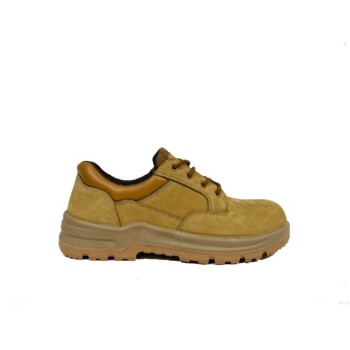
Optical motion capture systems function by tracking retroreflective markers placed on the body to digitize human movement. In safety footwear experiments, cameras record the three-dimensional spatial coordinates of these skin markers, which are attached to specific anatomical landmarks. This real-time data collection serves as the technological basis for analyzing how safety shoes affect a worker's walking mechanics.
The core purpose of this technology is to translate physical movement into quantifiable kinematic data. By calculating joint angles from marker positions, researchers can objectively measure how different midsole materials impact the lower body's range of motion during the gait cycle.
The Mechanics of Data Collection
The Role of Retroreflective Markers
The process begins with the precise placement of retroreflective skin markers. These are not placed randomly; they are attached to specific anatomical landmarks on the human body.
Real-Time Spatial Tracking
Once the subject begins walking, the optical system tracks these markers. The cameras record the markers' positions to generate three-dimensional spatial coordinates in real-time.
Digitizing the Skeleton
This spatial data effectively creates a digital model of the subject's movement. It converts the physical stride into a stream of precise data points that computers can analyze.
Transforming Data into Biomechanical Insight
Calculating Joint Angles
The raw coordinate data is the foundation for higher-level analysis. Software algorithms use the relative positions of the markers to calculate the angles of the ankle, knee, and hip joints.
Analyzing the Gait Cycle
These calculations allow researchers to visualize the entire gait cycle. By monitoring the changing angles, the system creates a detailed profile of the subject's walking pattern.
Measuring Range of Motion
Specific focus is placed on movements such as dorsiflexion (raising the foot upwards) and plantarflexion (pointing the foot downwards). The system quantifies exactly how much the joints rotate during these phases.
Evaluating Midsole Impact
This kinematic data reveals the specific impact of footwear components. It allows for a direct comparison of how different midsole materials influence the natural range of motion, indicating whether a safety shoe restricts or supports natural movement.
Understanding the Trade-offs
Marker Placement Precision
The reliability of the entire experiment rests on the initial setup. Because the system calculates angles based on anatomical landmarks, even slight errors in placing the skin markers can lead to inaccurate joint angle data.
Skin Motion Artifacts
It is important to recognize that markers are attached to the skin, not the bone. During movement, skin can slide over the underlying skeletal structure, which may introduce minor variances between the recorded marker position and the actual bone position.
Maximizing Data Value for Footwear Design
To effectively utilize optical motion capture in safety footwear testing, you must align the data output with your specific research goals.
- If your primary focus is material selection: Analyze the dorsiflexion and plantarflexion data to determine if specific midsole densities are restricting natural foot movement.
- If your primary focus is ergonomic design: Use the hip, knee, and ankle joint angle data to ensure the footwear does not alter the wearer's natural kinematic chain up the leg.
By rigorously tracking these kinematic data points, you ensure that safety footwear provides necessary protection without compromising biomechanical efficiency.
Summary Table:
| Feature | Function in Footwear Testing |
|---|---|
| Retroreflective Markers | Attached to anatomical landmarks to track spatial 3D coordinates. |
| Optical Cameras | Capture marker positions in real-time to digitize the human skeleton. |
| Kinematic Data | Calculates joint angles (ankle, knee, hip) to measure range of motion. |
| Midsole Analysis | Evaluates how materials impact dorsiflexion and plantarflexion. |
| Data Application | Informs ergonomic design to maintain natural walking mechanics. |
Partner with 3515 for High-Performance Safety Footwear Solutions
As a large-scale manufacturer serving global distributors and brand owners, 3515 leverages advanced manufacturing insights to deliver footwear that balances rigorous protection with biomechanical efficiency. Our production capabilities cover a comprehensive range of footwear types, ensuring your bulk requirements are met with precision and quality.
Our value to your business includes:
- Flagship Safety Shoes Series: Engineered for comfort and durability based on ergonomic gait standards.
- Diverse Portfolio: From tactical boots and sneakers to professional dress and formal shoes.
- OEM/ODM Expertise: Tailored solutions for brand owners looking to optimize midsole performance and wearer safety.
Contact our expert team today to discuss how our manufacturing excellence can elevate your product line.
References
- Judith Osterloh, Rainer Bader. The effect of different midsole materials in safety shoes on perceived comfort, muscle activities, and biomechanical parameters during walking – a musculoskeletal modelling approach. DOI: 10.1080/19424280.2025.2472249
This article is also based on technical information from 3515 Knowledge Base .
Related Products
- Safety Footwear Wholesale Manufacturer for Custom OEM/ODM Production
- Premium Suede Sport Safety Shoes for Wholesale & Bulk Orders
- Premium Safety Shoes with Rotating Buckle Safety Sneakers
- Premium Lightweight Safety Shoes for Wholesale & Bulk Orders
- Puncture-Resistant Velcro Safety Boots for Wholesale & Custom Manufacturing
People Also Ask
- What are the key OSHA regulations for safety footwear? Ensure Compliance & Protect Your Workforce
- Why is high-load mechanical testing equipment necessary for safety footwear? Ensure Life-Saving Compression Resistance
- What does a red rectangle with a white C letter on safety footwear mean? Essential Guide to Conductive Footwear
- What is the difference between oil resistance and slip resistance in footwear? Protect Your Boots and Your Safety
- What are the basic requirements of the ASTM F2413-05 standard? Mandatory Impact & Compression Protection