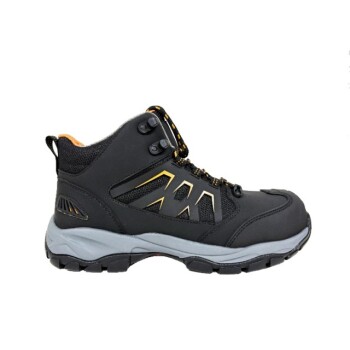
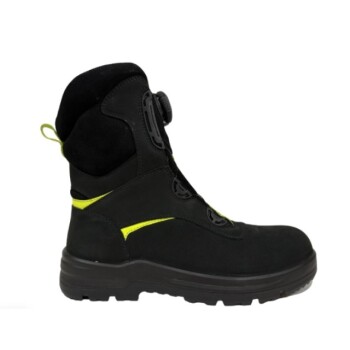
Low-profile correction clips are specifically engineered to resolve the conflict between active medical treatment and strict occupational safety standards. By minimizing physical volume, these devices eliminate the painful pressure points that inevitably occur when standard corrective tools are compressed inside the unyielding shells of industrial safety shoes or tactical boots.
The rigid toe boxes and reinforced uppers of safety footwear often make standard corrective treatments impossible due to pain. Low-profile clips bridge this gap, allowing for uninterrupted treatment without forcing professionals to violate workplace safety protocols.
Overcoming the Geometry of Safety Footwear
Navigating Limited Internal Volume
Industrial boots, particularly those featuring steel or composite toes, possess a fixed internal volume that does not stretch or adapt to the foot.
Standard correction devices add bulk that occupies this scarce space, leading to an impossibly tight fit.
Low-profile clips are designed to occupy minimal volume, ensuring they fit seamlessly within this rigid architecture without compromising the boot's intended sizing.
Eliminating Pressure Hotspots
In a soft sneaker, the shoe material can expand outward to accommodate a bulky clip.
In tactical boots, the rigid structure forces any added bulk inward against the foot.
By reducing the profile of the clip, the design ensures that no additional pressure points are created against the skin, preventing friction, blisters, and bruising during long shifts.
Ensuring Professional Compliance
Preventing Unauthorized Footwear Swaps
A major risk in industrial environments is workers switching to non-compliant, comfortable footwear to escape the pain caused by their corrective devices.
This exposes the worker to injury and the employer to liability.
Low-profile clips remove the source of pain, allowing professionals to wear their required safety equipment for full shifts without discomfort.
Maintaining Treatment Continuity
Corrective treatments often require consistent application to be effective.
Professionals in demanding environments frequently abandon their treatment during work hours because standard devices interfere with their gear.
These specialized clips ensure treatment continuity, allowing the correction process to progress even during active duty in harsh environments.
Common Pitfalls to Avoid
The Risk of Standard Devices
It is critical to understand that standard-profile clips are fundamentally incompatible with rigid safety footwear.
Attempting to force a standard clip into a tactical boot does not just reduce comfort; it creates high-pressure zones that can cause acute injury to the foot.
The "low-profile" designation is not a luxury feature but a mechanical necessity for anyone working in non-pliable footwear.
Making the Right Choice for Your Goal
To successfully combine medical correction with occupational demands, consider the following:
- If your primary focus is Pain Management: Select low-profile clips to ensure the rigid walls of your safety boots do not press the device into your foot, preventing friction injuries.
- If your primary focus is Workplace Compliance: Utilize these clips to eliminate the need to switch to unauthorized, softer footwear, ensuring you remain fully protected and compliant with safety regulations.
By utilizing low-profile designs, you transform a choice between safety and health into a solution that compromises neither.
Summary Table:
| Feature | Standard Correction Clips | Low-Profile Correction Clips |
|---|---|---|
| Footwear Fit | Adds bulk; causes tightness in rigid boots | Occupies minimal volume; fits seamlessly |
| Pressure Points | Creates painful hotspots against steel toes | Eliminates friction, blisters, and bruising |
| Workplace Safety | May lead to non-compliant footwear swaps | Enables full-shift use of required safety gear |
| Treatment Result | Often abandoned due to discomfort | Ensures continuity and faster recovery |
Elevate Your Professional Footwear Solutions with 3515
As a large-scale manufacturer serving global distributors and brand owners, 3515 specializes in high-performance footwear engineered for the most demanding environments. We understand that medical compliance and occupational safety must go hand-in-hand. Our comprehensive production capabilities cover all footwear types, anchored by our flagship Safety Shoes series and extending to tactical boots, outdoor shoes, training shoes, and sneakers.
Whether you need bulk supplies of rigid steel-toe boots or specialized dress & formal shoes, 3515 provides the quality and scale to meet your requirements. Partner with us to offer your customers footwear that supports both health and safety.
Contact 3515 Today to Discuss Your Bulk Requirements
References
- Nina Savania, Michael Harrison‐Blount. A Clinical Investigation to Evaluate the Safety and Performance of a Novel Self-Administered Treatment Kit for Ingrowing Toenail. DOI: 10.4236/jcdsa.2022.121004
This article is also based on technical information from 3515 Knowledge Base .
Related Products
- Advanced KPU Athletic Safety Shoe with Steel Toe Cap Anti-Slip Rotary Lacing System
- Premium Safety Shoes with Rotating Buckle Safety Sneakers
- Premium KPU Athletic Safety Shoes for Wholesale
- Wholesale Mesh Steel Toe Safety Shoes with Dial Closure Factory Production
- Athletic Safety Shoes with Dial Closure & Steel Toe for Wholesale & Custom Manufacturing
People Also Ask
- What are the key differences between steel toe and composite toe caps? Choose the Right Safety for Your Job
- What impact do steel toe caps have on toe skin health? Prevent Friction and Pressure in Your Safety Shoes
- What are the primary protective functions of safety shoes with steel toes in the automotive repair industry?
- What type of safety shoe is recommended for workers exposed to heavy machinery? Steel Toe Boots for Ultimate Protection
- How does defining specific friction interface models in FEA assist in predicting safety shoe toe cap failure modes?