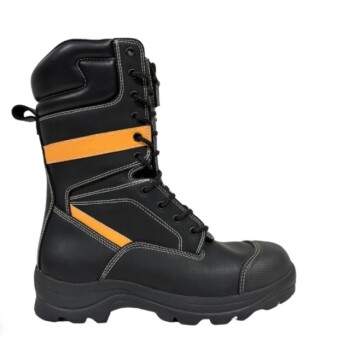
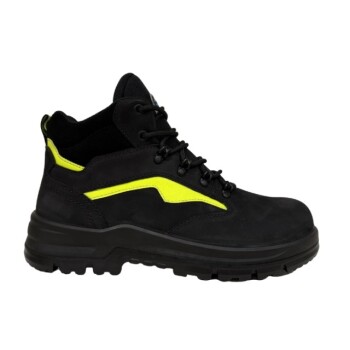
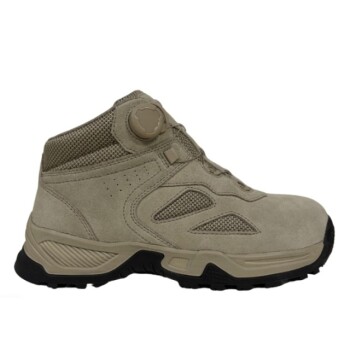
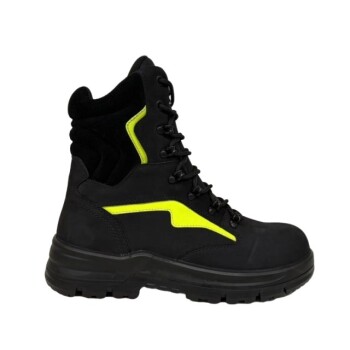
Professional rubber safety boots act as the primary defense line against chemical exposure in agricultural settings. Specifically constructed from impermeable materials like polyvinyl chloride (PVC), these boots create a physical blockade that prevents pesticide droplets and hazardous residues from penetrating the skin of the feet and lower limbs. Because manual spraying involves walking through treated vegetation, these boots are essential for neutralizing the high risk of contact with spray drift and ground contaminants.
The core value of professional PVC boots lies in their ability to hermetically seal off the lower extremities from chemical seepage. By combining high-tube designs with corrosion-resistant materials, they transform a vulnerable exposure zone into a protected environment during plant protection tasks.
The Mechanics of Chemical Isolation
The Role of PVC Material
The effectiveness of these boots stems from the use of polyvinyl chloride (PVC). Unlike standard footwear materials that may absorb liquids, PVC is impermeable. This material property physically blocks the path of pesticide droplets, ensuring they remain on the exterior of the boot rather than reaching the skin.
Defending Against Environmental Residues
During manual spraying, the threat is not just from the nozzle but from the environment itself. Ground vegetation creates a "residue trap" that workers must walk through. Safety boots isolate the feet from these chemical deposits on the ground, preventing absorption through contact.
The Necessity of High-Tube Design
Protection must extend beyond the foot to be effective. High-tube protective boots are designed to shield the lower limbs as well as the feet. This design is critical for preventing chemicals from splashing over the top of the boot or soaking into pant legs during operation.
Durability and Operational Value
Corrosion Resistance
Agricultural environments are chemically harsh and can degrade standard materials quickly. Professional safety boots possess corrosion-resistant properties that allow them to withstand repeated exposure to pesticides. This ensures the protective barrier remains intact over the long term, rather than breaking down after a few uses.
Ease of Adoption
Complexity often hinders safety compliance, but rubber boots offer a straightforward solution. Due to their high durability and relative ease of use, they are frequently the most widely adopted form of personal protective equipment (PPE) among agricultural workers. They provide maximum protection with minimal setup or maintenance.
Critical Considerations for Effectiveness
The "Impermeability" Requirement
Not all rubber boots are created equal; the specific classification of "chemical-resistant" is vital. Users must ensure boots are explicitly made for agricultural chemical use. Relying on generic waterproof boots without verified chemical resistance may lead to material degradation and eventual seepage.
The Gap in Protection
The protective capacity of the boot is absolute only where it covers. If the boot does not feature a sufficiently high tube, or if the pants are not worn correctly over or inside the boot (depending on the specific chemical protocol), the barrier is compromised. The high-tube feature is not optional; it is a functional requirement to counter liquid splashes and spray drift effectively.
Ensuring Optimal Safety in the Field
To maximize skin protection during plant protection tasks, align your equipment choice with your specific exposure risks.
- If your primary focus is active manual spraying: Prioritize high-tube PVC boots to guard against inevitable spray drift and splashes.
- If your primary focus is long-term cost efficiency: Select boots with verified corrosion resistance to ensure the PPE retains its protective properties over many operational cycles.
- If your primary focus is reducing ground contact risks: Ensure the boots provide a certified impermeable physical barrier to isolate skin from vegetation residues.
The right pair of safety boots transforms the lower limbs from a point of vulnerability into a foundation of safety.
Summary Table:
| Feature | Protection Benefit | Practical Impact |
|---|---|---|
| PVC Material | Impermeable chemical barrier | Prevents pesticide absorption through skin |
| High-Tube Design | Extended coverage to lower limbs | Blocks spray drift and liquid splashes |
| Corrosion Resistance | Material integrity maintenance | Long-term durability in harsh environments |
| Physical Blockade | Environmental residue isolation | Protects from contaminated ground vegetation |
Secure Your Supply of Professional Safety Footwear
As a large-scale manufacturer serving distributors and brand owners, 3515 offers comprehensive production capabilities for all footwear types, anchored by our flagship Safety Shoes series. We understand the critical need for reliable protection in agricultural and industrial settings. Our extensive portfolio covers work and tactical boots, outdoor shoes, training shoes, and sneakers, as well as Dress & Formal shoes to meet diverse bulk requirements.
Partner with 3515 to provide your customers with top-tier, corrosion-resistant PVC boots and professional safety footwear. Contact us today to discuss your wholesale needs and benefit from our robust manufacturing heritage.
References
- Summaiya Lari, Babban Jee. Assessment of dermal exposure to pesticides among farmers using dosimeter and hand washing methods. DOI: 10.3389/fpubh.2022.957774
This article is also based on technical information from 3515 Knowledge Base .
Related Products
- Premium Wholesale Waterproof Safety Boots High Performance Protection for Industrial Markets
- High Performance Fire-Retardant Waterproof Safety Boots
- Premium Flame-Retardant Waterproof Safety Boots and Shoes
- Puncture-Resistant Velcro Safety Boots for Wholesale & Custom Manufacturing
- Heavy-Duty Waterproof Nubuck Safety Boots Safety Shoes for Bulk Supply
People Also Ask
- What weather and chemical protections do premium boots offer? Your Complete Guide to Safety & Performance
- Why are waterproof safety boots recommended for certain work environments? Essential Protection for Wet & Hazardous Jobs
- What are the primary protective functions of industrial safety boots in oil palm plantations? Master Rough Terrain Safety
- Why are oil-resistant and anti-slip properties critical for industrial safety boots? Expert Outsole Engineering Guide
- What are the best types of shoes for different gardening conditions? Find Your Perfect Match.