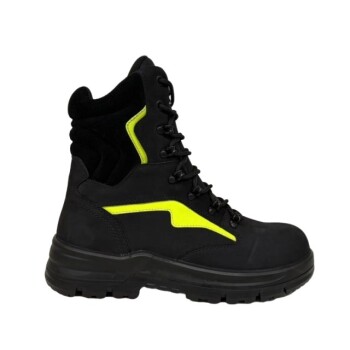
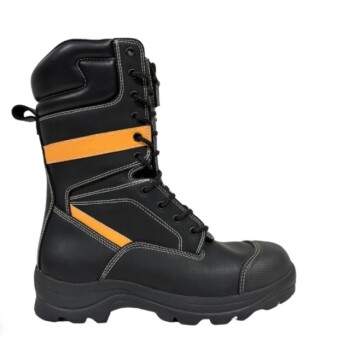
Professional-grade protective footwear functions as a primary defense system against hazardous substances in industrial environments. By acting as an impermeable physical barrier, these specialized shoes prevent toxic chemicals, forklift emissions, and liquid contaminants from adhering to the sole or penetrating the material to reach the worker's skin.
Beyond providing structural safety, high-quality footwear serves as an isolation mechanism. It is essential for preventing "secondary contamination"—the dangerous transfer of toxic substances from active work zones into clean environments like rest areas or offices.
The Mechanics of Contaminant Isolation
Blocking Chemical Penetration
In environments prone to hazardous material leaks, standard footwear offers little resistance to liquid or particulate absorption. Professional-grade footwear utilizes specialized, non-porous materials designed to repel specific industrial chemicals.
This ensures that harmful substances remain on the exterior of the boot. By preventing saturation, the footwear acts as a shield, maintaining the integrity of the worker's skin barrier against corrosives or toxins.
Managing Exposure in Non-Standard Spaces
Industrial settings often include confined spaces or areas with high concentrations of heavy particulates, such as forklift emissions. These heavier contaminants naturally settle on the ground, increasing the exposure risk for the lower extremities.
Specialized footwear addresses this by providing a robust seal against ground-level hazards. This is vital for maintaining long-term worker health in logistics hubs where exhaust particulates settle on walking surfaces.
Controlling Secondary Contamination
Stopping the Spread to Safe Zones
One of the most overlooked risks in industrial hygiene is the migration of contaminants. Workers moving from a warehouse floor to a break room can inadvertently track toxins into "clean" zones.
Protective footwear mitigates this by resisting adhesion. High-quality tread designs and materials are engineered to minimize the amount of debris or chemical residue that sticks to the sole, keeping communal areas safe.
Reducing Exposure Pathways
Effective safety strategies must control all potential exposure pathways. While respirators handle inhalation risks, footwear manages contact and transport risks.
By severing the pathway between the contaminated floor and clean surfaces, professional footwear limits the overall volume of hazardous substances circulating within a facility.
Understanding the Limitations
It Is Not a Total Solution
While protective footwear is effective at blocking contact and preventing tracking, it is only one part of the Personal Protective Equipment (PPE) ecosystem. Footwear cannot mitigate airborne risks.
As noted in broader safety protocols, physical barriers like shoes must be paired with appropriate respiratory protection to address dust or chemical vapors that have become airborne.
Material Specificity Matters
Not all professional footwear is rated for every substance. A boot designed to resist oil may degrade quickly when exposed to specific acids.
Reliable protection requires matching the footwear's specific chemical resistance rating to the actual hazards present in your facility. Using the wrong barrier material can lead to premature failure and sudden exposure.
Making the Right Choice for Your Safety Strategy
Selecting the correct protective footwear requires analyzing the specific flow of your workspace and the nature of your contaminants.
- If your primary focus is preventing cross-contamination: Prioritize footwear with low-adhesion outsoles to ensure toxins are not tracked into clean break rooms or offices.
- If your primary focus is direct worker safety: Select footwear with verified chemical impermeability ratings specific to the liquids or emissions present in your facility.
Investing in application-specific footwear transforms a standard uniform requirement into a critical component of long-term industrial hygiene.
Summary Table:
| Feature | Protection Mechanism | Impact on Safety |
|---|---|---|
| Material Integrity | Non-porous, chemical-resistant barriers | Prevents liquid/toxin absorption into the skin |
| Isolation Tech | Low-adhesion outsole engineering | Stops tracking contaminants into clean zones |
| Ground-Level Defense | Robust seals against heavy particulates | Mitigates exposure to settled forklift emissions |
| Strategic Design | Application-specific resistance ratings | Ensures durability against specific industrial acids/oils |
Secure Your Workforce with Industrial-Grade Protection from 3515
As a large-scale manufacturer serving global distributors and brand owners, 3515 offers comprehensive production capabilities for all footwear types. Our flagship Safety Shoes series is specifically engineered to serve as a primary defense against hazardous substances, ensuring your team remains safe from chemical penetration and cross-contamination.
Whether you need specialized work and tactical boots, outdoor shoes, or bulk orders of dress and formal footwear, 3515 provides the manufacturing scale and expertise to meet your most demanding requirements.
Ready to elevate your industrial hygiene standards? Contact us today to discuss your bulk production needs and discover how our advanced protective footwear can safeguard your business.
References
- Gabriella Cioce, James Davison Hunter. How does informalisation encourage or inhibit collective action by migrant workers? A comparative analysis of logistics warehouses in Italy and hand car washes in Britain. DOI: 10.1111/irj.12359
This article is also based on technical information from 3515 Knowledge Base .
Related Products
- Premium Safety Shoes with Rotating Buckle Safety Sneakers
- Wholesale Customizable Safety Boots Durable & Protective Footwear Manufacturing
- Premium Grain Leather Safety Boots for Bulk Supply
- Premium Wholesale Waterproof Safety Boots High Performance Protection for Industrial Markets
- Premium Suede Sport Safety Shoes for Wholesale & Bulk Orders
People Also Ask
- How do the 3R principles influence green footwear design? Master Sustainable Safety Shoe Manufacturing
- Why should ergonomics and comfort be prioritized when selecting safety shoes? Boost Compliance & Worker Health
- What are the technical advantages of integrating sensors into safety shoes? Achieve Superior Motion Capture Precision
- What are the main safety features of S1-S5 shoes? The 3 Essential Protections Explained
- How do specialized safety shoes protect against battery maintenance injuries? Prevent Impact and Chemical Burns