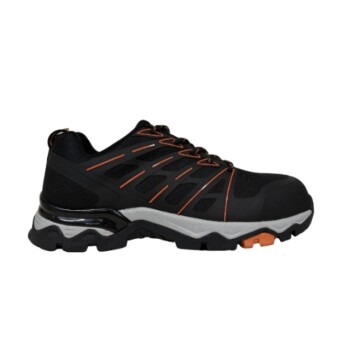
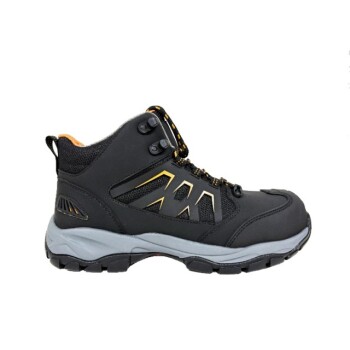
In the context of construction safety, the primary function of an Inertial Measurement Unit (IMU) integrated into footwear is to monitor a worker’s physical posture and movements in real-time. By utilizing an accelerometer and a gyroscope, the device captures acceleration and angular velocity data to automatically identify specific behavioral patterns—such as walking, climbing, or bending—and provide early warnings regarding potential fall risks.
Core Takeaway The IMU acts as the central sensory cortex for smart safety footwear, translating raw kinematic data into actionable safety insights. Its value lies not just in tracking movement, but in distinguishing between safe and unsafe behaviors to proactively prevent workplace accidents.
Deconstructing the IMU's Role
The Physiology of the Sensor
At its hardware core, the IMU typically combines two distinct instruments: an accelerometer and a gyroscope.
The accelerometer measures linear acceleration, detecting how fast the foot is speeding up or slowing down along three axes.
The gyroscope measures angular velocity, capturing the rotational movement of the foot. Together, they provide a complete picture of the limb's dynamics.
Real-Time Behavior Recognition
The raw data collected by the IMU is processed to recognize complex human activities.
In a construction environment, the system effectively "fingerprints" different movements. It can distinguish the rhythmic pattern of walking on flat ground from the distinct mechanics of climbing a ladder or the posture of bending down.
This automated recognition is the foundation for digitizing worker behavior without the need for constant visual supervision.
Preventing Accidents Through Data
Identifying Fall Risks
The most critical application of this technology is fall prevention. By continuously analyzing motion data, the IMU can detect anomalies that precede an accident.
For example, sudden changes in orientation or rapid acceleration vectors can signal a loss of balance or a stumble.
Biomechanical Analysis and Gait Tracking
Beyond immediate safety warnings, the IMU facilitates deep biomechanical analysis.
When placed precisely—often at the center of the shoe upper—the sensor can detect specific events like heel strikes and ground reaction forces.
This allows for the segmentation of the "gait cycle," providing data on step frequency and swing posture. This data helps identify fatigue or irregular walking patterns that may lead to injury over time.
Understanding the Trade-offs
The Challenge of Sensor Drift
IMUs are inherently prone to "drift," where small measurement errors accumulate over time, leading to inaccurate position data.
To counter this, advanced systems employ algorithms like Zero Velocity Update (ZUPT). This technique recalibrates the sensor during the brief moment the foot is stationary on the ground (the stance phase), preventing the trajectory data from diverging.
Complexity of Posture Distinction
While IMUs are excellent at detecting motion, distinguishing between subtly different static postures can be challenging.
For instance, differentiating between a safe squat and a potentially injurious stoop requires high sampling frequencies (e.g., 200 Hz) and sophisticated processing. The hardware must be powerful enough to handle this data load without draining the battery too quickly.
Making the Right Choice for Your Goal
To maximize the value of IMU technology in construction footwear, align the sensor's capabilities with your specific safety objectives.
- If your primary focus is Immediate Accident Prevention: Prioritize systems with high-speed processing capable of triggering real-time alerts for stumbling or sudden altitude changes.
- If your primary focus is Long-Term Worker Health: Look for sensors that excel in gait segmentation and fatigue monitoring to identify ergonomic risks before they cause chronic injury.
By turning standard protective gear into an intelligent diagnostic tool, you transform the shoe from a passive shield into an active safety partner.
Summary Table:
| Feature | Function in Safety Footwear | Key Benefit |
|---|---|---|
| Accelerometer | Measures linear acceleration & speed | Detects sudden stumbles or falls |
| Gyroscope | Measures angular velocity & rotation | Identifies posture changes (climbing/bending) |
| Gait Analysis | Segments the walking cycle | Monitors fatigue and ergonomic risks |
| ZUPT Algorithm | Recalibrates during foot stance | Corrects sensor drift for accurate tracking |
| Real-Time Alerts | Processes kinematic data instantly | Provides early warnings to prevent accidents |
Elevate Your Safety Standards with 3515 Smart Footwear Solutions
As a leading large-scale manufacturer serving global distributors and brand owners, 3515 leverages cutting-edge technology to redefine protective equipment. Our comprehensive production capabilities allow us to integrate advanced features like IMU sensors into our flagship Safety Shoes series, as well as our tactical boots, outdoor shoes, and training sneakers.
Partner with us to provide your customers with more than just a shoe—offer an active safety partner that prevents injuries and tracks performance. Whether you need bulk manufacturing for specialized work boots or high-performance dress shoes, we deliver quality at scale.
Ready to upgrade your product line? Contact us today to discuss your manufacturing needs!
References
- Ran Gao, Chengdong Yi. Review of the Application of Wearable Devices in Construction Safety: A Bibliometric Analysis from 2005 to 2021. DOI: 10.3390/buildings12030344
This article is also based on technical information from 3515 Knowledge Base .
Related Products
- Premium Safety Shoes with Rotating Buckle Safety Sneakers
- Premium Wholesale Tactical Style Safety Shoes Boots with Quick Lacing
- Premium Lightweight Safety Shoes for Wholesale & Bulk Orders
- Premium Grain Leather Safety Boots for Bulk Supply
- Heavy-Duty Waterproof Nubuck Safety Boots Safety Shoes for Bulk Supply
People Also Ask
- What are the technical advantages of integrating sensors into safety shoes? Achieve Superior Motion Capture Precision
- How do specialized safety shoes protect against battery maintenance injuries? Prevent Impact and Chemical Burns
- How do the 3R principles influence green footwear design? Master Sustainable Safety Shoe Manufacturing
- What role do specialized safety shoes play in preventing falls? Engineering Stability in Industrial Environments
- What are the main safety features of S1-S5 shoes? The 3 Essential Protections Explained