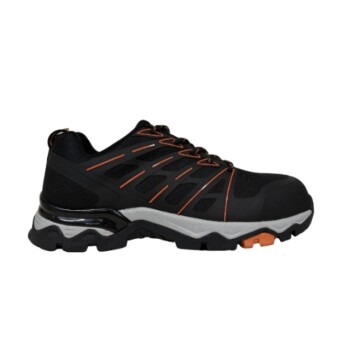
The primary protective function of industrial-grade Safety Shoes relies on a triad of specialized components: impact-resistant toe caps, puncture-resistant mid-soles, and slip-resistant outsoles. These integrated elements work in unison to shield workers from crushing weights, penetrating sharp objects, and hazardous surfaces.
Industrial-grade Safety Shoes are not merely footwear but specialized hardware designed to serve as a critical barrier against mechanical injuries. By integrating reinforced materials into the toe, sole, and tread, they provide indispensable security against the specific risks inherent in construction, engineering, and heavy-duty environments.
The Defense Against Mechanical Impact
Reinforced Toe Caps
The most recognizable feature of a safety shoe is the integrated toe cap. Constructed from high-strength materials such as steel or modern composites, this component is designed to absorb and deflect kinetic energy.
Its primary function is to prevent crushing injuries caused by falling heavy objects, such as vehicle components or construction materials. This hardware support is essential for preserving the structural integrity of the foot in unpredictable environments.
Protection From Below
Puncture-Resistant Mid-soles
Industrial floors are frequently littered with sharp debris, including nails, metal fragments, and glass. The mid-sole of a safety shoe incorporates a specialized barrier designed specifically to resist penetration.
This layer acts as a shield, preventing sharp foreign objects from piercing the sole and injuring the foot. It effectively neutralizes the risk of puncture wounds in environments where visibility of the ground surface may be compromised.
Slip and Wear-Resistant Outsoles
The outsole serves as the primary interface between the worker and the environment. These components are engineered with wear-resistant materials to withstand harsh abrasion from concrete and rough terrain.
Crucially, they provide slip resistance on treacherous surfaces. whether the ground is uneven, wet, or contaminated with oil and hydraulic fluids, the outsole ensures necessary traction to prevent falls and mechanical injuries.
Structural Stability and Support
Stability Systems
Beyond external threats, safety shoes also manage the internal mechanics of the foot. Features such as reinforced shanks and rigid ankle collars provide essential mechanical stability.
This design prevents the displacement of foot bones during heavy loading or while navigating uneven terrain. By stabilizing the lower limb structure, these components reduce the risk of musculoskeletal injuries associated with long-term weight-bearing.
Understanding the Trade-offs
Weight vs. Fatigue
The integration of steel caps and puncture-resistant plates inevitably adds weight to the footwear. While this maximizes protection, it can lead to increased leg fatigue over the course of a long shift compared to standard footwear.
Rigidity vs. Flexibility
The materials required to stop a nail or crush impact are inherently rigid. This necessary stiffness can limit the natural flexion of the foot, potentially altering gait mechanics and requiring a "break-in" period for the user.
Making the Right Choice for Your Environment
Selecting the correct safety footwear requires matching specific components to the hazards present in your workspace.
- If your primary focus is heavy construction: Prioritize puncture-resistant mid-soles and steel toe caps to defend against nails and falling debris.
- If your primary focus is automotive repair: Look for slip-resistant outsoles specifically rated for oil and hydraulic fluids to maintain traction on slick workshop floors.
- If your primary focus is uneven terrain: Ensure the boot features a reinforced shank and ankle collar to maintain stability and prevent sprains.
Properly selected safety shoes are the foundational hardware that turns a potentially career-ending accident into a minor incident.
Summary Table:
| Protective Component | Primary Function | Typical Material Used |
|---|---|---|
| Reinforced Toe Cap | Absorbs/deflects impact from falling objects | Steel, Composite, Aluminum |
| Puncture-Resistant Mid-sole | Prevents sharp debris from piercing the sole | Steel plate, Kevlar, Aramid |
| Slip-Resistant Outsole | Provides traction on wet, oily, or uneven surfaces | Rubber, TPU, PU |
| Stability Shank/Collar | Prevents bone displacement & ankle sprains | Steel, Nylon, Hardened Plastic |
Partner with 3515 for Premium Industrial Footwear Solutions
As a large-scale manufacturer serving distributors and brand owners, 3515 offers comprehensive production capabilities for all footwear types, anchored by our flagship Safety Shoes series. Our extensive portfolio covers work and tactical boots, outdoor shoes, training shoes, and sneakers, as well as Dress & Formal shoes to meet your diverse bulk requirements.
We provide our partners with high-durability products that meet international safety standards, ensuring your customers receive the ultimate protection against mechanical risks.
Ready to elevate your inventory with world-class safety footwear? Contact our expert team today to discuss custom manufacturing and bulk orders.
References
- Alberto Arceri, Cesare Faldini. Safety Footwear Impact on Workers’ Gait and Foot Problems: A Comparative Study. DOI: 10.3390/clinpract14040120
This article is also based on technical information from 3515 Knowledge Base .
Related Products
- Premium Suede Sport Safety Shoes for Wholesale & Bulk Orders
- Premium Lightweight Safety Shoes for Wholesale & Bulk Orders
- Wholesale Anti-Smash & Puncture-Proof Safety Shoes Custom Manufacturing for Brands
- Premium KPU Injection Athletic Style Safety Shoes
- Premium Safety Shoes with Rotating Buckle Safety Sneakers
People Also Ask
- What are the primary functions of professional safety shoes? Maximize Safety in Water Supply Confined Spaces
- What industries have specific OSHA footwear requirements? Ensure Compliance & Protect Your Workforce
- What role do specialized safety shoes play in preventing falls? Engineering Stability in Industrial Environments
- What are the main safety features of S1-S5 shoes? The 3 Essential Protections Explained
- How do specialized safety shoes protect against battery maintenance injuries? Prevent Impact and Chemical Burns