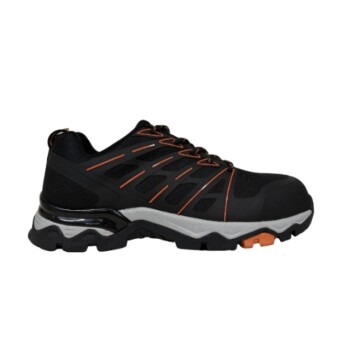
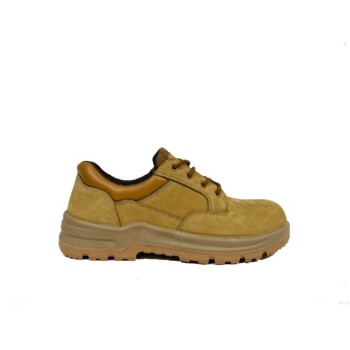
The mechanical coupling between foot and footwear is the determining factor in worker stability. Tightening safety shoe laces serves to minimize foot sliding within the shoe, creating a unified interface between the worker and the ground. This integration is not merely about comfort; it is a critical safety protocol that reduces body sway and directly mitigates the risk of industrial falls.
Core Takeaway Safety shoes function as a stability system only when the foot is firmly secured. By tightening laces to achieve foot-shoe integration, you significantly reduce the sway of the body's center of gravity, improving balance and preventing injuries caused by gait instability.
The Biomechanics of Foot-Shoe Integration
Minimizing Internal Movement
The primary mechanical function of tightened laces is to stop the foot from sliding inside the footwear.
When the foot shifts independently of the shoe, stability is compromised. Tight lacing locks the foot in place, ensuring the shoe reacts instantly to the user's movement.
Enhancing Mechanical Coupling
Proper tension creates a solid link between the foot and the floor.
This mechanical coupling ensures that the traction features of the outsole are effectively utilized. Without this integration, the benefits of slip-resistant soles are diminished by internal instability.
Reducing Center of Gravity Sway
Stability can be quantified by how much the body's Center of Gravity (COG) moves.
Tightened laces have been shown to significantly reduce both the sway velocity and the path length of the COG. This means the worker's body makes fewer, smaller, and slower micro-adjustments to maintain balance.
Impact on Industrial Safety
Improving Static and Dynamic Stability
Workers require stability both when standing still (static) and when moving (dynamic).
Foot-shoe integration enhances performance in both states. It anchors the worker during stationary tasks and provides consistent support during movement across complex environments.
Preventing Fall-Related Injuries
Gait instability is a leading cause of workplace accidents.
By stabilizing the COG and reducing sway, tight laces directly address the root causes of many falls. This simple adjustment acts as a preventative measure against injury in hazardous industrial zones.
Common Pitfalls to Avoid
Relying Solely on Shoe Construction
A common error is assuming high-quality footwear guarantees stability regardless of fit.
Even the most advanced safety shoe loses its stabilizing properties if the laces are loose. The protective mechanics rely entirely on the tension applied by the user.
Inconsistent Tension Application
Laces that are tight at the start of a shift may loosen, reducing the mechanical coupling over time.
To maintain safety standards, the integration must be checked and adjusted. Allowing laces to slacken reintroduces foot sliding and increases the velocity of body sway.
How to Apply This to Your Safety Protocol
Safety is an active process, not a passive product feature. To maximize the effectiveness of your industrial footwear:
- If your primary focus is Stationary Work: Ensure laces are tightened to minimize sway velocity, reducing fatigue and imbalance while standing in place.
- If your primary focus is Active Mobility: Prioritize a secure fit to minimize path length and internal sliding, ensuring the shoe moves in perfect sync with the foot during transit.
Treat the tightening of laces as a mandatory calibration of your safety equipment, turning passive footwear into an active stability system.
Summary Table:
| Feature | Effect of Tightened Laces | Safety Benefit |
|---|---|---|
| Internal Movement | Minimizes foot sliding inside the shoe | Prevents blisters and gait instability |
| Mechanical Coupling | Creates a unified foot-shoe-ground interface | Maximizes the effectiveness of slip-resistant outsoles |
| Center of Gravity (COG) | Reduces sway velocity and path length | Enhances balance and reduces physical fatigue |
| Stability Type | Improves both static and dynamic stability | Ensures safety during both stationary tasks and transit |
Maximize Your Workforce Safety with 3515 Footwear Solutions
At 3515, we understand that a safety shoe is only as effective as its fit. As a large-scale manufacturer serving global distributors and brand owners, we provide high-performance footwear engineered for perfect foot-shoe integration. Our comprehensive production capabilities allow us to deliver professional-grade Safety Shoes, tactical boots, and industrial footwear that prioritize biomechanical stability and worker protection.
Partner with 3515 to access:
- Flagship Safety Series: Advanced designs optimized for stability and impact resistance.
- Diverse Portfolio: From rugged work boots and sneakers to polished Dress & Formal shoes.
- Bulk Manufacturing Excellence: Reliable supply chains and custom solutions tailored to your brand's requirements.
Don't let poor fit compromise safety. Contact us today to discuss your bulk footwear needs and discover how 3515 can provide the stability your customers demand!
References
- S.-P. Cho, Won-Seob Shin. Effect of Shoelace Tightness in Safety Shoes on Static and Dynamic Balance and Gait Ability in Industrial Workers. DOI: 10.14474/ptrs.2024.13.4.416
This article is also based on technical information from 3515 Knowledge Base .
Related Products
- Premium Suede Sport Safety Shoes for Wholesale & Bulk Orders
- Premium Lightweight Safety Shoes for Wholesale & Bulk Orders
- Wholesale Anti-Smash & Puncture-Proof Safety Shoes Custom Manufacturing for Brands
- Premium KPU Injection Athletic Style Safety Shoes
- Premium Safety Shoes with Rotating Buckle Safety Sneakers
People Also Ask
- What industries have specific OSHA footwear requirements? Ensure Compliance & Protect Your Workforce
- What are the primary functions of professional safety shoes? Maximize Safety in Water Supply Confined Spaces
- What role do specialized safety shoes play in preventing falls? Engineering Stability in Industrial Environments
- How do complex outsole tread designs in safety shoes work with coated floors? Master Slip Resistance Engineering
- How do the 3R principles influence green footwear design? Master Sustainable Safety Shoe Manufacturing