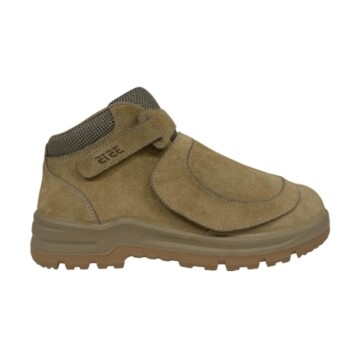
At their core, modern safety boots offer a specialized system of protection against common workplace hazards. The most critical features include reinforced safety toes for impact, penetration-resistant midsoles to guard against sharp objects, slip-resistant outsoles for traction, and options for guarding against electrical, chemical, and environmental dangers.
The most effective safety boot isn't the one with the most features; it's the one with the right features for your specific environment. Understanding the distinction between different types of protection is crucial for ensuring true safety on the job.
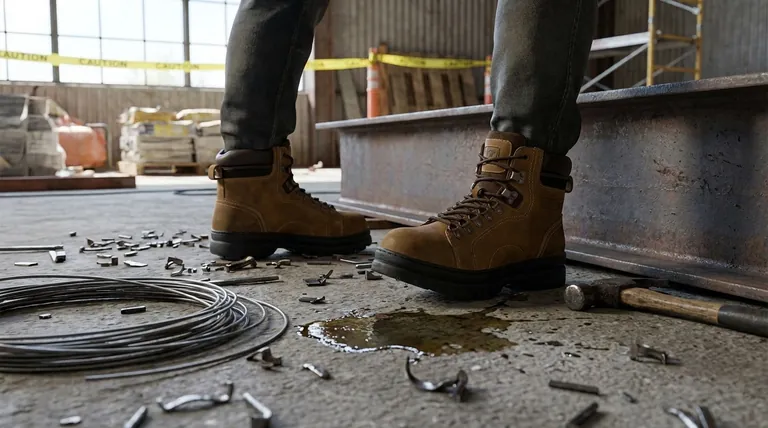
Protection from Physical Impact & Compression
The most recognized feature of a safety boot is its ability to protect your feet from being crushed or struck by heavy objects.
The Essential Toe Cap
A reinforced toe cap is the primary defense against falling debris, compression from rolling equipment, and other direct impacts. This feature is designed to prevent broken bones and severe crush injuries.
Steel vs. Composite Materials
Steel toe caps are the traditional standard, offering excellent resistance to impact and puncture. Composite toe caps (made from materials like Kevlar, carbon fiber, or plastic) are lighter, do not conduct electricity, and provide better insulation in extreme temperatures.
Beyond the Toe: Guards and Reinforcement
Some boots offer extended protection. A metatarsal guard sits on top of the boot to protect the delicate bones in the upper foot, while reinforced heel and ankle areas provide stability and defense against side impacts.
Shielding from Puncture and Penetration
Hazards on the ground are just as dangerous as those from above. Protection from below is a critical, non-negotiable feature in many work environments.
The Role of the Midsole Plate
A penetration-resistant plate is embedded in the midsole of the boot, directly under your foot. Its sole purpose is to stop sharp objects like nails, screws, or metal shards from piercing through the sole and injuring your foot.
Common Midsole Materials
Like toe caps, these plates are typically made of steel for maximum puncture resistance. Flexible, non-metallic options made from materials like Kevlar are also common, offering greater comfort and lighter weight without compromising safety.
Mitigating Environmental & Chemical Hazards
A modern safety boot must also function as a barrier between the worker and the specific environmental conditions of their job site.
Slip-Resistant Outsoles
Traction is a fundamental safety feature. Soles are often rated for their slip resistance on different surfaces, with SRC being the highest rating, indicating it has passed both tests on ceramic tiles with soap (SRA) and steel floors with glycerol (SRB).
Electrical Hazard (EH) Protection
Boots with an EH rating are designed to impede the flow of electricity. According to ASTM standards, they must be able to withstand 18,000 volts at 60 Hz for one minute in dry conditions with no significant current leakage, protecting workers from accidental contact with live electrical circuits.
Chemical, Fuel, and Oil Resistance
For automotive, industrial, or chemical handling jobs, the boot's outsole and upper materials must be resistant to degradation from contact with oils, fuels, and various chemicals. This prevents the boot from breaking down and ensures a longer lifespan.
Temperature and Weatherproofing
Many boots incorporate features for environmental comfort and safety. This includes full waterproofing for wet conditions, as well as cold or heat insulation to protect workers in extreme temperatures.
Understanding the Trade-offs
Choosing safety footwear involves balancing competing needs. More protection in one area can sometimes mean a compromise in another.
Steel vs. Composite: The Core Debate
Steel offers maximum protection at a lower cost but is heavier and conducts temperature. Composite is lighter, better for metal-free environments, and provides insulation, but can be bulkier and more expensive.
The Cost of Specialization
A boot with every single protective feature would be incredibly heavy, stiff, and expensive. The goal is not to find a boot that does everything, but to identify the primary hazards of your job and select the boot that specifically addresses them.
Waterproofing vs. Breathability
A fully waterproof membrane is excellent for keeping feet dry from external moisture. However, this can sometimes reduce breathability, trapping sweat and leading to discomfort over long shifts in warm conditions.
Selecting the Right Protection for Your Environment
Your choice should be dictated entirely by the risks you face daily. Analyze your workplace to determine your non-negotiable safety needs.
- If your primary focus is construction or manufacturing: Prioritize a certified toe cap (steel or composite) for impact and a puncture-resistant midsole.
- If your primary focus is electrical work: You must select boots with a certified Electrical Hazard (EH) rating to protect against shock.
- If your primary focus is working outdoors or in wet conditions: Look for boots with a high slip-resistance rating (SRC) and proven waterproofing.
- If your primary focus is around vehicles or machinery: Ensure the outsole is explicitly rated for resistance to oil and fuel.
By matching the boot's features to your specific hazards, you transform it from simple footwear into a critical piece of personal protective equipment.
Summary Table:
| Protection Type | Key Feature | Common Applications |
|---|---|---|
| Impact & Compression | Reinforced Toe Cap (Steel/Composite) | Construction, Manufacturing |
| Puncture & Penetration | Midsole Plate (Steel/Kevlar) | Construction, Demolition |
| Slip & Fall Prevention | Slip-Resistant Outsole (SRC Rating) | Food Service, Outdoor Work |
| Electrical Hazards | EH-Rated Construction | Electrical Work, Utilities |
| Chemical/Environmental | Oil/Fuel Resistance, Waterproofing | Automotive, Chemical Handling |
Need safety boots that match your specific workplace hazards?
As a large-scale manufacturer, 3515 produces a comprehensive range of industrial footwear for distributors, brand owners, and bulk clients. Our production capabilities encompass all types of safety shoes and boots, ensuring you get the precise protection your team needs—without paying for unnecessary features.
Contact us today for a consultation and let us help you equip your workforce with durable, compliant, and purpose-built safety footwear.
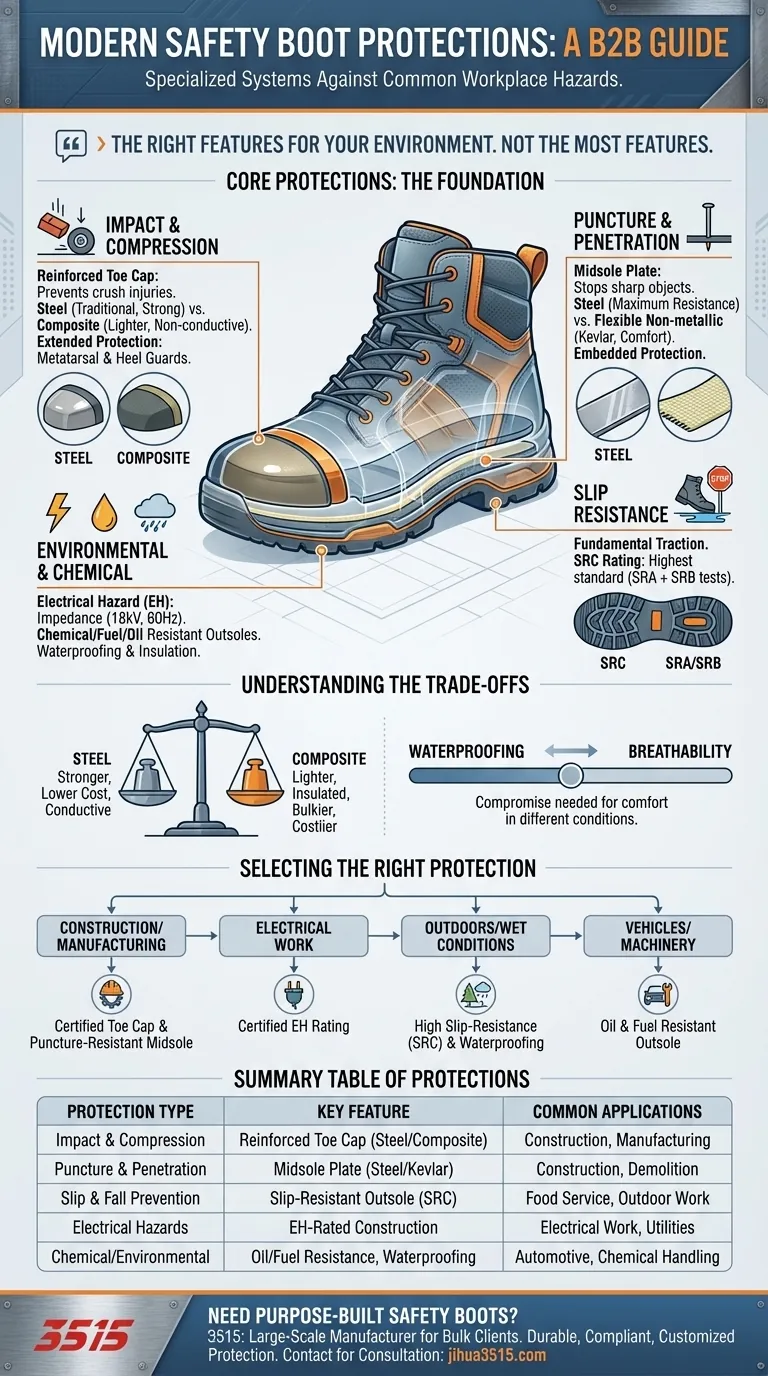
Visual Guide
Related Products
- Puncture-Resistant Velcro Safety Boots for Wholesale & Custom Manufacturing
- Wholesale Durable Safety Boots | Custom Steel Toe & Puncture-Resistant Manufacturing
- Premium Grain Leather Safety Boots for Bulk Supply
- Heavy-Duty Waterproof Nubuck Safety Boots Safety Shoes for Bulk Supply
- Premium High-Cut Waterproof Safety Boots Manufacturing & Wholesale Solutions
People Also Ask
- Why are industrial safety boots with steel toes necessary for machine operators? Essential Foot Protection for Safety
- What are the characteristics of steel toe safety boots? Maximum Protection, Key Trade-offs
- Is it true that steel toes can cause toes to get cut off? Debunking the Dangerous Myth
- What are the primary safety functions of safety boots with steel-toe designs? Essential Protection for Industry
- What do the symbols M, F, I, and C represent on safety toe boots? Decode ASTM F2413 for Maximum Protection