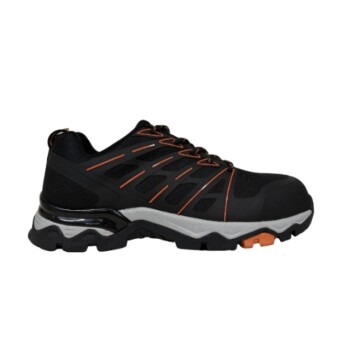
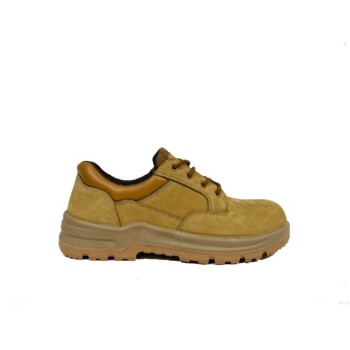
The calculation of peak Required Coefficient of Friction (RCOF peak) serves as the primary metric for identifying the moments during a stride when a user is most vulnerable to slipping. By pinpointing that maximum grip demand occurs specifically during early heel strike and late toe-off, designers can strategically reinforce the anti-slip structures of safety shoes and tactical boots at these exact contact points to prevent falls.
Core Takeaway RCOF peak data transforms outsole design from a general "grip" problem into a targeted safety strategy. Because physical fatigue significantly increases the friction required to stay upright, designers use this calculation to engineer shoes that compensate for tired muscles, mitigating slip risks during high-intensity labor or emergency evacuations.
Targeting Critical Gait Phases
Identifying Vulnerable Moments
The RCOF peak represents the absolute maximum demand for friction between the shoe and the floor.
Research indicates this demand is not constant; it spikes during early heel strike and late toe-off. These are the transition points where weight transfer is most dynamic and stability is most compromised.
The Impact of Physical Fatigue
A critical insight derived from RCOF calculations is the correlation between fatigue and slip risk.
As a worker becomes physically tired, their gait changes, causing the RCOF peak to increase significantly. This means a tired worker requires more grip to prevent a fall than a rested one.
Designing for the "Worst Case" Scenario
Designers do not build safety footwear for ideal conditions; they build it for the fatigued state identified by RCOF data.
By using the elevated RCOF peak values associated with fatigue, engineers ensure the shoe provides a safety margin that protects the wearer even at the end of a long shift or during a high-stress emergency.
Optimizing Outsole Construction
Strategic Tread Reinforcement
RCOF peak data informs the physical layout of the outsole tread pattern.
Instead of a uniform pattern, designers apply targeted anti-slip structures specifically at the heel and toe regions. This ensures maximum traction is available exactly when the biomechanical demand is highest.
Material Formulation and Surface Adaptation
Beyond geometry, RCOF data helps optimize the rubber formulations used in the outsole.
By analyzing RCOF changes across different inclines and wet surfaces, manufacturers can select compounds that maintain the necessary friction coefficient under peak pressure, ensuring the safety factor remains high regardless of the environment.
Understanding the Trade-offs
Grip vs. Durability
Designing for a high RCOF peak often requires softer, stickier rubber compounds to maximize surface contact.
The trade-off is that these softer materials tend to wear down faster on rough surfaces like concrete. A shoe optimized purely for peak friction may have a shorter service life than a general-purpose boot.
Traction vs. Mobility
Aggressive tread patterns designed to meet high RCOF demands can add weight and bulk to the boot.
Excessive weight can paradoxically contribute to increased fatigue, which is the very factor that raises RCOF demand. Designers must balance the need for extreme grip with the need to keep the footwear lightweight and agile.
Making the Right Choice for Your Goal
RCOF peak data allows for specialized footwear selection based on the specific demands of the operational environment.
- If your primary focus is High-Intensity Labor: Prioritize boots with reinforced heel and toe tread patterns, as these directly counteract the increased slip risk caused by physical fatigue.
- If your primary focus is Variable Terrain: Look for outsoles where RCOF data has influenced rubber formulation, ensuring consistent grip across wet or inclined surfaces.
By aligning shoe design with the biomechanics of fatigue, we move from passive protection to active stability support.
Summary Table:
| Gait Phase | RCOF Demand Level | Design Optimization Strategy |
|---|---|---|
| Early Heel Strike | Peak (Critical) | Reinforce heel tread and impact-absorbing rubber compounds |
| Mid-Stance | Lower | Focus on stability and overall support |
| Late Toe-Off | Peak (Critical) | Aggressive tread patterns for push-off traction |
| Fatigued State | Increased Peak | Higher safety margins and high-friction material selection |
As a large-scale manufacturer serving distributors and brand owners, 3515 leverages biomechanical insights like RCOF peak to engineer high-performance footwear. We offer comprehensive production capabilities for all footwear types, anchored by our flagship Safety Shoes series. Our portfolio includes work and tactical boots, outdoor shoes, training shoes, and sneakers, as well as Dress & Formal shoes designed to meet your bulk requirements. Partner with us to provide your customers with footwear that offers superior stability and active slip protection. Contact us today to discuss your production needs!
References
- Amitava Halder, Chuansi Gao. Gait Biomechanics While Walking Down an Incline After Exhaustion. DOI: 10.1007/s10694-023-01402-x
This article is also based on technical information from 3515 Knowledge Base .
Related Products
- Premium Suede Sport Safety Shoes for Wholesale & Bulk Orders
- Premium Lightweight Safety Shoes for Wholesale & Bulk Orders
- Wholesale Anti-Smash & Puncture-Proof Safety Shoes Custom Manufacturing for Brands
- Premium KPU Injection Athletic Style Safety Shoes
- Premium Safety Shoes with Rotating Buckle Safety Sneakers
People Also Ask
- What industries have specific OSHA footwear requirements? Ensure Compliance & Protect Your Workforce
- What are the primary functions of professional safety shoes? Maximize Safety in Water Supply Confined Spaces
- What role do specialized safety shoes play in preventing falls? Engineering Stability in Industrial Environments
- What are the technical advantages of integrating sensors into safety shoes? Achieve Superior Motion Capture Precision
- What core functions do professional safety shoes serve? Enhance Construction & Industrial Safety Standards