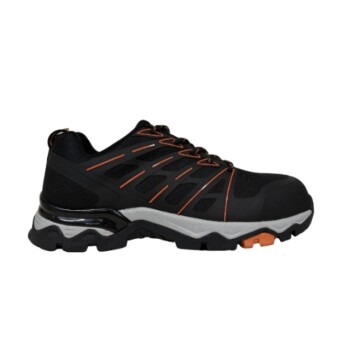
Balancing protective performance with flexibility is critical because overly rigid footwear creates new safety risks. While robust structures defend against impact and compression, heavy or stiff designs often lead to premature worker fatigue. Furthermore, a lack of flexibility can hinder natural movement, introducing hazards such as tripping or reduced reaction times in dynamic industrial environments.
The ideal safety shoe safeguards against external threats without becoming a burden to the wearer. By utilizing lightweight materials and flexible construction, manufacturers can maintain core protective functions while preventing the physical exhaustion and restricted mobility that compromise safety.
The Consequence of Rigidity
Reducing Premature Fatigue
Heavy protective structures act as a constant weight on the worker.
Over the course of a long shift, this excess weight accelerates physical exhaustion. A fatigued worker has slower reaction times and reduced situational awareness, which indirectly increases the probability of accidents.
Preventing Movement-Induced Hazards
Protection should not come at the cost of agility.
If a shoe lacks flexibility, it forces the foot into unnatural positions during movement. This stiffness can restrict range of motion, making it difficult to navigate uneven terrain or react quickly to workplace dangers.
How Flexibility Enhances Efficiency
Maintaining Core Protective Functions
Modern safety shoe designs prove that protection does not require bulk.
Optimized designs use lightweight materials to provide necessary impact and compression resistance. This allows the shoe to absorb shocks effectively without the "brick-like" feel of older safety footwear.
Ensuring Operational Efficiency
Workers in diverse environments need to move freely to perform tasks well.
Flexible construction allows the shoe to bend with the foot, rather than fighting against it. This ensures that workers remain comfortable and efficient, maintaining high productivity levels throughout their working hours.
Understanding the Trade-offs and Pitfalls
The "Break-in" Myth
A common error is selecting rigid safety shoes assuming they will soften over time.
Safety shoes do not break in. Unlike casual footwear, the protective caps and plates are static; if the shoe restricts flexibility or causes discomfort in the store, it will do so on the job site.
Specificity Over Generality
Flexibility must be weighed against the specific hazards of the job.
A shoe designed for maximum flexibility (like a warehouse trainer) may lack the puncture resistance required for a construction site. Prioritizing flexibility without considering specific threats like chemicals, electrical hazards, or slick floors can leave the worker vulnerable.
Making the Right Choice for Your Goal
To select the correct footwear, you must audit the specific movements and hazards involved in the daily tasks.
- If your primary focus is High-Activity Logistics: Prioritize lightweight materials and flexible soles to minimize fatigue caused by constant walking.
- If your primary focus is Heavy Construction: Prioritize puncture resistance and ankle support, ensuring the fit is wide enough to accommodate foot spread without relying on flexibility for comfort.
- If your primary focus is Task-Specific Work (e.g., Flooring): Ensure the shoe has toe-cap protection suitable for kneeling and a sole flexible enough for frequent position changes.
True safety is achieved when the footwear protects the foot without impeding the worker's ability to move.
Summary Table:
| Feature | Impact of High Flexibility | Impact of High Protection |
|---|---|---|
| Weight | Lightweight for reduced fatigue | Heavier build for maximum defense |
| Mobility | Enhances agility and reaction time | Provides stability and support |
| Best For | Logistics, warehouse, high-activity | Heavy construction, puncture risks |
| Risk Factor | Potential lack of specific barrier | Potential for premature physical fatigue |
Partner with 3515 for High-Performance Footwear Solutions
At 3515, we understand that true safety requires a perfect harmony between uncompromising protection and ergonomic flexibility. As a large-scale manufacturer serving global distributors and brand owners, we offer comprehensive production capabilities tailored to your specific industrial needs.
From our flagship Safety Shoes series to work and tactical boots, outdoor shoes, and formal dress footwear, our portfolio is designed to meet diverse bulk requirements. Our advanced manufacturing processes ensure that your workers or customers benefit from lightweight materials that reduce fatigue without sacrificing core protective functions.
Ready to upgrade your inventory or workforce protection? Contact us today to discuss your bulk manufacturing needs
References
- Muhammad Adithya Sasmitha, Triana Srisantyorini. Pelatihan dan Pengawasan sebagai Upaya Meningkatkan Kepatuhan Penggunaan Alat Pelindung Diri (APD) untuk Menurunkan Tingkat Kecelakaan Kerja. DOI: 10.51888/jpmeo.v3i3.325
This article is also based on technical information from 3515 Knowledge Base .
Related Products
- Premium Suede Sport Safety Shoes for Wholesale & Bulk Orders
- Premium Lightweight Safety Shoes for Wholesale & Bulk Orders
- Wholesale Anti-Smash & Puncture-Proof Safety Shoes Custom Manufacturing for Brands
- Premium KPU Injection Athletic Style Safety Shoes
- Premium Safety Shoes with Rotating Buckle Safety Sneakers
People Also Ask
- What are the primary functions of professional safety shoes? Maximize Safety in Water Supply Confined Spaces
- What industries have specific OSHA footwear requirements? Ensure Compliance & Protect Your Workforce
- What role do specialized safety shoes play in preventing falls? Engineering Stability in Industrial Environments
- Why are customized foot sensors or professional safety shoes incorporated into biomechanical testing? Precision Insights
- Why should ergonomics and comfort be prioritized when selecting safety shoes? Boost Compliance & Worker Health