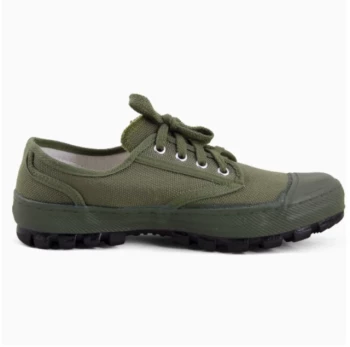
To extend the lifespan of your work shoes, you must adopt a proactive maintenance routine. The most effective strategy combines regular cleaning, proper storage in a cool and dry place, and, most critically, rotating between at least two pairs to allow each one a full 24 hours to dry and recover its shape.
Your work shoes are not just footwear; they are a critical investment in your daily safety and comfort. Shifting your mindset from seeing them as disposable to treating them as essential tools that require regular maintenance is the single most important factor in maximizing their lifespan.
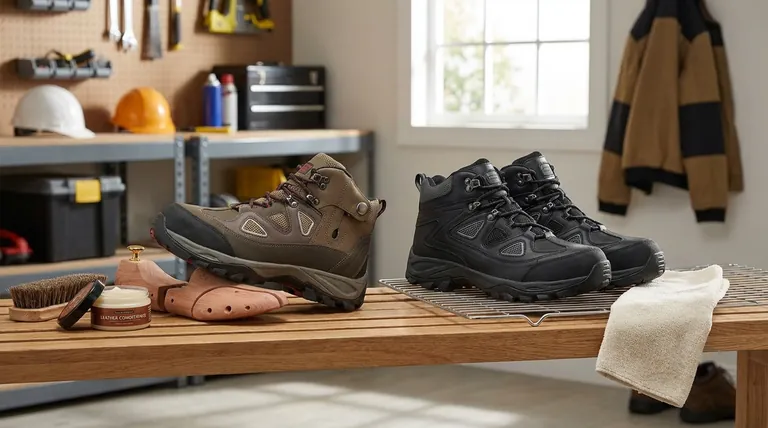
The Foundation of Durability: More Than Just Appearance
Proper care for work shoes goes far beyond keeping them looking good. It's about preserving the structural integrity of the materials, which directly impacts their safety features and your comfort.
Protecting Material Integrity
Dirt, debris, and moisture are the primary enemies of your work shoes. Caked-on grime can abrade materials like leather, while constant dampness accelerates the breakdown of glues and fabrics, leading to rot and mold.
Preserving Structure and Support
Every step you take compresses the shoe's cushioning and support structures. Without adequate time to decompress and dry out, these materials lose their shape and supportive qualities, leading to fatigue and discomfort.
Maintaining Critical Safety Features
For many, work shoes are a key piece of personal protective equipment. Worn-out soles lose their slip resistance, and an exposed toe cap means the shoe's protective function is compromised and it's time for a replacement.
A Practical Maintenance Cycle
A consistent routine is more effective than occasional, intensive cleaning. By breaking down care into simple daily, weekly, and periodic tasks, you can dramatically extend the life of your footwear.
The Daily Habit: Rotation and Rest
The single most effective habit is to own and rotate at least two pairs of work shoes. This allows one pair to rest and dry completely while you wear the other.
Leather, in particular, can take up to 24 hours to fully release the moisture absorbed throughout the day. This rest period is crucial for preventing material breakdown.
Using shoe trees after each wear helps absorb residual moisture and, just as importantly, helps the shoe maintain its proper shape as it dries, preventing creases and cracks.
Weekly Task: Cleaning and Inspection
Set aside a few minutes each week to thoroughly clean your shoes. Brush off all loose dirt and debris, paying close attention to the seams and the area where the sole meets the upper.
This weekly cleaning is also the perfect time to inspect the shoes for signs of significant wear, such as cracked soles, thinning leather, or a loss of grip on the outsole.
Periodic Care: Conditioning and Waterproofing
For leather shoes, applying a conditioner periodically is essential. This replenishes the natural oils in the leather, keeping it supple and preventing it from drying out and cracking.
Applying a waterproofing treatment creates a barrier against moisture, which is one of the most common causes of premature shoe deterioration.
Understanding the Trade-offs: Repair vs. Replace
Not all work shoes are created equal. Understanding how your shoes are constructed helps you make smarter decisions about long-term care.
The Modern Disposable Model
Most work shoes today are built to last for a specific period, often around a year with heavy use. They are not designed to be easily repaired.
Once key safety features fail—such as a cracked sole or an exposed steel toe—the shoe must be replaced.
The Long-Term Investment Model
Some high-quality footwear, particularly boots with a Goodyear welt construction, are built for longevity. This construction method allows the soles to be removed and replaced by a cobbler.
While the initial cost is higher, a pair of well-maintained, resoleable boots can last for many years, even decades, making them a sound long-term investment.
How to Apply This to Your Goal
Your approach to shoe care should align with your budget, your job's demands, and the type of footwear you own.
- If your primary focus is maximizing value on a budget: The most impactful action is rotating two affordable pairs and keeping them clean and dry.
- If your primary focus is long-term durability and you can invest more: Choose a high-quality, repairable shoe and commit to a full maintenance routine of cleaning, conditioning, and resoling when needed.
- If your primary focus is safety in a hazardous environment: Prioritize regular inspection for wear on soles and toe caps, replacing shoes immediately when their protective features are compromised.
Your work shoes are essential tools; maintaining them properly ensures they protect you effectively for their entire functional life.
Summary Table:
| Maintenance Task | Frequency | Key Benefit |
|---|---|---|
| Rotate Pairs | Daily | Allows 24hrs to dry & recover shape |
| Use Shoe Trees | After each wear | Absorbs moisture, maintains shape |
| Clean & Inspect | Weekly | Removes damaging grime, checks for wear |
| Condition Leather | Periodically | Prevents drying and cracking |
| Waterproofing | Periodically | Creates a barrier against moisture |
Ready to Invest in Durable, Long-Lasting Work Footwear?
As a large-scale manufacturer, 3515 produces a comprehensive range of high-quality safety boots and work shoes designed for durability. Our footwear is built to meet the demanding needs of distributors, brand owners, and bulk clients across various industries.
Let us help you equip your team with reliable footwear that stands the test of time. Contact us today to discuss your requirements and explore our extensive catalog.
Visual Guide

Related Products
- Durable Canvas Work Shoes with Rubber Lug Sole | Wholesale Manufacturer
- Durable Goodyear Welt Leather Work Boots for Wholesale & Private Label
- Durable Leather Work Boots for Wholesale & Custom OEM Manufacturing
- Durable Leather Work Boots for Wholesale & Custom Manufacturing
- Durable Leather Safety Boots for Wholesale & Custom OEM Manufacturing
People Also Ask
- What are the properties of canvas as a shoe material? A Guide to Lightweight Comfort & Style
- Why is the selection of high-strength fabric materials necessary in the production of canvas shoes and training shoes?
- What types of jobs are canvas work boots suitable for? Ideal for Light-Duty, High-Mobility Roles
- Can canvas shoes be worn in rainy conditions? The Truth About Water Resistance
- What are the functional advantages of choosing rubber soles over leather soles for work boots? Superior Safety & Durability