For manufacturing workers, the most critical comfort features in protective footwear are superior shock absorption, proper arch support, and a design that allows for natural foot movement. These elements work together to combat the physical strain of standing for long hours on hard, unforgiving surfaces, directly impacting your daily well-being and endurance.
True footwear comfort is not about excessive softness; it's about a biomechanically correct design that supports your foot's structure while meeting the non-negotiable safety requirements of your specific job.
The Foundation of Comfort: Support and Fit
The architecture of your boot is the primary factor determining whether you end the day feeling fatigued or supported. Cushioning alone is not enough.
Why Arch Support is Non-Negotiable
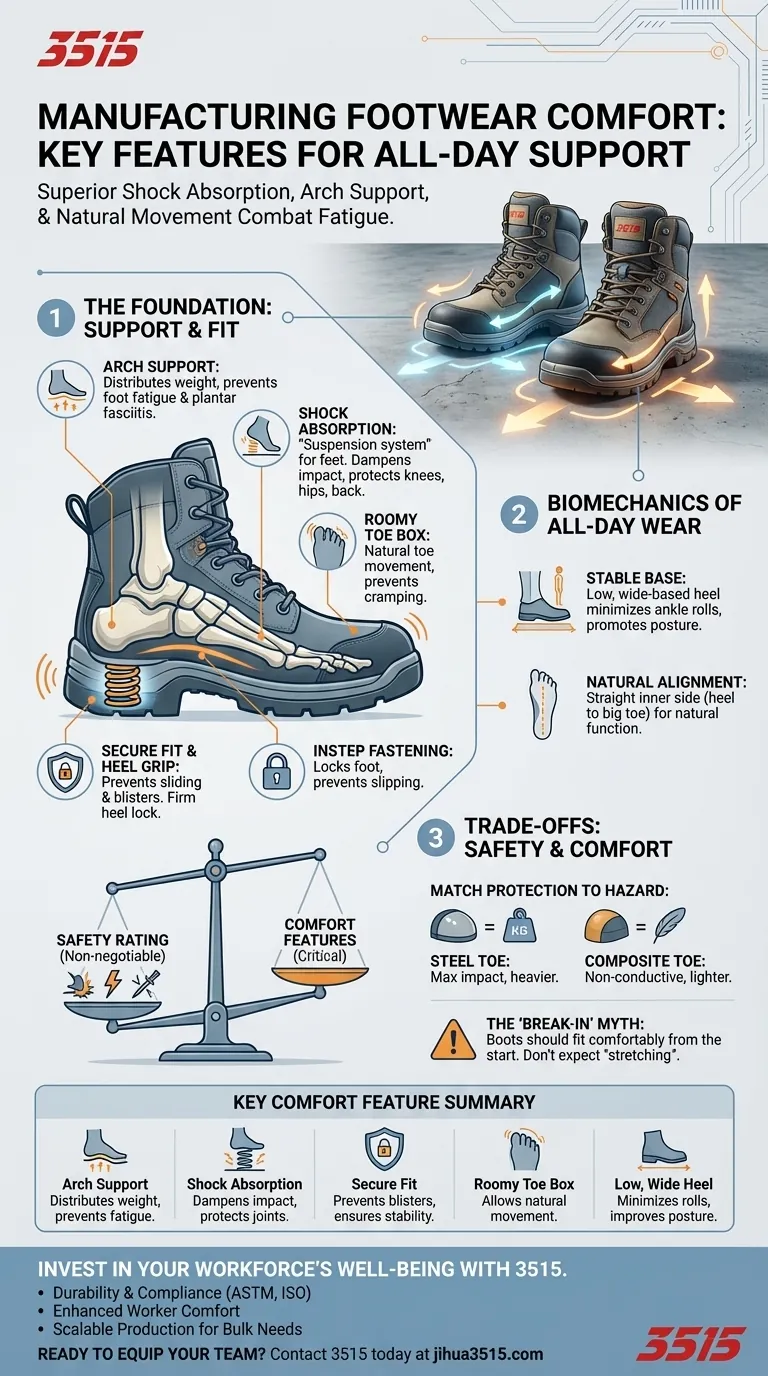
Standing for extended periods puts immense stress on the arches of your feet. Proper arch support helps distribute your body weight evenly across your foot.
This support is crucial for preventing foot fatigue and can help mitigate common conditions like plantar fasciitis, which is prevalent among workers who spend all day on concrete floors.
The Critical Role of Shock Absorption
Think of a boot's sole as your body's suspension system. High-quality shock-absorbing insoles and midsoles dampen the constant impact of walking and standing on hard surfaces.
This feature doesn't just protect your feet; it reduces the stress that travels up your legs to your knees, hips, and lower back.
Securing the Perfect Fit
An improper fit is the fastest way to create discomfort. A well-fitting boot should have a firm heel grip to prevent your foot from sliding, which causes friction and blisters.
Simultaneously, there must be enough room in the toe box for you to move your toes freely. This prevents cramping and allows your foot to function naturally.
Finally, an instep fastening system, like laces or buckles, is essential to lock your foot in place and prevent internal slipping, which is a major source of instability and discomfort.
Biomechanics of All-Day Wear
Beyond the initial feel, a boot's design must respect the natural mechanics of your foot to provide lasting comfort.
Stability from the Ground Up
Look for footwear with a low, wide-based heel. While a completely flat sole is often ideal, a low, broad heel provides a stable foundation that minimizes the risk of ankle rolls.
This design promotes a more natural and stable posture, reducing strain on your leg muscles and tendons throughout the day.
Natural Foot Alignment
A well-designed boot will have a relatively straight inner side, running from the heel to the tip of the big toe. This shape allows your foot to function without being forced into an unnatural position.
Understanding the Trade-offs
Comfort is essential, but it can never compromise safety. Understanding how these two factors interact is key to making an intelligent choice.
Safety is Always the Priority
Before considering any comfort features, you must identify the footwear's required safety rating for your specific job. Your employer is required to perform a hazard assessment to determine this.
Protection against impact, compression, punctures, or electrical hazards is the primary function of your footwear. Comfort is the secondary, albeit critical, consideration.
Matching Protection to Your Hazard
The type of safety feature affects the boot's weight, flexibility, and feel. For example, steel toes offer maximum impact protection but are heavier than composite toes.
Composite toes are non-conductive, making them essential for electricians, and their lighter weight can increase comfort over a long shift. Always match the boot's features to your specific workplace risks.
The Myth of the "Break-In" Period
Do not expect a tight or uncomfortable boot to "stretch" into a comfortable fit. While high-quality leather may soften slightly, the fundamental size and shape will not change.
A properly sized boot should feel supportive and comfortable from the moment you put it on. A painful "break-in" period is a clear sign that the footwear is the wrong size or shape for your foot.
Making the Right Choice for Your Environment
Your specific job duties should guide your final selection. Prioritize features that solve your most significant daily challenges.
- If your primary focus is reducing fatigue from standing all day: Prioritize boots with best-in-class shock-absorbing insoles and robust, integrated arch support.
- If your primary focus is preventing blisters and rubbing: Ensure the boot has a firm, non-slip heel grip and a toe box with adequate room for movement.
- If your primary focus is overall stability and safety: Start by identifying your required safety certifications (e.g., steel toe, electrical hazard) and then find a boot with the right support and fit that meets those ratings.
Choosing the right footwear is a direct investment in your daily health, safety, and productivity.
Summary Table:
| Key Comfort Feature | Why It Matters for Manufacturing Workers |
|---|---|
| Arch Support | Distributes body weight evenly, preventing foot fatigue and conditions like plantar fasciitis from standing on hard surfaces. |
| Shock Absorption | Acts as a suspension system, dampening impact on concrete floors to protect feet, knees, hips, and back. |
| Secure Fit & Heel Grip | Prevents internal slipping and blisters, ensuring stability and reducing friction during long shifts. |
| Roomy Toe Box | Allows for natural toe movement, preventing cramping and enabling the foot to function correctly. |
| Low, Wide Heel | Provides a stable foundation to minimize ankle rolls and promote better posture, reducing muscle strain. |
Invest in Footwear That Supports Your Workforce's Well-being and Productivity
Choosing the right protective footwear is a direct investment in your team's health, safety, and endurance. As a large-scale manufacturer, 3515 produces a comprehensive range of safety footwear and boots designed specifically for the demands of the manufacturing environment. We combine biomechanically correct designs for superior comfort with the non-negotiable safety ratings your workforce requires.
We help distributors, brand owners, and bulk clients by providing:
- Durability & Compliance: Footwear that meets or exceeds industry safety standards (e.g., ASTM, ISO).
- Enhanced Worker Comfort: Features like advanced shock absorption and arch support to reduce fatigue and improve productivity.
- Scalable Production: Reliable supply of all types of safety shoes and boots to meet your volume needs.
Ready to equip your team with footwear that truly supports them? Contact 3515 today to discuss your specific requirements and discover how our manufacturing expertise can benefit your operation.
Visual Guide
Related Products
- Premium Suede Sport Safety Shoes for Wholesale & Bulk Orders
- Premium Lightweight Safety Shoes for Wholesale & Bulk Orders
- Wholesale Customizable Safety Boots Durable & Protective Footwear Manufacturing
- Premium Waterproof Nubuck Safety Boots for Wholesale
- Wholesale Anti-Smash & Puncture-Proof Safety Shoes Custom Manufacturing for Brands
People Also Ask
- What industries have specific OSHA footwear requirements? Ensure Compliance & Protect Your Workforce
- What are the primary functions of professional safety shoes? Maximize Safety in Water Supply Confined Spaces
- What role do specialized safety shoes play in preventing falls? Engineering Stability in Industrial Environments
- What are the main safety features of S1-S5 shoes? The 3 Essential Protections Explained
- How do the 3R principles influence green footwear design? Master Sustainable Safety Shoe Manufacturing