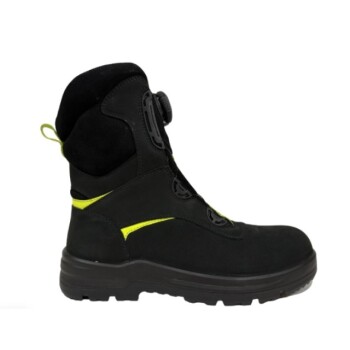
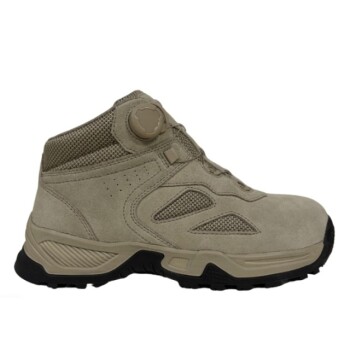
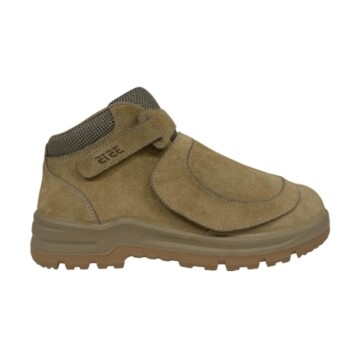
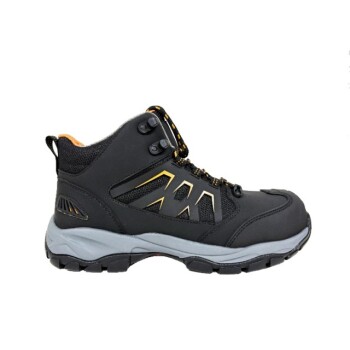
Puncture-resistant composite midsoles are advanced functional components in safety footwear that utilize high-strength fiber structures to block sharp objects from penetrating the sole. While offering protection levels equivalent to traditional materials, their primary technical advantage is a significant reduction in weight combined with superior fatigue resistance.
Core Takeaway: Composite midsoles modernize safety footwear by swapping heavy metals for advanced fibers. This maintains critical puncture safety standards while drastically lowering the physical toll on the wearer during extended use.
The Mechanics of Composite Protection
High-Strength Fiber Structure
Unlike traditional steel plates, composite midsoles rely on high-strength fiber structures. These woven or layered materials create a dense barrier capable of stopping sharp hazards, such as nails or glass shards, from piercing the shoe.
Equivalent Safety Performance
Despite being constructed from fibers rather than metal, these midsoles offer equivalent protection levels to traditional puncture-resistant materials. They are engineered to meet rigorous safety standards, often denoted by specific labeling such as a green triangle with a white 'R'.
Operational Advantages for the Wearer
Significant Weight Reduction
The most distinct technical advantage of composite materials is that they are significantly lighter than steel counterparts. Reducing the weight of the footwear decreases the energy required for every step, which is critical for professionals walking long distances in warehouse or construction environments.
Superior Fatigue Resistance
Composite midsoles possess better fatigue resistance than traditional materials. This refers to both the durability of the material under repeated flexing and the reduction of physical fatigue experienced by the wearer over a long shift.
Protection Against Unseen Hazards
In environments like warehouses, debris is often obscured or difficult to spot. These midsoles provide a passive defense layer against these unseen dangers, ensuring injuries are prevented without requiring the wearer to constantly scan the floor.
Understanding the Trade-offs
Functional Density vs. Flexibility
While composites are lighter and resist fatigue well, they remain a functional barrier. To stop a nail, the material must be dense and strong, which inherently adds some structure to the sole compared to a non-safety shoe.
The Limits of Resistance
It is vital to remember that "puncture-resistant" does not mean "puncture-proof." These components reduce the risk of injury significantly but are tested against specific standards. Extremely high-velocity projectiles or unusual sharp hazards may still pose risks regardless of the material used.
Making the Right Choice for Your Goal
When selecting safety footwear, align the midsole technology with your daily operational needs.
- If your primary focus is reducing daily exhaustion: Choose composite midsoles, as their lighter weight directly correlates to reduced leg strain over high-step-count shifts.
- If your primary focus is compliance in hazardous zones: Ensure the footwear carries the green triangle symbol, verifying the midsole meets the standard for stopping sharp objects like nails.
Summary: Composite midsoles offer a superior balance of safety and ergonomics, providing the necessary armor for your feet without the "heavy boot" penalty of the past.
Summary Table:
| Feature | Composite Midsoles | Traditional Steel Plates |
|---|---|---|
| Material Basis | High-strength woven fibers | Solid stainless/carbon steel |
| Weight | Extremely lightweight | Heavy, adds to wearer fatigue |
| Flexibility | High fatigue resistance & flex | Rigid and less ergonomic |
| Safety Standard | Meets ASTM/EN equivalent | Meets ASTM/EN equivalent |
| Non-Metallic | Yes (ideal for metal detectors) | No |
Upgrade Your Product Line with 3515 High-Performance Safety Footwear
As a premier large-scale manufacturer serving global distributors and brand owners, 3515 leverages advanced composite technology to deliver safety shoes that never compromise on comfort or protection. Our flagship Safety Shoes series features state-of-the-art puncture-resistant midsoles, providing your customers with the perfect balance of lightweight agility and industrial-grade durability.
Beyond safety boots, our comprehensive production capabilities extend to tactical boots, outdoor footwear, training sneakers, and formal dress shoes to meet all your bulk procurement needs. Partner with 3515 to bring superior ergonomic protection to your market.
Contact 3515 Today for Custom Manufacturing & Bulk Orders
References
- Alexandra Bodoga, Dorina Nicolina Isopescu. Environmental Impact of Footwear Using Life Cycle Assessment—Case Study of Professional Footwear. DOI: 10.3390/su16146094
This article is also based on technical information from 3515 Knowledge Base .
Related Products
- Wholesale Durable Safety Boots | Custom Steel Toe & Puncture-Resistant Manufacturing
- Puncture-Resistant Velcro Safety Boots for Wholesale & Custom Manufacturing
- Wholesale Anti-Smash & Puncture-Proof Safety Shoes Custom Manufacturing for Brands
- Athletic Safety Shoes with Dial Closure & Steel Toe for Wholesale & Custom Manufacturing
- Wholesale Durable Breathable Safety Boots Custom OEM Manufacturer
People Also Ask
- What are the consequences of not wearing safety boots? Protect Your Finances and Career
- Why is proper storage important for safety boots? Preserve Protection and Extend Lifespan
- What makes durable safety boots? The Ultimate Guide to Long-Lasting Work Footwear
- How should safety boots be cleaned to avoid damage? A Gentle Guide to Preserve Your Boots
- What are the key features of safety boots? Essential Protection for Hazardous Workplaces