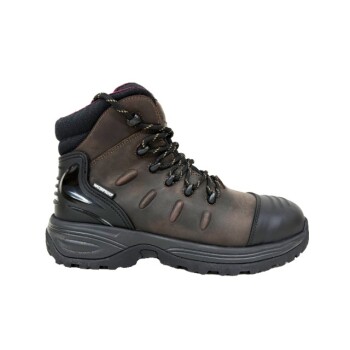
Industrial-grade safety shoes are the critical last line of defense in metal stamping and mold manufacturing workshops because these environments present a unique combination of heavy kinetic risks and sharp stationary hazards. Specifically, they employ impact-resistant toe caps and puncture-resistant midsoles to physically shield workers from falling workpieces, crushing machinery, and sharp metal scraps common in lathe and mill operations. Without this specialized gear, the margin for error is non-existent, turning minor accidents into permanent disabilities.
Core Takeaway In metal stamping and mold manufacturing, the primary threats are heavy compression and sharp floor debris. Industrial safety shoes mitigate these risks through a dual-protection system: reinforced toe caps to prevent crushing injuries and puncture-resistant midsoles to stop metal fragments from penetrating the foot.
The Mechanics of Protection in Stamping Environments
Shielding Against Impact and Compression
Metal stamping and mold manufacturing involve constant heavy workpiece handling and material stacking. The primary risk here is kinetic energy transfer—heavy objects falling or shifting.
Safety shoes address this via built-in impact-resistant toe caps. Often made of steel or high-strength composite materials, these caps create a rigid cage around the toes. This structure absorbs and deflects the crushing force from falling dies or equipment components, preventing catastrophic bone fractures.
Defending Against Sharp Floor Hazards
Workshops utilizing lathes, mills, and stamping presses produce a significant volume of byproduct, specifically sharp metal scraps and iron shavings. These fragments frequently accumulate on the shop floor.
Standard footwear soles are easily penetrated by these shavings. Industrial-grade shoes utilize puncture-resistant midsoles as a barrier. This layer prevents sharp debris from piercing the outsole and entering the foot, effectively neutralizing the risk of deep lacerations or tetanus infections from rusty scrap.
Stability and Fatigue Management
Preventing Slips in Oily Conditions
Metalworking environments often involve lubricants, cooling fluids, and oils, creating dangerous, low-traction surfaces.
Specialized safety footwear integrates high-performance outsoles resistant to oil, weak acids, and alkalis. These outsoles are engineered to maintain consistent grip even on slick surfaces. By stabilizing the worker, the shoes prevent slips that could lead to accidental contact with moving machinery or secondary impacts against hard equipment.
Reducing Fatigue-Induced Accidents
Safety is not just about armor; it is about operator alertness. Poor footwear leads to foot fatigue, which directly correlates to a decline in coordination.
High-quality industrial shoes utilize an optimized shoe last structure to ensure uniform pressure distribution. By reducing physical strain during long shifts on concrete floors, the footwear helps maintain the worker’s balance and focus, proactively reducing fall risks caused by exhaustion.
Understanding the Trade-offs
While essential, industrial safety shoes introduce specific ergonomic challenges that must be managed to ensure compliance and comfort.
Weight vs. Protection
The integration of steel caps and puncture-resistant plates adds significant weight to the shoe. Heavier footwear can increase leg strain over time, potentially impacting agility in fast-paced environments.
Flexibility Limitations
To achieve puncture resistance, midsoles must be rigid. This stiffness can reduce the natural flexion of the foot, making movements like crouching or climbing ladders more difficult compared to standard footwear.
The "Invincibility" Fallacy
Wearing safety shoes can sometimes lead to a false sense of security. It is vital to remember that these shoes are mitigation devices, not prevention devices; they reduce injury severity but cannot stop a multi-ton press from causing damage if safety protocols are ignored.
Making the Right Choice for Your Goal
Selecting the correct footwear depends on the specific hazards present at your specific station within the workshop.
- If your primary focus is handling heavy dies and molds: Prioritize shoes with steel toe caps rated for maximum impact and compression resistance to protect against dropped weights.
- If your primary focus is machining and lathe operation: Prioritize shoes with puncture-resistant midsoles and oil-resistant outsoles to protect against sharp shavings and slippery fluids.
- If your primary focus is inspection or supervision (high mobility): Prioritize composite toe caps, which offer necessary protection but with reduced weight to minimize fatigue during long periods of walking.
True safety is achieved when the protective equipment is perfectly matched to the specific mechanical risks of the environment.
Summary Table:
| Hazard Category | Protective Feature | Benefit in Workshop |
|---|---|---|
| Falling Dies/Molds | Impact-Resistant Toe Cap | Prevents bone fractures from heavy kinetic energy. |
| Sharp Metal Scraps | Puncture-Resistant Midsole | Stops shavings and iron fragments from piercing the foot. |
| Oil & Coolant Spills | Oil-Resistant Outsole | Maintains grip on slick surfaces to prevent machinery slips. |
| Long Shift Fatigue | Ergonomic Shoe Last | Distributes pressure to keep workers alert and balanced. |
Secure Your Workforce with Premium Industrial Footwear
Protect your team from the high-risk hazards of metal stamping and mold manufacturing. As a large-scale manufacturer serving distributors and brand owners, 3515 offers comprehensive production capabilities for all footwear types, anchored by our flagship Safety Shoes series.
Our extensive portfolio covers work and tactical boots, outdoor shoes, training shoes, and sneakers, as well as Dress & Formal shoes to meet diverse bulk requirements. By partnering with us, you benefit from industrial-grade durability, certified protection standards, and a robust supply chain tailored to your brand's growth.
Ready to elevate your safety standards?
Contact Us Today to Discuss Bulk Solutions
References
- Indra Dharma Wijaya. Analisa Kecelakaan Kerja Pada Di PT Cipta Unggul Karya Abadi dengan Metode Job Safety Analysis (JSA) dengan Pendekatan Failure Mode And Effect Analysis (FMEA). DOI: 10.46799/jsa.v3i2.399
This article is also based on technical information from 3515 Knowledge Base .
Related Products
- Premium Waterproof High-Cut Industrial Safety Boots for Wholesale and Bulk Orders
- Premium Wheat Nubuck Safety Shoes for Bulk Distribution
- Wholesale Mesh Steel Toe Safety Shoes with Dial Closure Factory Production
- Wholesale Anti-Smash & Puncture-Proof Safety Shoes Custom Manufacturing for Brands
- Premium KPU Athletic Safety Shoes for Wholesale
People Also Ask
- Why are oil-resistant and anti-slip properties critical for industrial safety boots? Expert Outsole Engineering Guide
- What are the primary protective functions of industrial safety boots in oil palm plantations? Master Rough Terrain Safety
- What dual characteristics do industrial safety boots exhibit? Balance Worker Protection with Health Recovery Efficiency
- Why is professional industrial-grade safety footwear a suitable carrier for diabetic rehabilitation insoles?
- How do industrial safety boots assist maintenance personnel working on high-level palm oil factory structures?