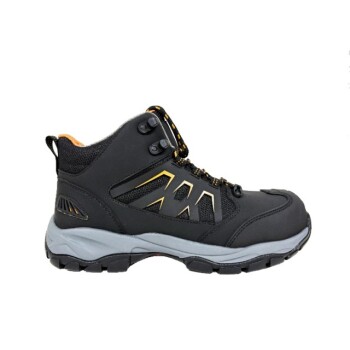
Caring for composite toe boots is a straightforward process that boils down to a consistent routine. It involves regular cleaning with mild soap, allowing them to air dry away from direct heat, conditioning any leather components every few months, and performing periodic inspections for wear and tear. This simple regimen is the key to preserving their protective qualities and extending their service life.
The goal of proper boot care is not just cleanliness; it's about proactively maintaining the structural integrity of the materials. Consistent maintenance prevents the premature breakdown of leather, adhesives, and seams, ensuring your boots remain a reliable tool for safety and support.
The Core Care Routine: A Step-by-Step Guide
Proper care is a cycle of cleaning, drying, and conditioning. Integrating these steps into a regular habit is the most effective way to protect your investment.
Step 1: Regular Cleaning is Non-Negotiable
Dirt, mud, and chemical residues are abrasive and can slowly degrade the boot's materials. Regular cleaning is your first line of defense.
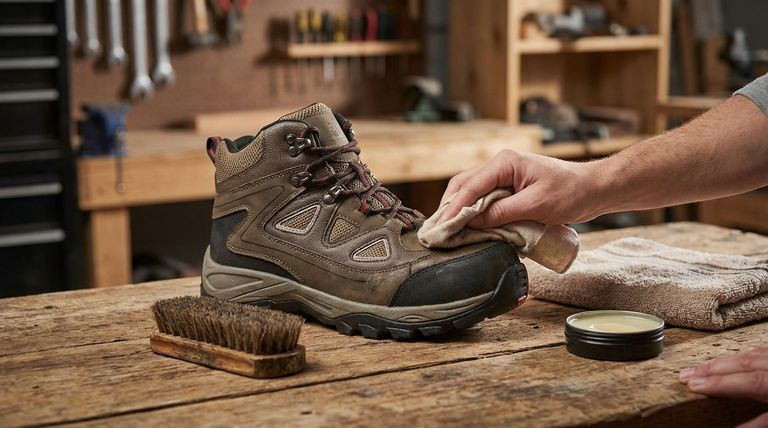
Remove loose dirt with a brush. For deeper cleaning, use a damp cloth and a mild soap solution to wipe down the entire boot.
Step 2: Proper Drying to Prevent Material Damage
How you dry your boots is as important as how you clean them. Improper drying can cause irreversible damage.
Never use a direct heat source like a radiator, fire, or hairdryer. This can cause leather to crack and can weaken the adhesives that bond the sole to the upper. Always let your boots air dry naturally in a cool, well-ventilated area.
Step 3: Conditioning to Preserve Leather Integrity
Leather is a natural material that can dry out, become brittle, and crack over time. Conditioning restores essential oils to keep it supple and strong.
Apply a quality leather conditioner, oil, or cream every few months, or more frequently if you work in very dry or harsh conditions. This simple step is critical for preventing cracks and tears.
Step 4: Waterproofing for Wet Environments
For those who work in consistently wet conditions, adding a layer of waterproofing can provide significant benefits.
After cleaning and drying your boots, apply a waterproofing spray according to the manufacturer's instructions. This creates a barrier against moisture, protecting both the materials and your feet.
Proactive Maintenance: Extending Lifespan
Beyond the basic clean-and-condition cycle, a few proactive habits will significantly extend the life and comfort of your boots.
The Importance of Regular Inspection
Catching small problems early prevents them from becoming boot-ending failures.
Once a month, give your boots a thorough inspection. Look for signs of sole separation, cracking or splitting leather, and torn seams. Pay close attention to the area around the composite toe cap for any signs of excessive wear.
Replacing Worn Components
The comfort and fit of your boots depend on more than just the leather and sole.
Replace worn-out insoles to maintain proper support and comfort. Frayed or damaged laces should also be replaced immediately to ensure a secure and safe fit.
The Benefit of Rotation
Allowing your boots to fully dry and recover between wears is one of the most effective ways to prolong their life.
If possible, rotate between two pairs of work boots. This gives each pair ample time to air out completely, preventing the buildup of moisture and bacteria that can break down materials from the inside.
Common Pitfalls to Avoid
Mistakes in boot care often do more harm than general neglect. Knowing what to avoid is crucial for preserving the safety features and durability of your footwear.
Using Harsh Chemicals or Solvents
Never use harsh detergents, solvents, or chemicals to clean your boots. These products can strip the natural oils from leather and damage synthetic materials and adhesives.
Force-Drying with High Heat
As mentioned, applying high heat is the fastest way to destroy a good pair of boots. It causes materials to become brittle and can melt the glues holding the boot together, leading to delamination.
Storing Boots When Wet or Dirty
Storing boots while they are still damp or caked in mud is a recipe for disaster. This practice encourages the growth of mold and mildew, which will weaken fibers and create a persistent odor.
Tailoring Your Care to Your Work Environment
The ideal care routine depends on the specific challenges your boots face every day.
- If your primary focus is working in wet or muddy conditions: Prioritize daily cleaning to remove corrosive mud and consider applying a waterproofing treatment monthly.
- If your primary focus is working in dry, dusty environments: Emphasize regular conditioning (every 1-2 months) to prevent the leather from drying out and cracking.
- If your primary focus is maximizing the lifespan of your investment: Rotate between two pairs and conduct a thorough inspection for wear and tear at the beginning of each month.
Consistent care transforms your boots from a simple expense into a reliable, long-term asset for your safety and comfort.
Summary Table:
| Core Care Step | Key Action | Purpose |
|---|---|---|
| Cleaning | Brush off dirt; wipe with mild soap & water. | Removes abrasive debris and chemicals. |
| Drying | Air dry naturally away from direct heat. | Prevents leather cracking and adhesive failure. |
| Conditioning | Apply leather conditioner every few months. | Keeps leather supple and prevents cracking. |
| Inspection | Monthly check for sole wear, cracks, and seam damage. | Identifies small issues before they become major failures. |
Invest in Boots Built to Last.
As a large-scale manufacturer, 3515 produces a comprehensive range of durable footwear for distributors, brand owners, and bulk clients. Our production capabilities encompass all types of safety boots and work shoes designed for longevity. Let us help you equip your workforce with reliable, high-quality footwear.
Contact 3515 today to discuss your needs and discover our value-driven manufacturing solutions.
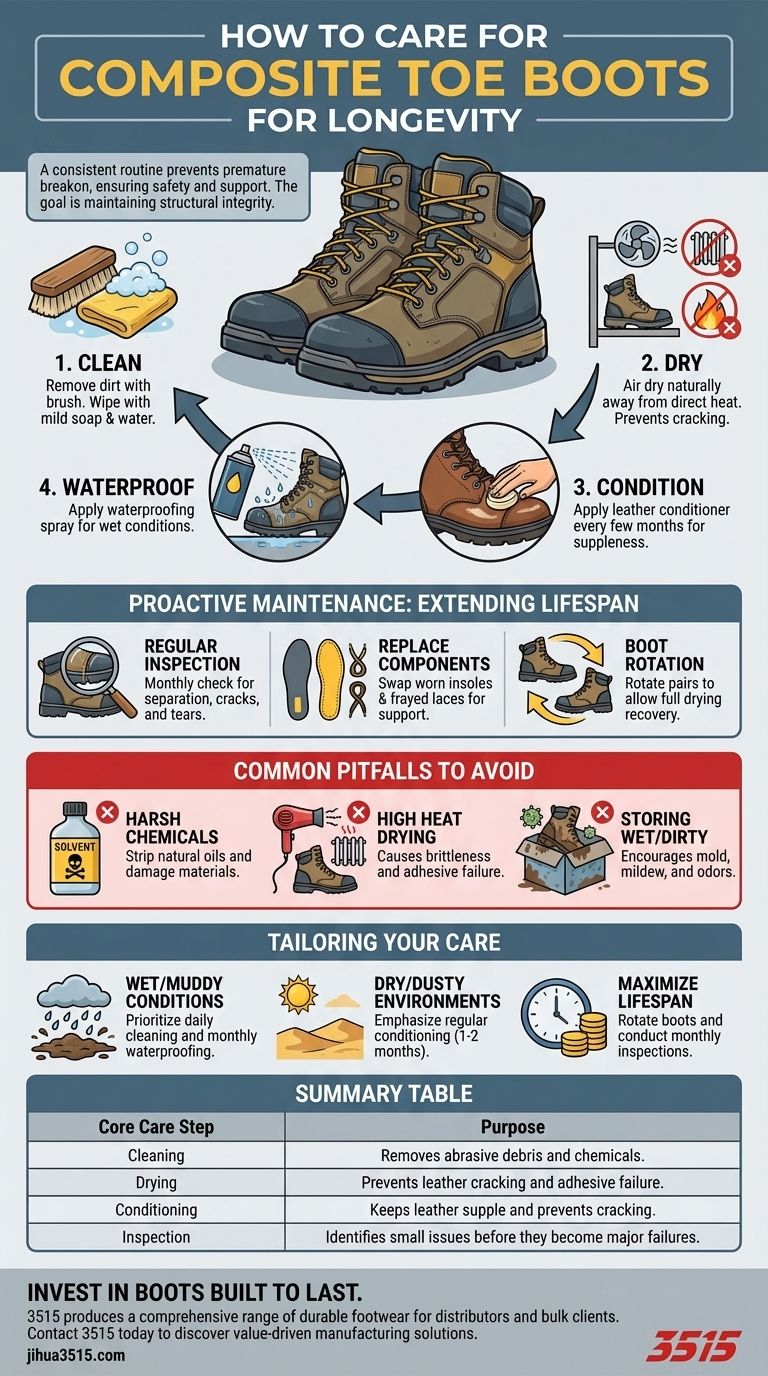
Visual Guide
Related Products
- Wholesale Durable Safety Boots Manufacturer Customizable Steel Toe Work Boots
- Durable Leather Moc Toe Work Boots for Wholesale & Custom Manufacturing
- Wholesale Mesh Steel Toe Safety Shoes with Dial Closure Factory Production
- Wholesale Durable Breathable Safety Boots Custom OEM Manufacturer
- Wholesale Customizable Safety Boots Durable & Protective Footwear Manufacturing
People Also Ask
- What are the pros and cons of steel toe work boots? A Guide to Maximum Protection vs. Comfort
- What are the different types of steel toe work boots? Choose the Right Boot for Your Job
- What is the history of steel toe work boots? From German Invention to Modern Safety Standard
- How much weight can steel toe work boots withstand? Unpacking the 3,372 lb. Safety Standard
- What are some common myths about steel toe work boots? Debunked for Modern Workers