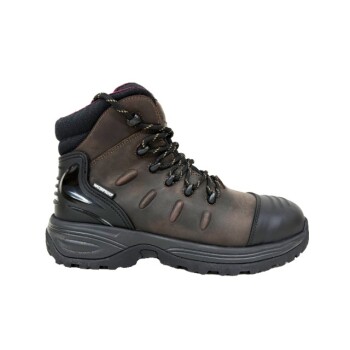
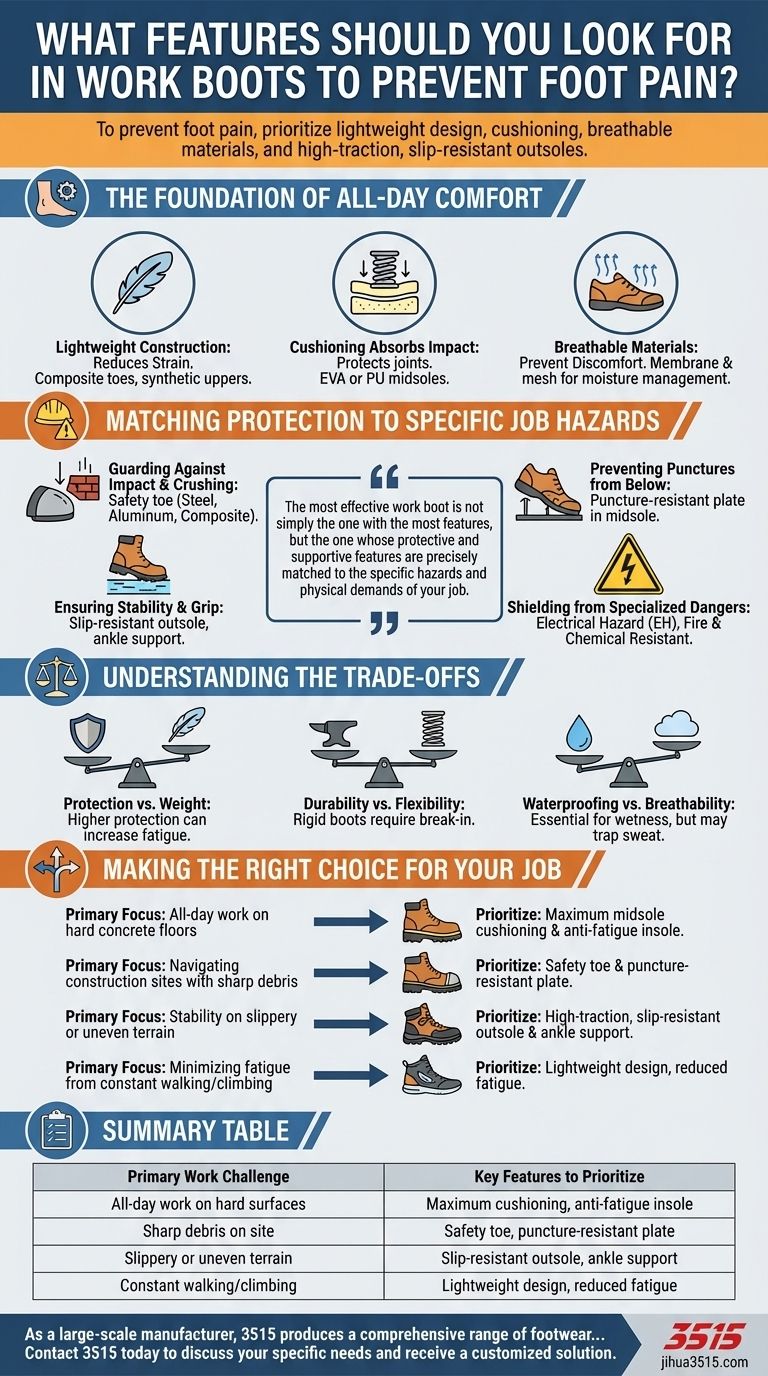
To prevent foot pain, you should look for work boots that feature a lightweight design to reduce fatigue, ample cushioning to absorb impact, breathable materials to manage moisture, and high-traction, slip-resistant outsoles for stability. These features work together to reduce the cumulative stress your feet endure over a long workday.
The most effective work boot is not simply the one with the most features, but the one whose protective and supportive features are precisely matched to the specific hazards and physical demands of your job.
The Foundation of All-Day Comfort
Before addressing specific job-site dangers, a boot must provide a baseline of comfort and support. Without this foundation, even the safest boot will cause pain and fatigue, reducing your focus and productivity.
Lightweight Construction Reduces Strain
Every extra ounce on your feet adds to your workload throughout the day. Modern materials like composite safety toes and advanced synthetic uppers can provide necessary protection without the fatigue-inducing weight of traditional steel and leather.
Cushioning Absorbs Constant Impact
Working on hard surfaces like concrete is punishing on your joints. A boot's midsole is the primary source of cushioning. Look for materials like EVA (ethylene vinyl acetate) or polyurethane (PU) that absorb shock and provide rebound, lessening the impact on your feet, ankles, and knees.
Breathable Materials Prevent Discomfort
Your feet sweat, and trapped moisture leads to blisters, fungal growth, and general discomfort. Uppers made with breathable membranes or mesh panels allow sweat vapor to escape, keeping your feet drier and more comfortable, especially in warm environments.
Matching Protection to Specific Job Hazards
True foot protection goes beyond general comfort. It requires identifying the most probable risks in your environment and selecting boots engineered to counter them directly.
Guarding Against Impact and Crushing
If you work around falling objects or heavy machinery, a safety toe is non-negotiable. This feature directly prevents injuries like crushed or broken toes. Your primary options are steel, aluminum, or composite materials, each offering a different balance of weight and protection.
Preventing Punctures from Below
Job sites are often littered with nails, screws, and other sharp debris. A puncture-resistant plate—made of steel or a flexible composite material—is embedded in the midsole to protect the soles of your feet from these hazards.
Ensuring Stability and Grip
Slips, trips, and falls are a leading cause of workplace injuries, including ankle sprains and fractures. A slip-resistant outsole with a well-designed tread pattern is critical for maintaining traction on wet, oily, or uneven surfaces. Taller boots can also provide essential ankle support.
Shielding from Specialized Dangers
Certain jobs carry unique risks. If you work near live electrical circuits, boots with an Electrical Hazard (EH) rating provide a crucial secondary layer of protection. For those around high heat or chemicals, specialized fire-resistant and chemical-resistant materials are available.
Understanding the Trade-offs
Choosing the perfect work boot always involves balancing competing priorities. Understanding these trade-offs is key to making an informed decision.
Protection vs. Weight
The highest levels of protection, such as steel toes and puncture plates, often add significant weight. This can increase fatigue over a long shift. Composite materials offer a lighter alternative but may come at a higher price point.
Durability vs. Flexibility
A rigid, heavily constructed boot may offer maximum durability and support but can feel stiff and require a lengthy break-in period. A more flexible boot will be comfortable out of the box but may not stand up to the most demanding environments.
Waterproofing vs. Breathability
A fully waterproof boot is essential for wet conditions but can trap sweat in hot, dry climates, leading to discomfort. A boot with a breathable, water-resistant membrane often provides the best balance for varied conditions.
Making the Right Choice for Your Job
Your ideal boot depends entirely on your daily tasks and environment. Use your primary challenge as your guide.
- If your primary focus is all-day work on hard concrete floors: Prioritize maximum midsole cushioning and an anti-fatigue insole.
- If your primary focus is navigating construction sites with sharp debris: A certified safety toe and a puncture-resistant plate are your most critical features.
- If your primary focus is stability on slippery or uneven terrain: Emphasize a high-traction, slip-resistant outsole and consider a taller boot for ankle support.
- If your primary focus is minimizing fatigue from constant walking or climbing: Choose the most lightweight design that still meets your job's mandatory safety requirements.
Investing in the right work boot is a direct investment in your daily comfort and long-term physical health.
Summary Table:
| Primary Work Challenge | Key Features to Prioritize |
|---|---|
| All-day work on hard surfaces | Maximum cushioning, anti-fatigue insole |
| Sharp debris on site | Safety toe, puncture-resistant plate |
| Slippery or uneven terrain | Slip-resistant outsole, ankle support |
| Constant walking/climbing | Lightweight design, reduced fatigue |
As a large-scale manufacturer, 3515 produces a comprehensive range of footwear for distributors, brand owners, and bulk clients. Our production capabilities encompass all types of safety shoes and boots, engineered with the precise features discussed here to protect your workforce and enhance comfort. Let us help you equip your team with the right boots for the job. Contact 3515 today to discuss your specific needs and receive a customized solution.
Visual Guide
Related Products
- Durable Leather Work Boots for Wholesale & Custom Manufacturing
- Durable Leather Work Boots for Wholesale & Custom OEM Manufacturing
- Durable Leather Work Boots Wholesale Manufacturer & Custom Factory
- Durable Leather Moc Toe Work Boots for Wholesale & Custom Manufacturing
- Wholesale Leather Work Boots with Customizable Wedge Sole for Brands
People Also Ask
- What is the difference between full-grain and top-grain leather? Premium Material Guide for Boot Manufacturers
- What are the common workplace hazards that can be mitigated with the right work boots? Protect Your Workforce
- What are the common foot issues workers face due to uncomfortable work boots? Prevent Pain & Deformities
- What are the advantages of leather versus synthetic work boots? A Guide to Choosing the Right Material
- What are the key components of modern work boots? Engineered for Ultimate Durability and Comfort