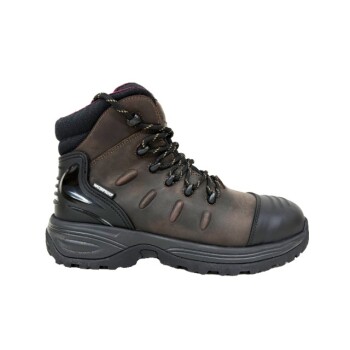
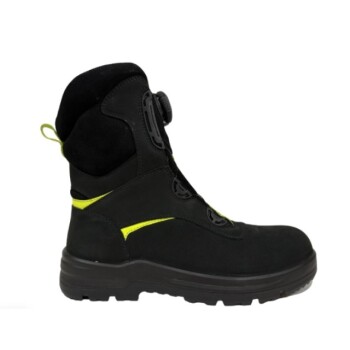
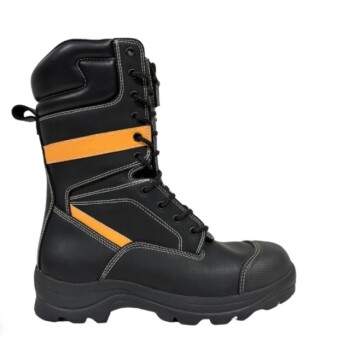
Specialized protective boots function primarily as an impermeable barrier against corrosive substances. By utilizing materials specifically engineered to resist chemicals, these boots physically block strong acids and alkalis from making contact with the skin. Their design incorporates a high-top structure to extend protection beyond the feet to the lower legs, preventing severe burns from liquid splashes during high-risk activities like chemical blending or equipment maintenance.
Core Insight:
These boots act as a dual-purpose shield, combining chemical resistance with physical coverage to prevent burns and injuries. They serve as the critical "final barrier" in a Personal Protective Equipment (PPE) system, protecting workers when unsafe behaviors or accidents occur.
The Mechanism of Chemical Resistance
Blocking Corrosive Agents
The fundamental function of these boots is to withstand direct contact with hazardous liquids. They are manufactured from chemical-resistant materials capable of repelling strong acids and alkalis.
Preventing Skin Contact
Unlike standard footwear, the material structure is designed to be non-porous to these specific agents. This ensures that corrosive fluids remain on the exterior of the boot, eliminating the risk of absorption and subsequent skin burns.
Design Features for Maximum Coverage
High-Top Architecture
Chemical splashes rarely impact only the feet; they often threaten the lower legs as well. These boots feature a high-top design that seals off the gap between the foot and the pant leg.
Targeted Operational Safety
This extended coverage is vital during dynamic tasks such as equipment maintenance or chemical blending. In these scenarios, liquids are often in motion, making the lower leg area highly vulnerable to accidental splashes.
Understanding the Role of PPE
The Final Physical Barrier
While process safety is the first line of defense, protective boots act as the last. They provide impact resistance and puncture protection to mitigate injuries resulting from unsafe behaviors or unforeseen accidents.
Compliance as a Safety Indicator
In safety management, these boots serve a secondary function as a metric for culture. The wear rate of safety boots is often used as a direct indicator of employee compliance with safety protocols.
Evaluating Protective Footwear Needs
To select the right protection for your specific environment, consider the following priorities:
- If your primary focus is Chemical Safety: Prioritize boots with certified resistance to the specific acids and alkalis present in your facility, ensuring high-top coverage to prevent splash burns.
- If your primary focus is Physical Safety Management: Ensure the boots offer impact and puncture resistance to serve as an effective final barrier against mechanical accidents and unsafe behaviors.
Effective protection requires viewing the boot not just as footwear, but as an essential, integrated component of your facility's safety architecture.
Summary Table:
| Feature | Protection Mechanism | Industrial Benefit |
|---|---|---|
| Material Integrity | Impermeable chemical-resistant barrier | Blocks strong acids and alkalis from skin contact |
| High-Top Design | Extended vertical coverage | Prevents burns from liquid splashes to the lower legs |
| Physical Durability | Impact and puncture resistance | Acts as the final barrier against mechanical accidents |
| Compliance Tool | Safety protocol indicator | Reflects and improves site-wide safety culture |
Partner with 3515 for Premium Industrial Protection
As a large-scale manufacturer serving distributors and brand owners, 3515 offers comprehensive production capabilities for all footwear types, anchored by our flagship Safety Shoes series. Whether you require specialized chemical-resistant boots for paper production or durable tactical gear, our extensive portfolio covers work and tactical boots, outdoor shoes, training shoes, and sneakers, as well as Dress & Formal shoes to meet your diverse bulk requirements.
Protect your workforce and enhance your product line with our industry-leading manufacturing expertise. Contact us today to discuss your bulk requirements and custom safety solutions!
References
- Happy Nihayatul Afroh, Fransisca Tiur Basaria. Reducing Environmental and Health Risks in Construction Projects Through Hazard Identification and Risk Assessment. DOI: 10.1051/e3sconf/202338801028
This article is also based on technical information from 3515 Knowledge Base .
Related Products
- Premium Oil Wax Leather Safety Boots for Bulk Purchase
- Premium High-Cut Waterproof Safety Boots Manufacturing & Wholesale Solutions
- Wholesale Durable Safety Boots | Custom Steel Toe & Puncture-Resistant Manufacturing
- Puncture-Resistant Velcro Safety Boots for Wholesale & Custom Manufacturing
- Premium Flame-Retardant Waterproof Safety Boots and Shoes
People Also Ask
- What materials are commonly used for outsoles in safety boots? A Guide to Durability, Grip, and Comfort
- How do safety boots reduce cutting hazards? Essential Protection for Your Workforce
- What are the common types of safety boots and their primary uses? A Guide to Industrial Footwear
- Which organizations develop safety standards for work boots? Ensure Compliance & Worker Safety
- What primary protective functions do professional safety boots provide in urban solid waste recovery and waste picking processes? Discover Dual-Layer Protection.