To significantly improve the fit of your work boots, focus on three key areas: upgrading your insoles for proper arch support, choosing the right socks to manage moisture and add cushioning, and using specific lacing techniques to secure your heel and eliminate movement. These adjustments work together to transform a standard boot into a more customized, supportive piece of equipment.
The most common mistake is assuming the boot's size is the only factor in its fit. The true goal is to adapt the boot's internal volume and support structure to perfectly match the unique shape of your foot, which is best achieved through targeted accessories and adjustments.
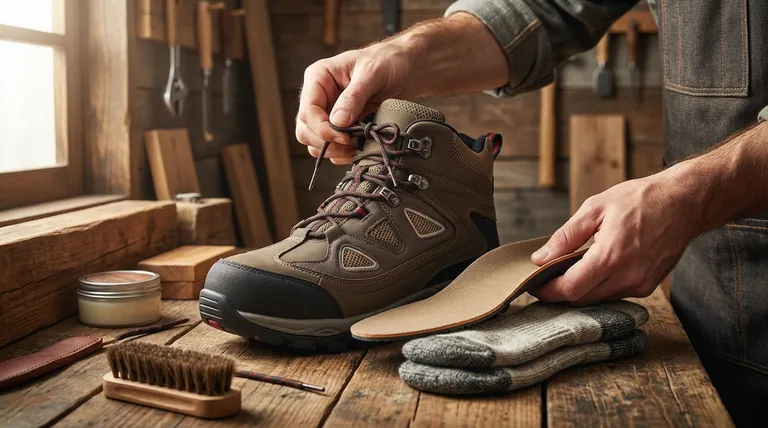
Why the "Out-of-the-Box" Fit Often Fails
Work boots are manufactured for a generic foot shape, but no two feet are identical. This discrepancy is the root cause of common issues like blisters, arch pain, and heel slippage.
Understanding Foot Shape vs. Boot Shape
A boot's "last"—the form it's built around—determines its internal shape, including heel width, arch length, and toe box volume. If the last doesn't align with your foot's geometry, you will experience pressure points and friction, regardless of the stated size.
The Role of Stock Insoles
The insoles included with most work boots are typically inexpensive foam placeholders. They offer minimal cushioning and virtually no structural support for your arch, which is critical for proper alignment and shock absorption during a long workday.
Key Adjustments for a Custom-Feeling Fit
You can systematically address fit issues by modifying the boot's interior. These are the most effective methods, starting with the highest impact.
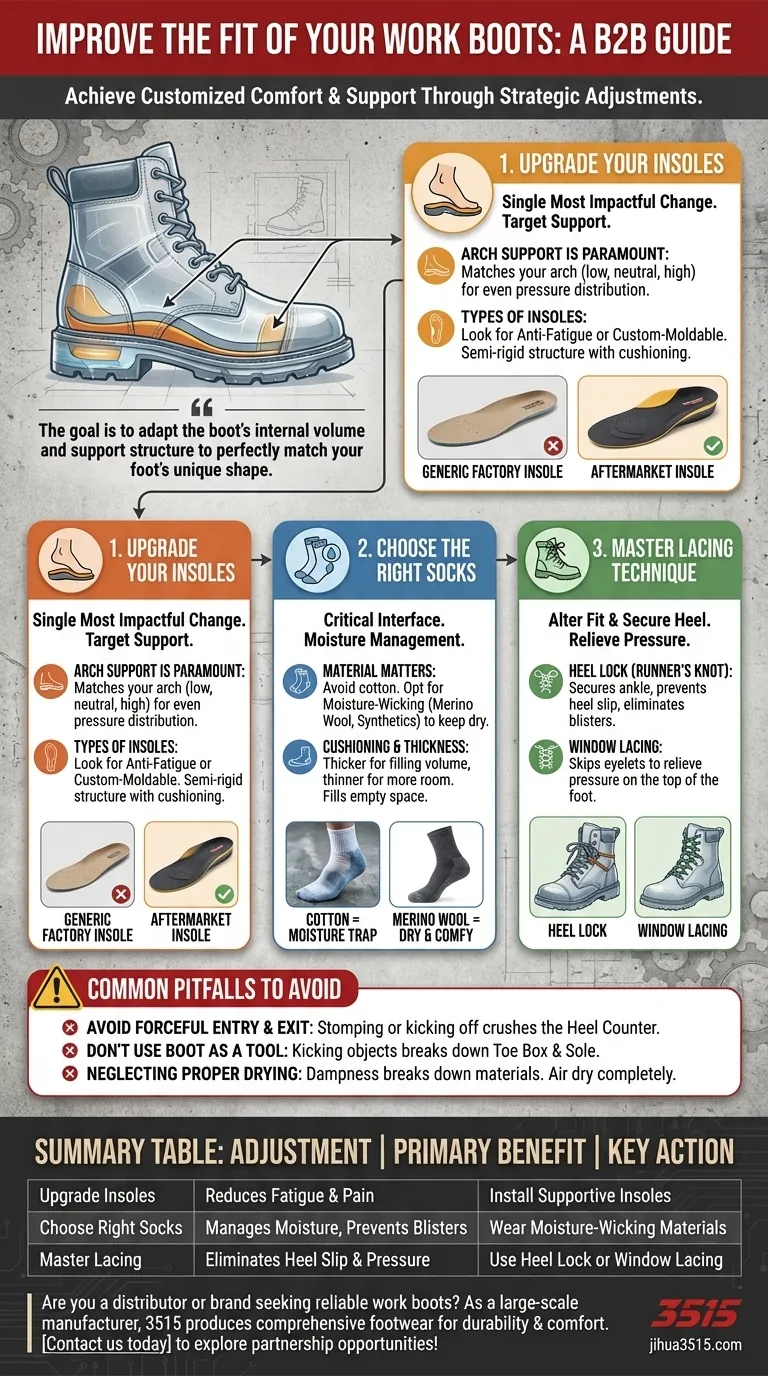
1. Upgrade Your Insoles
This is the single most impactful change you can make. Aftermarket insoles are designed to provide targeted support that factory insoles lack.
Arch Support is Paramount
Your arch is your foot's natural shock absorber. An insole that matches your arch height (low, neutral, or high) distributes pressure evenly, reducing fatigue in your feet, knees, and back.
Types of Insoles
Look for anti-fatigue or custom-moldable insoles. These provide a semi-rigid structure that supports the arch while still offering cushioning at the heel and ball of the foot.
2. Choose the Right Socks
Socks are not just a layer of fabric; they are a critical interface between your foot and the boot. They manage moisture, provide cushioning, and fill empty space.
Material Matters Most
Avoid cotton socks, which trap moisture and lead to blisters. Instead, opt for moisture-wicking materials like merino wool or synthetic blends. These keep your feet dry and comfortable.
Cushioning and Thickness
Thicker, cushioned socks can help fill excess volume in a boot that feels slightly too large, improving the snugness. Conversely, a thinner sock can create more room if the boot feels too tight.
3. Master Your Lacing Technique
How you lace your boots can dramatically alter the fit, especially for securing your heel and relieving pressure points.
The Heel Lock (or "Runner's Knot")
This technique creates a secure lock around the ankle, preventing your heel from slipping up and down with each step. It is highly effective at eliminating friction and subsequent blisters.
Window Lacing
If you feel pressure on the top of your foot, you can skip a set of eyelets directly over the sensitive area. This creates a "window" that relieves the pressure point without sacrificing overall snugness.
Common Pitfalls to Avoid
Improving fit is also about preventing damage that compromises the boot's structure. Poor habits can quickly degrade the support and shape of your footwear.
Avoid Forceful Entry and Exit
Stomping your foot into a boot or kicking it off without unlacing crushes the heel counter. This is the rigid piece that cups your heel, and damaging it permanently ruins the boot's fit and support.
Don't Use Your Boot as a Tool
Using the toe of your boot to kick or pry objects can break down the toe box and sole. This compromises both the protective features and the overall structural integrity.
Neglecting Proper Drying
Allowing boots to remain damp from sweat or weather causes the materials to break down and shrink. Always let them air dry completely, and consider using a boot dryer to prevent bacterial growth and maintain the boot's shape.
Making the Right Choice for Your Goal
Your primary concern will dictate which adjustments to prioritize.
- If your primary focus is reducing foot fatigue and arch pain: Immediately replace the factory inserts with high-quality, supportive insoles that match your arch type.
- If your primary focus is eliminating heel slip and blisters: Master the heel-lock lacing technique and ensure you are wearing moisture-wicking socks of the appropriate thickness.
- If your primary focus is relieving pressure points on the top of your foot: Experiment with window lacing to bypass the sensitive area while keeping the rest of the boot secure.
Ultimately, a well-fitting work boot should feel like a natural extension of your foot, providing unwavering support throughout the day.
Summary Table:
| Adjustment | Primary Benefit | Key Action |
|---|---|---|
| Upgrade Insoles | Reduces foot fatigue & arch pain | Install anti-fatigue or custom-moldable insoles |
| Choose the Right Socks | Manages moisture & prevents blisters | Wear moisture-wicking materials like merino wool |
| Master Lacing Techniques | Eliminates heel slip & pressure points | Use the Heel Lock or Window Lacing method |
Are you a distributor, brand owner, or bulk client seeking reliable, high-quality work boots?
As a large-scale manufacturer, 3515 produces a comprehensive range of footwear designed for durability and comfort. Our production capabilities encompass all types of safety and work boots, ensuring your customers get the perfect fit and superior support they need.
Let's discuss how we can support your business with our manufacturing expertise. Contact us today to explore partnership opportunities!
Visual Guide
Related Products
- Durable Leather Work Boots for Wholesale & Custom Manufacturing
- Durable Leather Work Boots for Wholesale & Custom OEM Manufacturing
- Durable Leather Work Boots Wholesale Manufacturer & Custom Factory
- Durable Leather Moc Toe Work Boots for Wholesale & Custom Manufacturing
- Wholesale Durable 6-Inch Work Boots | Custom & Private Label Manufacturer
People Also Ask
- What is the difference between full-grain and top-grain leather? Premium Material Guide for Boot Manufacturers
- What are the common workplace hazards that can be mitigated with the right work boots? Protect Your Workforce
- What are the common foot issues workers face due to uncomfortable work boots? Prevent Pain & Deformities
- What are the advantages of leather versus synthetic work boots? A Guide to Choosing the Right Material
- What are the key components of modern work boots? Engineered for Ultimate Durability and Comfort