
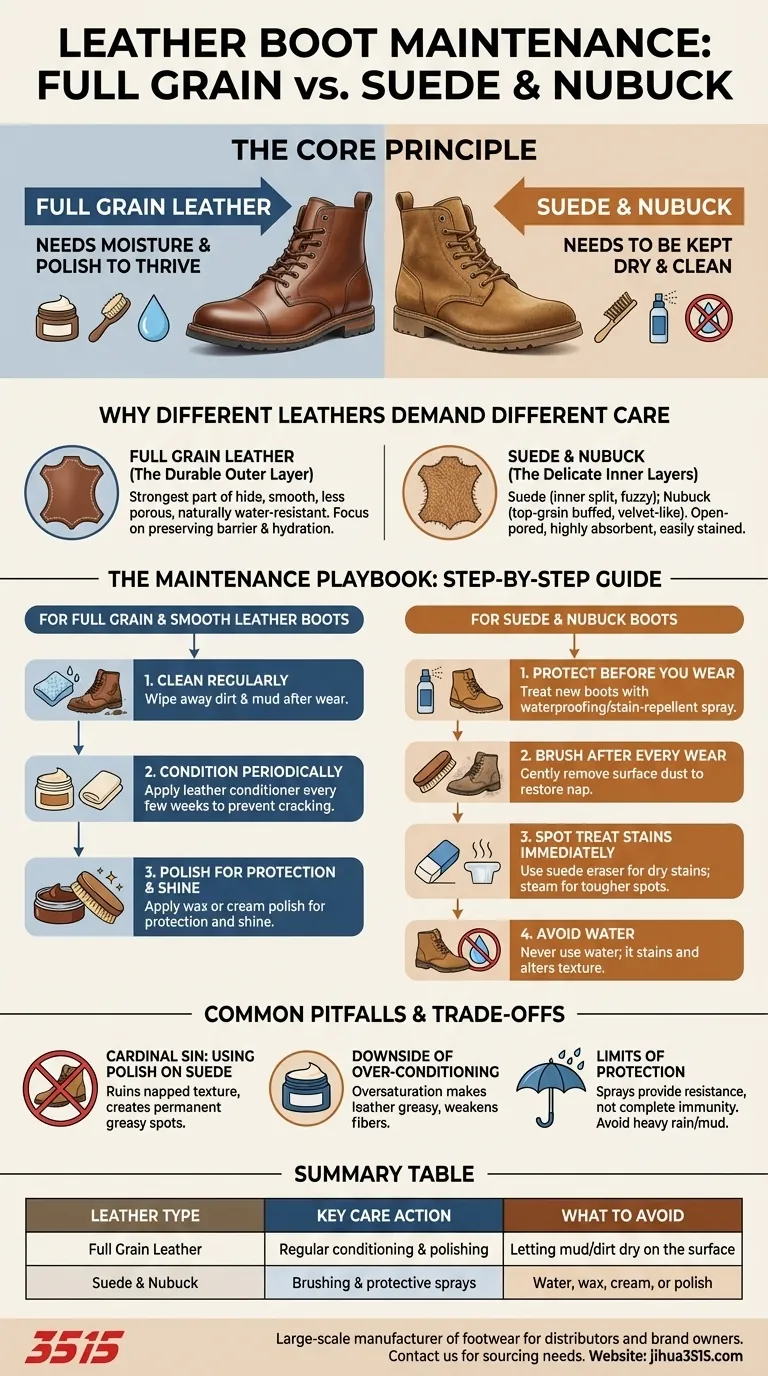
To maintain leather boots effectively, you must treat each material according to its unique properties. Full grain leather requires regular cleaning, conditioning, and polishing to keep it hydrated and protected. In contrast, suede and nubuck are far more delicate; they must be kept dry and maintained with specialized brushes and protective sprays, never creams or polishes.
The core principle of boot care is simple: full grain leather needs moisture and polish to thrive, while suede and nubuck need to be kept dry and clean with brushes and sprays to preserve their signature textured surface.
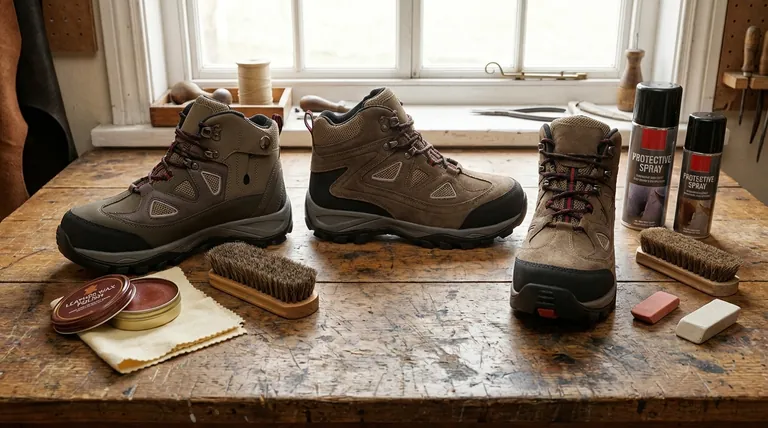
Why Different Leathers Demand Different Care
Understanding the material is the first step to proper maintenance. Full grain leather, suede, and nubuck are all derived from animal hide, but their finishing process creates vastly different surfaces with unique needs.
Full Grain Leather: The Durable Outer Layer
Full grain leather is the strongest and most durable part of the hide, taken from just below the hair. It retains the natural grain and surface imperfections.
Its smooth, less porous surface makes it naturally water-resistant and tough. Maintenance focuses on preserving this barrier and keeping the hide from drying out.
Suede & Nubuck: The Delicate Inner Layers
Suede is made from the softer, inner split of the hide. Its fibers are sanded to create a fuzzy, napped texture. This open-pored surface is highly absorbent and easily stained.
Nubuck is technically a top-grain leather (like full grain) but has been sanded or buffed on the grain side. This gives it a soft, velvet-like texture that is more durable than suede but still more delicate and absorbent than full grain leather.
Because both have an "open" texture, they are highly susceptible to water damage, oil stains, and dirt.
The Maintenance Playbook: A Step-by-Step Guide
Follow these distinct routines for each type of leather. Never use the methods for one on the other.
For Full Grain & Smooth Leather Boots
- Clean Regularly: After wear, wipe away dirt and mud with a damp cloth or a soft brush. Letting mud dry on the leather can pull out essential oils and cause cracking.
- Condition Periodically: Every few weeks, or whenever the leather looks dry, apply a dedicated leather conditioner or cream. Use a soft cloth to work a small amount into the leather, which keeps it supple and prevents cracking.
- Polish for Protection and Shine: After conditioning, apply a wax or cream polish that matches the boot's color. This adds a layer of protection against water and scuffs while restoring the shine.
For Suede & Nubuck Boots
- Protect Before You Wear: The most critical step is prevention. Before the first wear, treat new boots with a waterproofing or stain-repellent spray designed specifically for suede and nubuck. This creates an invisible barrier without changing the texture.
- Brush After Every Wear: Use a specialized suede/nubuck brush to gently remove surface-level dust and dirt. Regular brushing helps restore the "nap" (the raised fibers) and keeps the material looking fresh.
- Spot Treat Stains Immediately: For dry stains or scuffs, use a suede eraser or a clean pencil eraser to gently lift the mark. For tougher spots, a brief exposure to steam (from an iron or kettle, held at a distance) can help loosen the dirt before gentle brushing with a clean toothbrush or towel.
- Avoid Water: Never use water to clean suede or nubuck. It will stain the material, alter its texture, and can cause discoloration.
Understanding the Trade-offs and Common Pitfalls
Proper care is effective, but it's crucial to know the limitations and what to avoid.
The Cardinal Sin: Using Polish on Suede
Never apply wax, cream, polish, or standard leather conditioner to suede or nubuck. These products will instantly ruin the napped texture, matting the fibers down and creating a permanent dark, greasy spot.
The Downside of Over-Conditioning
For full grain leather, more is not always better. Over-conditioning can oversaturate the leather, making it feel greasy, attracting more dirt, and potentially weakening the fibers over time. Stick to a schedule of conditioning only when the leather appears dry.
The Limits of Protection
While protective sprays for suede and nubuck are essential, they are not a magic shield. They provide resistance, not complete immunity. Avoid wearing these types of boots in heavy rain, mud, or snow whenever possible.
Making the Right Choice for Your Goal
Select your care routine based on the material of your boots and your primary objective.
- If your primary focus is preserving durability and water resistance for work or outdoor boots: Prioritize regular cleaning and conditioning of your full grain leather to prevent cracks and maintain its natural barrier.
- If your primary focus is maintaining the pristine look of fashion-oriented suede/nubuck boots: The most important actions are pre-treating with a protective spray and consistent brushing after each wear.
- If your primary focus is restoring older, scuffed smooth leather boots: A thorough cleaning followed by a quality leather conditioner and a color-matched cream polish will have the most significant impact.
Ultimately, consistent and correct care is the key to extending the life and look of any quality leather boot.
Summary Table:
| Leather Type | Key Care Action | What to Avoid |
|---|---|---|
| Full Grain Leather | Regular conditioning & polishing | Letting mud/dirt dry on the surface |
| Suede & Nubuck | Brushing & protective sprays | Water, wax, cream, or polish |
Need a reliable source for durable, well-crafted boots? As a large-scale manufacturer, 3515 produces a comprehensive range of footwear for distributors, brand owners, and bulk clients. Our production capabilities encompass all types of shoes and boots, ensuring quality and consistency for your business. Contact us today to discuss your sourcing needs!
Visual Guide
Related Products
- High-Traction Suede Tactical Boots Wholesale & Custom Manufacturing
- Durable Leather Work Boots Wholesale Manufacturer & Custom Factory
- Durable Leather Work Boots for Wholesale & Custom Manufacturing
- Durable Leather Work Boots for Wholesale & Custom OEM Manufacturing
- Durable Leather Tactical Boots Wholesale & Custom Manufacturing for Brands
People Also Ask
- Why is sequential analysis utilized to evaluate tactical boots? Master Dynamic Boot Development and Ergonomic Performance
- How does the material of tactical boots affect their performance? Choose the Right Material for Your Mission
- How do tactical boots differ from regular boots? Performance, Durability & Design Explained
- How do military uniforms and tactical boots impact the prediction of thermal risk? Essential Safety Insights
- What are the benefits of integrating FES and sEMG into tactical boots? Safety, Reliability & Field-Ready Performance


















