
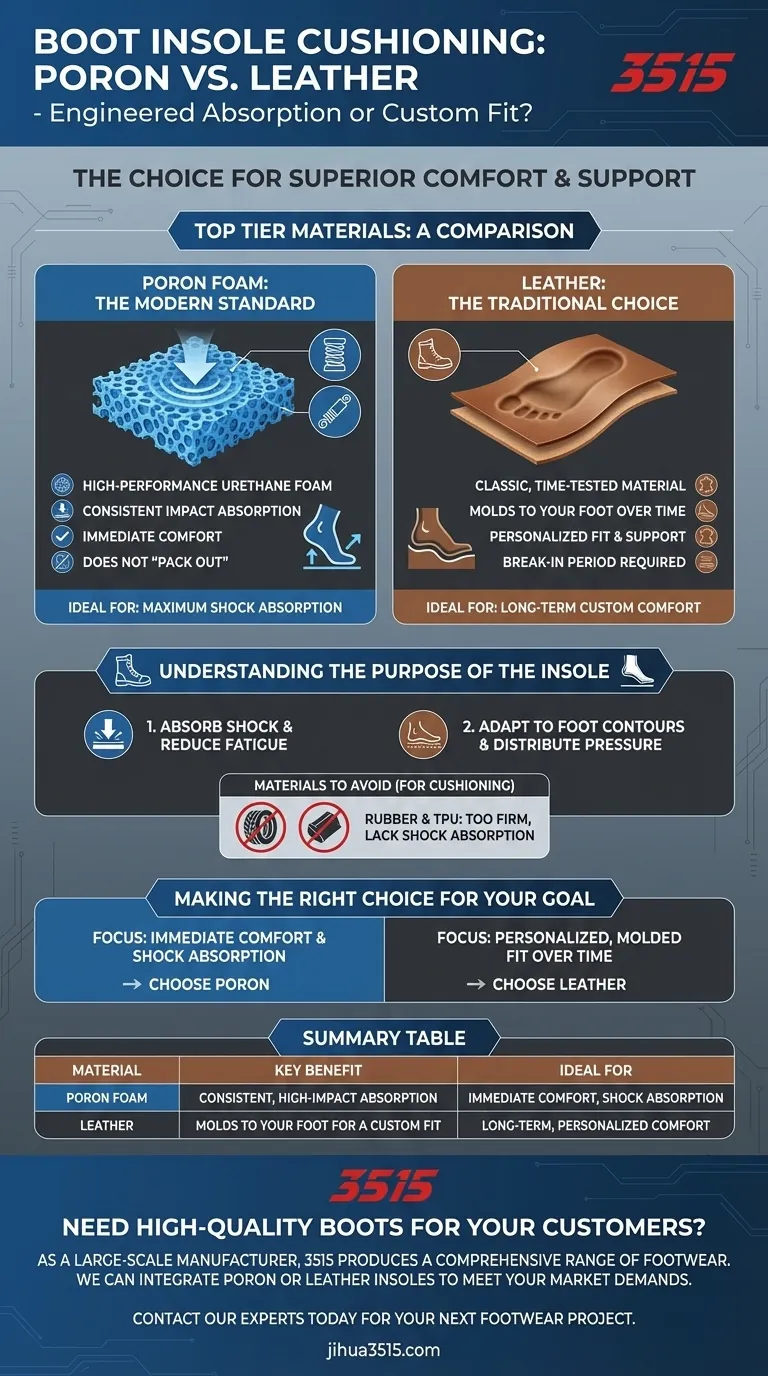
For boot insole cushioning, the two most highly recommended materials are Poron and leather, each excelling in different areas. Poron is a modern engineered foam that provides exceptional, consistent impact absorption, while traditional leather offers a classic approach by gradually molding to the unique shape of your foot for a custom fit.
The choice between insole materials is a decision between immediate, engineered cushioning and long-term, personalized comfort. Understanding the fundamental difference between Poron's impact resistance and leather's ability to mold is key to selecting the right foundation for your boots.
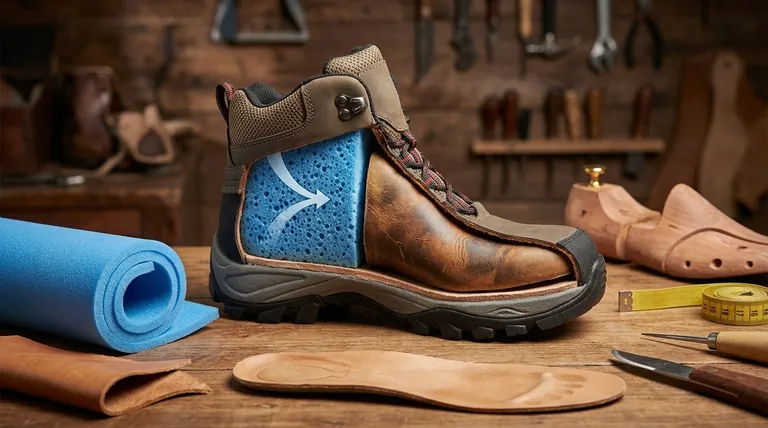
The Purpose of the Insole
An insole is the layer inside your boot that sits directly between your foot and the midsole. Its primary job is to provide comfort and support.
Engineered for Impact Absorption
The core function of a cushioning insole is to absorb the shock generated with every step, reducing fatigue and stress on your feet and joints.
Adapting to Your Foot
A quality insole should also conform to the contours of your foot. This distribution of pressure across the entire sole of the foot enhances comfort and stability.
Top Tier Materials Explained
While many materials are used in footwear, two stand out for their specific application as a primary insole or cushioning layer.
Poron: The Modern Cushioning Standard
Poron is a high-performance open-cell urethane foam specifically designed for cushioning applications. It is widely regarded as a top-tier choice for shock absorption.
This material excels at absorbing impact without losing its shape or "packing out" over time, ensuring consistent performance throughout the life of the boot.
Leather: The Traditional Choice for a Custom Fit
Leather is the classic, time-tested material for insoles. Its most significant advantage is its ability to mold to the precise shape of your foot over time.
This creates a personalized footbed that offers unique support and comfort. It's a key feature in many high-end, traditionally constructed boots.
Understanding the Trade-offs
Neither material is universally "better"; they simply serve different priorities. Your choice depends on what you value most in your footwear.
Poron: Consistency vs. Customization
Poron provides excellent cushioning and flexibility from the very first wear. It is consistent and reliable.
However, it does not create a deep, semi-rigid mold of your foot in the same way that a thick leather insole will.
Leather: The Break-in Period
Leather requires a break-in period. The initial feel can be firm, but with wear, it softens and conforms, delivering unparalleled custom comfort.
The trade-off is that it offers less initial "bounce" or shock absorption compared to an engineered foam like Poron.
Materials to Avoid for Insoles
Materials like rubber and TPU (Thermoplastic Polyurethane) are excellent for outsoles due to their durability and abrasion resistance.
However, they are generally too firm and lack the specific shock-absorbing or molding properties required for a high-quality cushioning insole.
Making the Right Choice for Your Goal
Your activity and comfort preference will determine the best material for your needs.
- If your primary focus is maximum impact absorption and immediate comfort: Choose an insole made with Poron for its superior and consistent cushioning.
- If your primary focus is a personalized fit that molds perfectly to your foot over time: Choose a boot with a quality leather insole for unmatched, long-term custom comfort.
Ultimately, selecting the right insole material is about building the proper foundation for your specific needs.
Summary Table:
| Material | Key Benefit | Ideal For |
|---|---|---|
| Poron Foam | Consistent, high-impact absorption | Immediate comfort, shock absorption |
| Leather | Molds to your foot for a custom fit | Long-term, personalized comfort |
Need high-quality boots with the right insole for your customers?
As a large-scale manufacturer, 3515 produces a comprehensive range of footwear for distributors, brand owners, and bulk clients. Our production capabilities encompass all types of shoes and boots, and we can integrate the ideal insole material—whether it's advanced Poron foam or premium leather—to meet your specific market demands.
Contact our experts today to discuss your next footwear project and ensure superior comfort from the ground up.
Visual Guide
Related Products
- Wholesale Leather Ankle Boots with Lug Soles for Custom Brand Manufacturing
- Wholesale Waterproof Tactical Boots Custom Suede & High-Traction Soles
- Premium Wholesale Waterproof Safety Boots High Performance Protection for Industrial Markets
- High Performance Fire-Retardant Waterproof Safety Boots
- Premium Waterproof High-Cut Industrial Safety Boots for Wholesale and Bulk Orders
People Also Ask
- What is the difference between full-grain and top-grain leather? Premium Material Guide for Boot Manufacturers
- What are the key qualities of leather for work boots? Superior Durability, Breathability & Custom Fit
- What is the complete process for deep cleaning leather work boots? A Step-by-Step Guide to Preserve Your Investment
- What are the advantages of leather uppers in work boots? Unmatched Durability & Protection
- How should new leather work boots be broken in? A Guide to Comfort and Durability


















