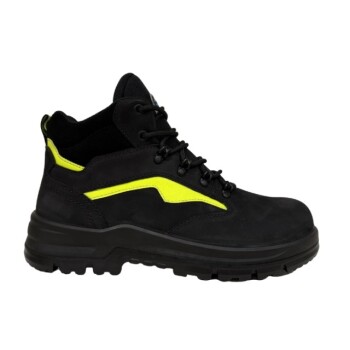
At its core, the importance of women wearing work boots in the construction industry is a matter of non-negotiable safety. These boots are a foundational piece of personal protective equipment (PPE) specifically engineered to protect against the severe and common hazards found on any job site, from falling objects to puncture wounds.
The right work boot is more than just safety equipment; it's a critical tool for performance and long-term health. For women, a properly designed, gender-specific boot is essential for providing the correct protection, fit, and support needed to prevent injury and reduce fatigue.

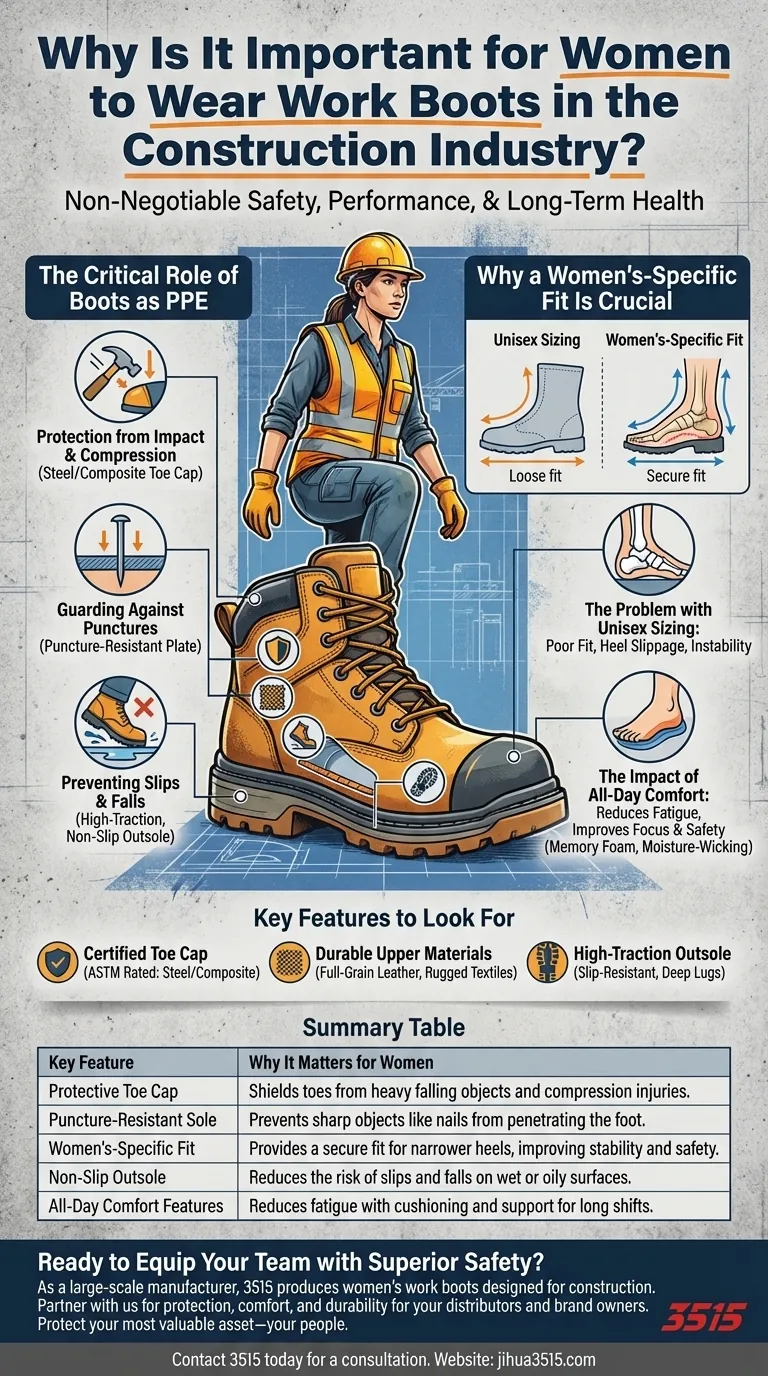
The Critical Role of Boots as PPE
A construction site presents a unique combination of risks to your feet. Certified work boots are purpose-built to mitigate these specific dangers in ways that standard footwear simply cannot.
Protection from Impact and Compression
The most vulnerable parts of your feet are your toes. Work boots feature a reinforced protective toe cap, typically made of steel or a lighter composite material, to safeguard against injuries from falling tools, rolling materials, or heavy equipment.
Guarding Against Punctures
Job sites are often littered with sharp objects like nails, screws, and rebar. Many safety boots include a puncture-resistant plate in the midsole that prevents these hazards from penetrating the sole and causing serious injury.
Preventing Slips and Falls
Slips, trips, and falls are among the most frequent causes of injury in construction. Work boots are designed with high-traction, non-slip outsoles made from durable rubber compounds that provide a secure grip on uneven, wet, or oily surfaces.
Why a Women's-Specific Fit Is Crucial
Simply wearing a smaller men's boot is an inadequate and often unsafe solution. Women's feet have distinct anatomical differences, and a proper fit is directly linked to both safety and comfort.
The Problem with Unisex Sizing
Women's feet are not just smaller versions of men's feet; they typically have a narrower heel in relation to the forefoot and a different arch structure. Boots designed on a women's-specific last (the mold used to shape the boot) provide a secure, correct fit that prevents heel slippage and improves stability.
The Direct Link Between Fit and Safety
Ill-fitting boots are a hazard. Boots that are too loose can cause tripping and reduce your sense of balance, while boots that are too tight create painful pressure points and blisters, which can be a dangerous distraction on a busy site.
The Impact of All-Day Comfort
Comfort is not a luxury; it is a key factor in reducing physical fatigue over a long workday. Women's boots often incorporate features like memory foam insoles and moisture-wicking linings that support the foot and keep it dry, helping you stay focused and less prone to end-of-day mistakes.
Key Features to Look For
When evaluating work boots, prioritize the features that address the most common and serious risks associated with your specific role.
The Certified Toe Cap
Ensure the boot has a toe cap rated for safety standards (like ASTM). Steel toes offer maximum protection, while composite toes are lighter, don't conduct electricity, and perform better in cold weather.
Durable Upper Materials
The boot's upper must withstand abrasion and challenging conditions. High-quality materials like full-grain leather or rugged synthetic textiles offer the best combination of durability and protection.
A High-Traction Outsole
Examine the sole for deep lugs and a design that channels away water and debris. The material should be rated for slip resistance, especially if you frequently work on slick surfaces.
Making the Right Choice for Your Role
Selecting the right boot depends on the specific demands of your job.
- If your primary focus is maximum protection against heavy objects: Prioritize a boot with a certified steel toe cap and metatarsal guard.
- If your primary focus is working on uneven or slippery surfaces: Choose a boot with a highly-rated, non-slip outsole and good ankle support.
- If your primary focus is all-day comfort and reducing fatigue: Seek out a women's-specific design with excellent cushioning and a lightweight composite toe.
Investing in a high-quality, properly fitting work boot is a direct investment in your daily safety, long-term health, and professional performance.
Summary Table:
| Key Feature | Why It Matters for Women |
|---|---|
| Protective Toe Cap | Shields toes from heavy falling objects and compression injuries. |
| Puncture-Resistant Sole | Prevents sharp objects like nails from penetrating the foot. |
| Women's-Specific Fit | Provides a secure fit for narrower heels, improving stability and safety. |
| Non-Slip Outsole | Reduces the risk of slips and falls on wet or oily surfaces. |
| All-Day Comfort Features | Reduces fatigue with cushioning and support for long shifts. |
Ready to Equip Your Team with Superior Safety?
As a large-scale manufacturer, 3515 produces a comprehensive range of women's work boots designed specifically for the rigors of the construction industry. We ensure the highest standards of protection, comfort, and durability for distributors, brand owners, and bulk clients.
Partner with us to provide footwear that protects your most valuable asset—your people.
Contact 3515 today for a consultation to discuss your specific needs and volume requirements.
Visual Guide
Related Products
- Durable Leather Work Boots for Wholesale & Custom Manufacturing
- Durable Leather Work Boots for Wholesale & Custom OEM Manufacturing
- Durable Leather Work Boots Wholesale Manufacturer & Custom Factory
- Durable Leather Moc Toe Work Boots for Wholesale & Custom Manufacturing
- Wholesale Leather Work Boots with Customizable Wedge Sole for Brands
People Also Ask
- What is the difference between full-grain and top-grain leather? Premium Material Guide for Boot Manufacturers
- What are the common workplace hazards that can be mitigated with the right work boots? Protect Your Workforce
- What are the common foot issues workers face due to uncomfortable work boots? Prevent Pain & Deformities
- What are the advantages of leather versus synthetic work boots? A Guide to Choosing the Right Material
- What are the key components of modern work boots? Engineered for Ultimate Durability and Comfort