Work boots reduce muscle fatigue by acting as a sophisticated support system for your entire lower body. They use a combination of strategic cushioning, dedicated arch support, and shock-absorbing materials to minimize the constant strain placed on your feet, legs, and back during a long workday.
The core function of a fatigue-reducing work boot is to manage impact and distribute pressure correctly. By absorbing the shock from hard surfaces and supporting the natural alignment of your feet, they prevent the chain reaction of muscle strain that travels up your legs and into your back.
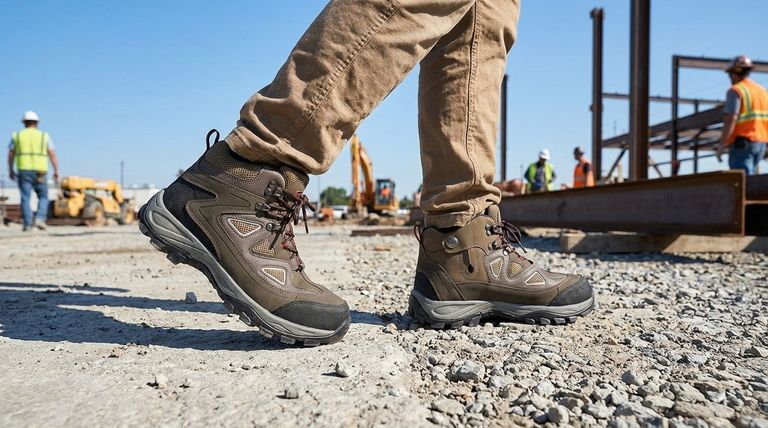
The Mechanics of Support and Fatigue Reduction
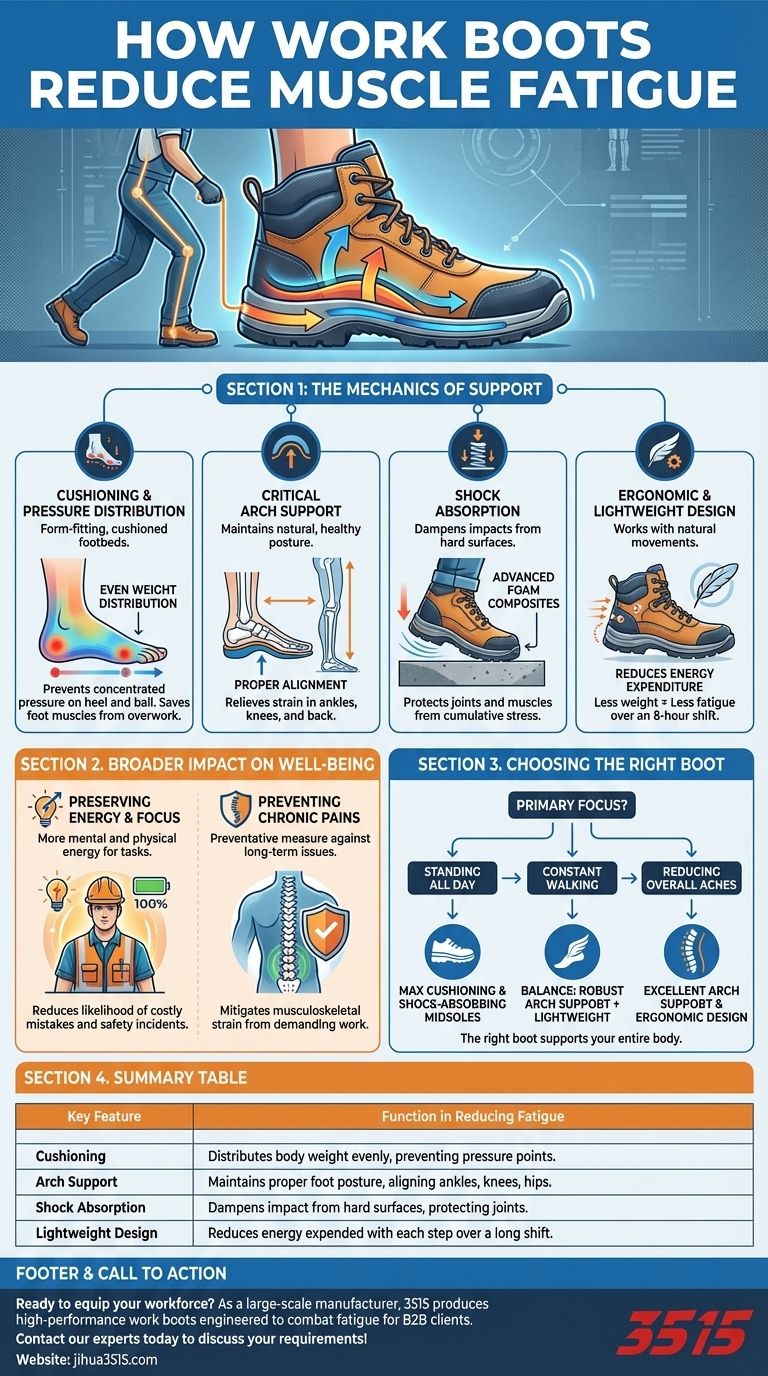
A well-designed work boot doesn't just protect your foot; it actively works to conserve your energy and prevent the physical exhaustion that builds up over a shift. This is achieved through several key engineering principles.
Cushioning and Pressure Distribution
High-quality boots feature form-fitting, cushioned footbeds. This isn't just for immediate comfort; it's about evenly distributing your body weight across the entire surface of your foot.
This distribution prevents pressure from concentrating on specific points, like the heel or ball of the foot. By reducing this pressure, the small muscles in your feet are saved from being constantly overworked.
The Critical Role of Arch Support
Proper arch support is fundamental to preventing fatigue that extends beyond the feet. It helps maintain your foot's natural, healthy posture.
When the arch is properly supported, it aligns your ankles, knees, and hips correctly. This alignment relieves the strain that can lead to significant leg and lower back pain after hours of standing or walking.
Shock Absorption from Every Step
Walking or standing on hard surfaces like concrete sends jarring impacts up through your body with every step. Work boots are designed with shock-absorbing materials in the midsole and outsole.
Materials like advanced foam composites dampen these impacts, protecting your joints and muscles from the cumulative stress. This is a primary factor in reducing feelings of exhaustion in your legs and knees.
Ergonomic and Lightweight Design
Modern boots often feature an ergonomic design intended to work with your body's natural movements, reducing discomfort over long hours.
Furthermore, advances in materials like foam composite technology have made boots significantly lighter. Reducing the weight of the boot itself means you expend less energy with every single step, which adds up to a significant energy saving over an 8-hour shift.
The Broader Impact on Worker Well-being
Reducing muscle fatigue is not just about comfort. It has a direct and measurable impact on a worker's overall performance, safety, and health.
Preserving Energy and Focus
When your body isn't fighting physical discomfort and strain, you have more mental and physical energy available for your tasks.
This preserved energy helps you maintain focus throughout the day. A less fatigued worker is a more attentive worker, which reduces the likelihood of costly mistakes or safety incidents.
Preventing Chronic Aches and Pains
The support offered by quality work boots is a preventative measure against chronic pain.
By mitigating the daily strain on muscles and joints in the feet, legs, and back, these boots help prevent long-term musculoskeletal issues that can arise from years of demanding physical work.
Choosing the Right Boot for Your Needs
To effectively combat fatigue, you must select a boot based on your specific work environment and physical requirements.
- If your primary focus is standing all day on hard surfaces: Prioritize boots with maximum cushioning and thick, shock-absorbing midsoles to dampen constant impact.
- If your primary focus is constant walking or movement: Look for a boot that balances robust arch support with a lightweight design to minimize the energy used for each step.
- If your primary focus is reducing overall body aches (legs and back): Ensure the boot has excellent, structured arch support and an ergonomic design that promotes proper body alignment.
Ultimately, the right work boot is a critical piece of equipment that supports your entire body, not just your feet.
Summary Table:
| Key Feature | Function in Reducing Fatigue |
|---|---|
| Cushioning | Distributes body weight evenly, preventing pressure points in feet. |
| Arch Support | Maintains proper foot posture, aligning ankles, knees, and hips. |
| Shock Absorption | Dampens impact from hard surfaces, protecting joints and muscles. |
| Lightweight Design | Reduces energy expended with each step over a long shift. |
Ready to equip your workforce with boots that fight fatigue?
As a large-scale manufacturer, 3515 produces a comprehensive range of high-performance work boots for distributors, brand owners, and bulk clients. Our boots are engineered with advanced cushioning, structured arch support, and shock-absorbing materials to directly combat muscle fatigue, helping to boost productivity and worker well-being.
Let us help you find the perfect solution for your team's needs. Contact our experts today to discuss your requirements!
Visual Guide
Related Products
- Durable Leather Work Boots for Wholesale & Custom Manufacturing
- Durable Leather Work Boots for Wholesale & Custom OEM Manufacturing
- Durable Leather Work Boots Wholesale Manufacturer & Custom Factory
- Durable Leather Moc Toe Work Boots for Wholesale & Custom Manufacturing
- Wholesale Durable 6-Inch Work Boots | Custom & Private Label Manufacturer
People Also Ask
- What is the difference between full-grain and top-grain leather? Premium Material Guide for Boot Manufacturers
- What are the common workplace hazards that can be mitigated with the right work boots? Protect Your Workforce
- What are the common foot issues workers face due to uncomfortable work boots? Prevent Pain & Deformities
- What are the advantages of leather versus synthetic work boots? A Guide to Choosing the Right Material
- What are the key components of modern work boots? Engineered for Ultimate Durability and Comfort