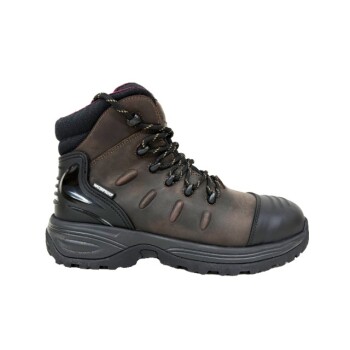
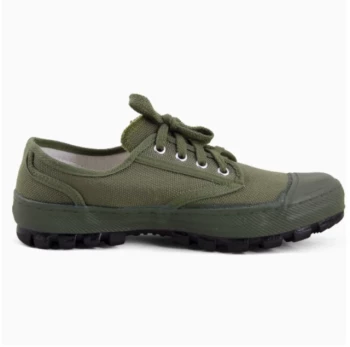
When selecting a work boot, the upper material is the foundation of its performance. The primary advantages of leather are its unique and balanced combination of exceptional durability, natural breathability, and its ability to absorb moisture. Critically, it also molds to the wearer's foot over time, creating a custom fit that is difficult for synthetic materials to replicate.
While other materials may excel in a single category, such as total waterproofing, leather's true value lies in its holistic performance. It provides robust physical protection without sacrificing the long-term comfort and foot health essential for demanding work environments.
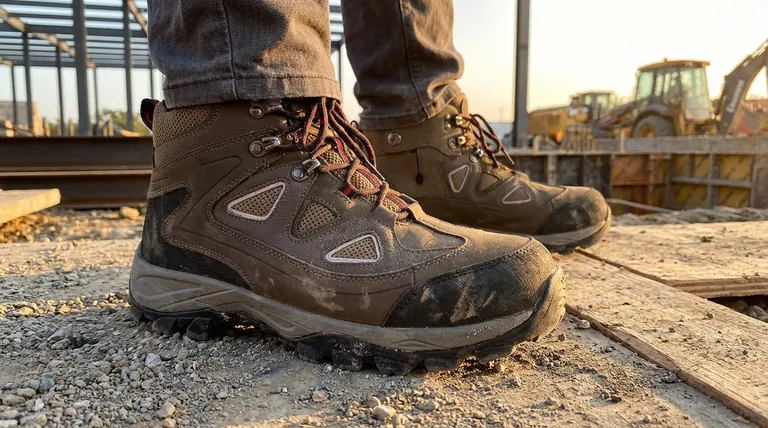
The Core Functions of a Leather Upper
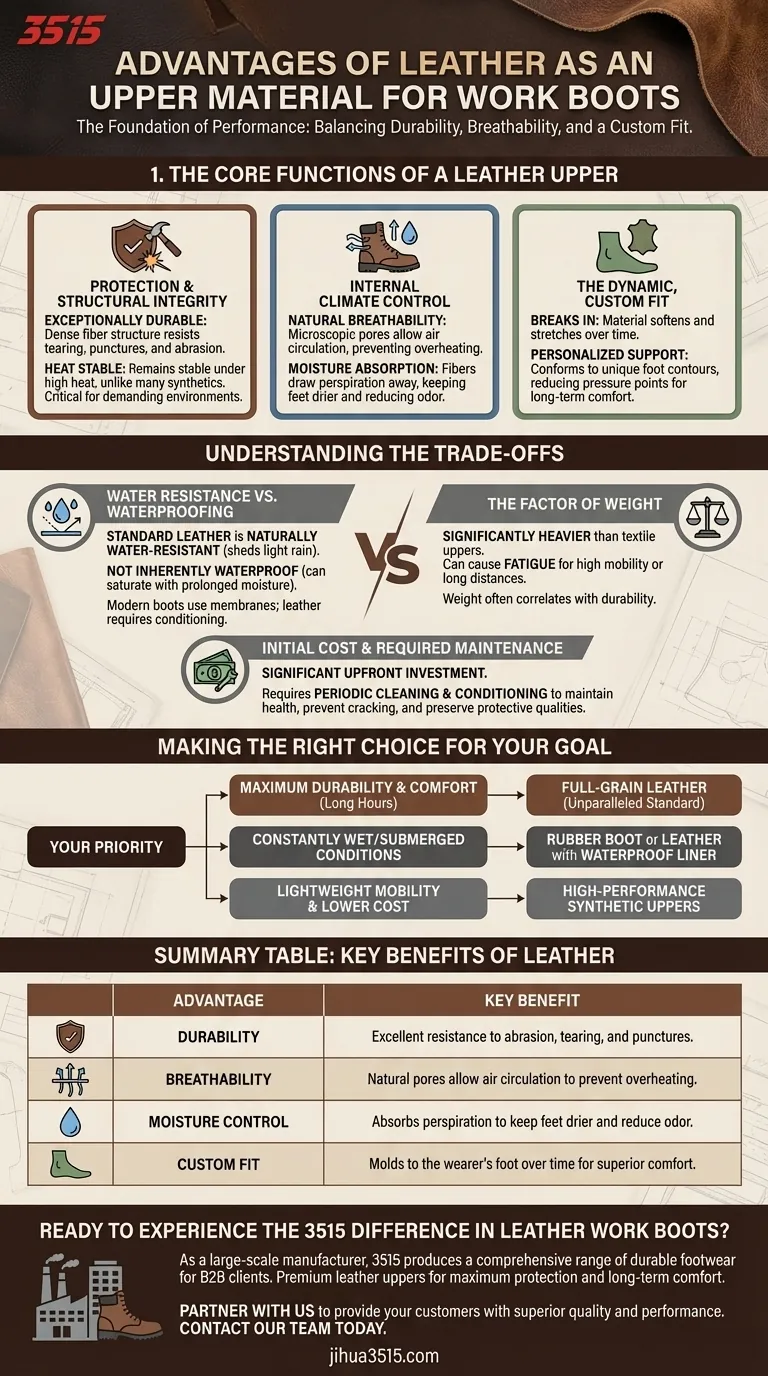
Leather has remained the benchmark for premium work boots because it effectively addresses the three core demands placed on footwear: protection, climate control, and long-term comfort.
Protection and Structural Integrity
Leather is a famously durable material. Its dense fiber structure provides excellent resistance to tearing, punctures, and abrasion, which is critical in workshops, construction sites, and rugged outdoor environments.
Unlike many synthetic materials that can melt or deform under high heat, high-quality leather remains stable, making it the required material for professions like firefighting.
Internal Climate Control
As a natural material, leather contains microscopic pores that allow air to circulate. This breathability is crucial for venting heat and water vapor, preventing the foot from overheating during long hours of labor.
Leather fibers can also absorb a significant amount of moisture, drawing perspiration away from the skin. This helps keep the foot drier and reduces the growth of odor-causing bacteria.
The Dynamic, Custom Fit
Perhaps leather's most valued trait is its ability to break in. Over time, the material softens and stretches, conforming to the unique contours of your foot.
This creates a personalized, supportive fit that reduces pressure points and friction. In contrast, rigid materials like rubber or many plastics offer a static fit that never adapts to the user.
Understanding the Trade-offs
No material is perfect. Acknowledging leather's limitations is key to making an informed decision and avoiding mismatched expectations.
Water Resistance vs. Waterproofing
Standard leather is naturally water-resistant, meaning it can shed light rain and splashes effectively. However, it is not inherently waterproof and will become saturated if submerged or exposed to heavy, prolonged moisture.
Many modern leather boots incorporate a separate waterproof membrane to overcome this, but the leather itself requires conditioning to maintain its health and resistance.
The Factor of Weight
Compared to textile uppers made from materials like nylon, leather is significantly heavier. While this weight often correlates with durability, it can be a source of fatigue for workers who require high mobility or cover long distances on foot.
Initial Cost and Required Maintenance
Genuine, high-quality leather boots represent a significant upfront investment. They are more expensive to produce than boots made from most synthetic materials.
To achieve a long service life, leather requires periodic cleaning and conditioning. Neglecting this maintenance will cause the material to dry out, crack, and lose its protective and water-resistant qualities.
Making the Right Choice for Your Goal
Your specific work environment and priorities should dictate your choice of upper material.
- If your primary focus is maximum durability and personalized comfort for long hours: Full-grain leather remains the unparalleled standard due to its strength and ability to mold perfectly to your foot.
- If your primary focus is working in constantly wet or submerged conditions: A dedicated rubber boot or a leather boot featuring a certified waterproof inner liner is the more practical choice.
- If your primary focus is lightweight mobility and a lower initial cost: High-performance synthetic uppers offer a viable alternative, though you may sacrifice some long-term durability and the benefits of a custom fit.
Ultimately, understanding these material properties empowers you to select a boot that is not just protective equipment, but a true tool for your trade.
Summary Table:
| Advantage | Key Benefit |
|---|---|
| Durability | Excellent resistance to abrasion, tearing, and punctures. |
| Breathability | Natural pores allow air circulation to prevent overheating. |
| Moisture Control | Absorbs perspiration to keep feet drier and reduce odor. |
| Custom Fit | Molds to the wearer's foot over time for superior comfort. |
Ready to Experience the 3515 Difference in Leather Work Boots?
As a large-scale manufacturer, 3515 produces a comprehensive range of durable footwear for distributors, brand owners, and bulk clients. Our production capabilities encompass all types of safety and work shoes and boots, including premium leather uppers designed for maximum protection and long-term comfort.
Partner with us to provide your customers with superior quality and performance.
Contact our team today to discuss your specific needs and discover how we can support your business with reliable, high-quality footwear solutions.
Visual Guide
Related Products
- Durable Leather Work Boots for Wholesale & Custom Manufacturing
- Wholesale Leather Work Boots with Customizable Wedge Sole for Brands
- Durable Leather Work Boots for Wholesale & Custom OEM Manufacturing
- Durable Goodyear Welt Leather Work Boots for Wholesale & Private Label
- Durable Leather Work Boots Wholesale Manufacturer & Custom Factory
People Also Ask
- What is the difference between full-grain and top-grain leather? Premium Material Guide for Boot Manufacturers
- What are the common workplace hazards that can be mitigated with the right work boots? Protect Your Workforce
- What are the common foot issues workers face due to uncomfortable work boots? Prevent Pain & Deformities
- What are the advantages of leather versus synthetic work boots? A Guide to Choosing the Right Material
- What are the key components of modern work boots? Engineered for Ultimate Durability and Comfort