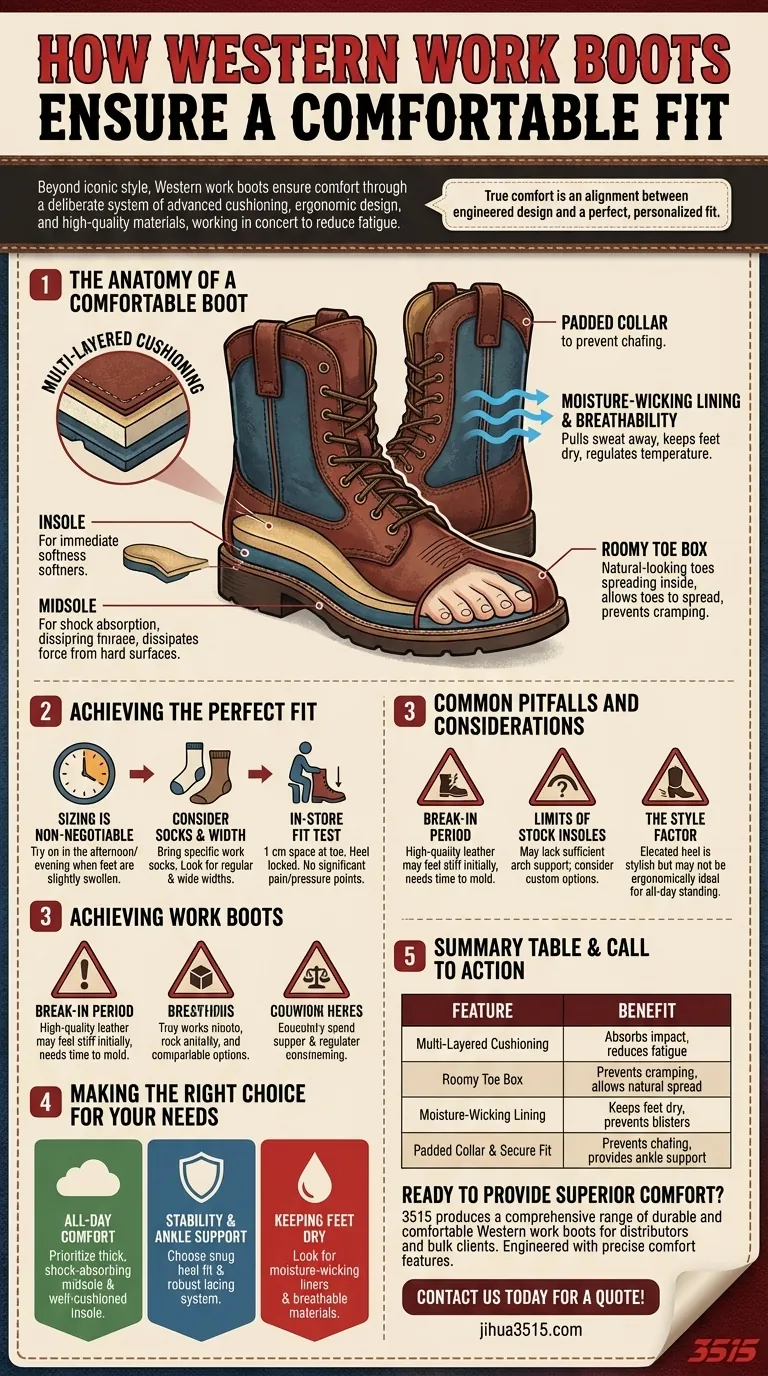
Beyond their iconic style, Western work boots ensure a comfortable fit through a deliberate system of advanced cushioning, ergonomic design, and high-quality materials. Key features like multi-layered insoles, roomy toe boxes, and moisture-wicking linings work in concert to reduce fatigue and support your feet during long hours of demanding work.
True comfort in a Western work boot is not the result of a single feature, but an alignment between the boot's engineered design and a wearer's ability to select the perfect, personalized fit.
The Anatomy of a Comfortable Boot
Understanding the components that create comfort is the first step in appreciating how these boots are designed for performance, not just appearance.
The Foundation: Multi-Layered Cushioning
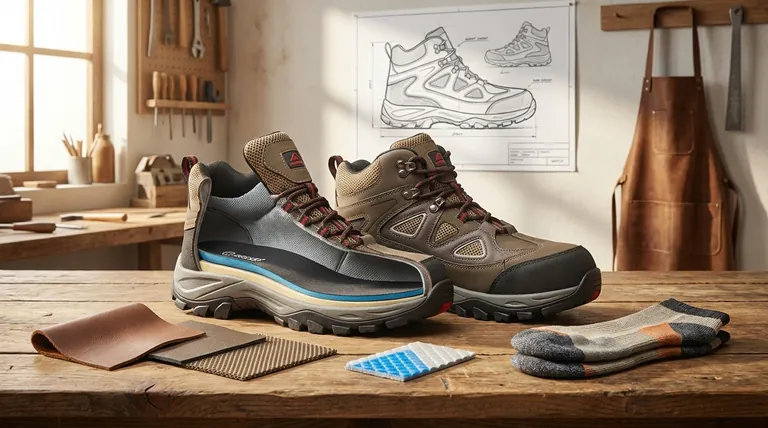
A boot's comfort starts from the ground up. Most quality Western work boots feature a multi-layered comfort system designed to absorb impact and reduce strain.
This system typically includes a cushioned insole for immediate softness and a shock-absorbing midsole that dissipates force from walking on hard surfaces.
The Upper: Room and Support
The fit around your foot is critical. These boots are engineered with a roomy toe box, which allows your toes to spread naturally and prevents cramping or pinching.
A padded collar at the top of the boot prevents chafing around the ankle, while high-quality stitching and lacing systems create a snug, secure fit that supports your foot without restricting movement.
Climate Control: Breathability and Moisture Management
Comfort is impossible if your feet are not dry. Modern Western work boots use moisture-wicking materials and breathable liners.
These features pull sweat away from the skin and allow air to circulate, which helps regulate temperature and prevent the discomfort and blisters caused by dampness.
Achieving the Perfect Fit
A well-designed boot will only be comfortable if it is sized correctly for your unique foot shape. Your role in the fitting process is just as important as the manufacturer's design.
Sizing is Non-Negotiable
Feet tend to swell slightly throughout the day. For the most accurate measurement, always try on boots in the afternoon or evening.
Bring the specific type of socks you plan to wear for work, as their thickness can significantly alter the fit. Look for brands that offer a broad range of sizes, including regular and wide widths, to find a boot that conforms to your foot.
The In-Store Fit Test
When trying on a pair, perform a few simple checks. There should be about a centimeter of space between your longest toe and the end of the boot.
Your heel should feel locked in place with minimal rubbing or slipping as you walk. Most importantly, there should be no significant pain or pressure points anywhere on your foot.
Common Pitfalls and Considerations
Even the best boots have trade-offs. Being aware of them allows you to make a more informed decision and manage your expectations.
The Break-In Period
High-quality leather boots, while incredibly durable, often require a break-in period. They may feel stiff at first and will gradually mold to the shape of your foot with wear.
The Limits of Stock Insoles
The included insole provides good general cushioning, but it may not offer sufficient arch support for your specific foot type. Many wearers find that comfort is significantly enhanced by using custom or specialized insoles.
The Style Factor
The classic Western boot design includes an elevated heel. While integral to the style and useful for certain tasks like riding, it may not be the ideal ergonomic choice for everyone, especially those who spend all day standing on flat concrete.
Making the Right Choice for Your Needs
Selecting the right boot depends entirely on your primary goal and work environment.
- If your primary focus is all-day comfort on hard surfaces: Prioritize boots with a thick, shock-absorbing midsole and a well-cushioned insole.
- If your primary focus is stability and ankle support: Choose a model with a snug fit around the heel and a robust lacing system to lock your foot in place.
- If your primary focus is keeping your feet dry: Look for boots explicitly advertised with moisture-wicking liners and breathable construction materials.
Ultimately, the right Western work boot combines proven design principles with your personal commitment to finding the perfect fit.
Summary Table:
| Feature | Key Benefit |
|---|---|
| Multi-Layered Cushioning | Absorbs impact, reduces foot fatigue |
| Roomy Toe Box | Prevents cramping, allows natural toe spread |
| Moisture-Wicking Lining | Keeps feet dry, prevents blisters |
| Padded Collar & Secure Fit | Prevents chafing, provides ankle support |
Ready to provide superior comfort for your workforce or customers?
As a large-scale manufacturer, 3515 produces a comprehensive range of durable and comfortable Western work boots for distributors, brand owners, and bulk clients. Our production capabilities encompass all types of safety and occupational footwear, engineered with the precise comfort features detailed above.
We can help you source or create the perfect boot to meet your market's demands. Contact us today to discuss your project and get a quote!
Visual Guide
Related Products
- Durable Goodyear Welt Leather Work Boots for Wholesale & Private Label
- Durable Leather Work Boots for Wholesale & Custom Manufacturing
- Durable Leather Work Boots for Wholesale & Custom OEM Manufacturing
- Durable Moc-Toe Wedge Work Boots | Wholesale Manufacturing for Brands
- Wholesale Leather Work Boots with Customizable Wedge Sole for Brands
People Also Ask
- What is the difference between full-grain and top-grain leather? Premium Material Guide for Boot Manufacturers
- What are the advantages of leather as an upper material for work boots? Unmatched Durability & Custom Comfort
- Why is it important to waterproof leather work boots? Protect Your Investment and Performance
- How should new leather work boots be broken in? A Guide to Comfort and Durability
- What are the advantages of leather uppers in work boots? Unmatched Durability & Protection