
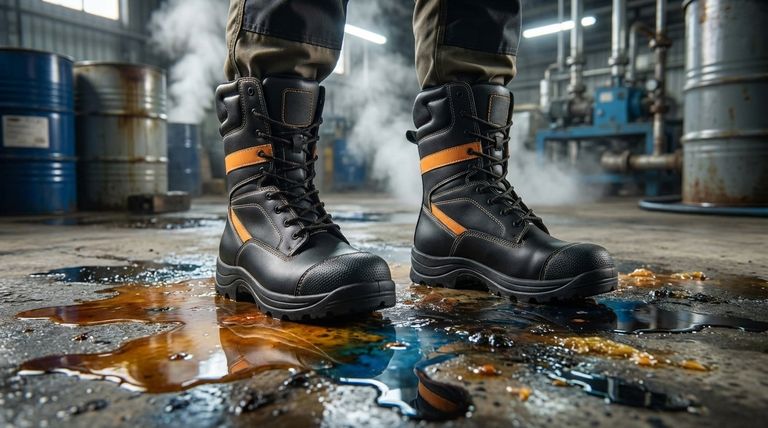
Wellington boots utilize specialized chemical-resistant materials in their soles and uppers to create an impermeable barrier against aggressive substances. By resisting the corrosive effects of fats, solvents, and oils, these boots prevent material degradation, stop hazardous fluids from reaching the skin, and maintain critical traction on slick surfaces.
Standard footwear often deteriorates rapidly when exposed to industrial fluids, leading to structural failure and safety risks. High-quality wellington boots are engineered to resist this chemical breakdown, ensuring the boot remains intact to prevent penetration and slip-and-fall accidents.
The Mechanics of Chemical Resistance
Resisting Material Breakdown
Exposure to animal fats, industrial solvents, and oils can cause standard rubber compounds to soften, crack, or dissolve.
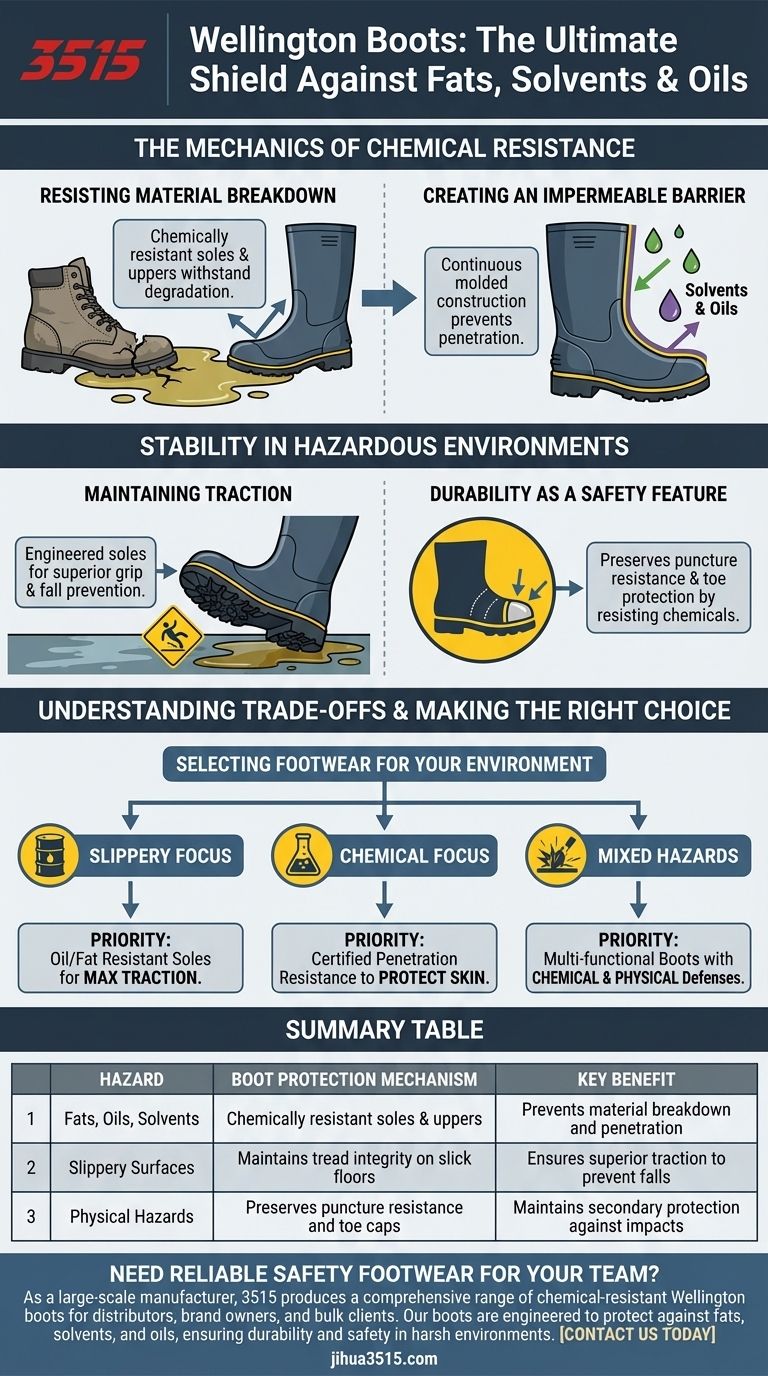
Wellington boots are constructed with resistant soles specifically designed to withstand these agents. This ensures the boot retains its shape and structural integrity even in environments saturated with corrosive fluids.
Creating an Impermeable Barrier
Solvents and oils are often low-viscosity fluids that can seep through stitched fabric or porous leather.
The continuous, molded construction of a wellington boot acts as a solid shield against chemical penetration. This prevents harmful substances from reaching the skin, protecting the wearer from chemical burns or absorption.
Stability in Hazardous Environments
Maintaining Traction on Slick Surfaces
Oils and fats act as lubricants, turning standard flooring into a dangerous slip hazard.
The soles of safety wellingtons are engineered to resist the slick nature of these fluids. By maintaining their tread integrity and grip, they provide superior traction to prevent falls, which are a primary cause of workplace injury.
Durability as a Safety Feature
A boot that degrades chemically loses its physical protective qualities.
By resisting fats and solvents, the boot maintains its secondary safety features, such as puncture resistance and toe protection. This ensures that the boot continues to guard against sharp objects and impact hazards throughout its lifespan.
Understanding the Trade-offs
Specificity of Protection
Not all rubber compounds protect against every chemical equally.
A boot designed for oil resistance may not necessarily offer the same level of protection against strong acids or specific corrosives. It is critical to match the boot's material specifications to the specific chemicals present in your workspace.
Weight and Ergonomics
Boots built with heavy-duty chemical and physical resistance can be heavier than standard footwear.
While they protect against musculoskeletal strain through ergonomic design, the added weight of safety toes and dense, chemically resistant soles can still be a factor during long shifts.
Making the Right Choice for Your Goal
Selecting the correct footwear requires analyzing the specific mix of hazards in your environment.
- If your primary focus is slippery environments: Prioritize boots with soles explicitly rated for oil and fat resistance to ensure maximum traction and stability.
- If your primary focus is chemical exposure: Select boots that certify resistance to penetration to prevent solvents from reaching the skin.
- If your primary focus is mixed hazards: Look for multi-functional boots that combine chemical resistance with physical defenses like safety toes and puncture plates.
True safety is achieved not just by covering the foot, but by selecting materials that remain stable in your specific working environment.
Summary Table:
| Hazard | Boot Protection Mechanism | Key Benefit |
|---|---|---|
| Fats, Oils, Solvents | Chemically resistant soles and uppers | Prevents material breakdown and penetration |
| Slippery Surfaces | Maintains tread integrity on slick floors | Ensures superior traction to prevent falls |
| Physical Hazards | Preserves puncture resistance and toe caps | Maintains secondary protection against impacts |
Need reliable safety footwear for your team? As a large-scale manufacturer, 3515 produces a comprehensive range of chemical-resistant wellington boots for distributors, brand owners, and bulk clients. Our boots are engineered to protect against fats, solvents, and oils, ensuring durability and safety in harsh environments. Contact us today to find the perfect safety solution for your needs!
Visual Guide
Related Products
- Durable Waterproof Rain Boots | Custom Manufacturer for Wholesale & Brands
- Durable Goodyear Welt Leather Work Boots for Wholesale & Private Label
- Wholesale Durable Leather Work Boots | 8-Inch Goodyear Welt Manufacturer
- Durable Leather Tactical Boots Wholesale & Custom Manufacturing for Brands
- High-Traction Suede Tactical Boots Wholesale & Custom Manufacturing
People Also Ask
- What are the main materials for waterproof rain boots? Choose the Right Material for Durability & Comfort
- What is the overall recommendation for choosing rain boot materials? A Guide to Rubber vs. PVC
- How does boot height affect waterproofing? Choose the Right Height for Ultimate Protection
- Why are rain boots more flexible and comfortable than snow boots? The Key Differences Explained
- What are the best types of shoes for different gardening conditions? Find Your Perfect Match.



















