
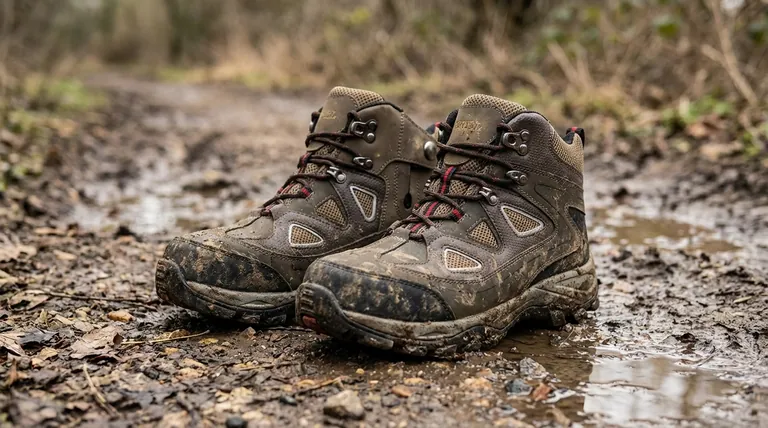
Neglecting to clean your rubber boots directly shortens their functional lifespan. The accumulation of dirt and moisture accelerates material degradation, leading to faster wear and tear, a noticeable loss of quality, and a reduction in the structural support you rely on.
Proper boot care is not about appearance; it's a critical maintenance practice. Regular, gentle cleaning prevents the rubber compound from breaking down, preserving the boot's integrity and extending its useful life significantly.
The Consequences of Neglect
Failing to clean your boots is not a passive act; it actively contributes to their decay. Each element left on the boot's surface works to break down the material over time.
Accelerated Wear and Tear
Dried mud, grit, and dirt act as a fine-grit abrasive. With every step you take, these particles grind against the surface, physically wearing down the rubber, especially at key flex points.
Loss of Material Quality
Contaminants can leach the plasticizers from the rubber that keep it flexible. This process causes the material to become dry, brittle, and prone to cracking, which compromises its waterproof capabilities.
Reduced Structural Support
As the rubber degrades and loses its intended form, the entire structure of the boot weakens. This diminishes the support provided to your foot and ankle, which can lead to discomfort and instability.
A Proactive Cleaning Protocol
A simple and consistent cleaning routine is the most effective defense against premature boot failure. This process addresses both the exterior and interior of the boot.
Step 1: Cleaning the Exterior
First, use mild water to rinse off any loose dust and dirt.
For more stubborn, dried-on mud, gently use a medium bristle brush to break away the hardened layers.
Finish by wiping the entire exterior with a soft cloth or towel dipped in warm water to remove any remaining grime.
Step 2: Cleaning the Interior
To clean and refresh the inside, mix one teaspoon of heavy-duty laundry detergent with two cups of warm water.
Use a cloth to wipe down the entire interior with this solution.
Follow up by "rinsing" with a second, clean cloth soaked in only warm water to remove any detergent residue.
Step 3: Preventing Interior Odors
For highly effective odor prevention, spray the inside of the boots with a 50/50 solution of white vinegar and water.
Allow the boots to air dry completely in a well-ventilated area away from direct heat.
Common Pitfalls to Avoid
How you clean your boots is as important as whether you clean them. Aggressive methods can cause as much damage as neglect.
Using Harsh Chemicals
Avoid solvents, oils, or aggressive chemical cleaners. These can strip the protective finish and essential compounds from the rubber, leading to rapid drying and cracking.
Applying Direct Heat to Dry
Never place your boots near a radiator, campfire, or other direct heat source. Intense heat can warp the rubber, damage seams, and weaken the adhesives that hold the boot together.
Storing Boots While Dirty
Storing boots while still covered in mud traps moisture and contaminants against the surface. This creates an ideal environment for material degradation and mildew growth.
How to Apply This to Your Goal
Use this simple framework to guide your maintenance routine based on what matters most to you.
- If your primary focus is extending the boot's lifespan: Make it a habit to rinse the exterior with mild water after every significant use to prevent abrasive buildup.
- If your primary focus is odor control and interior comfort: Prioritize cleaning and deodorizing the liner with the detergent and vinegar solutions, especially after long periods of wear.
Consistent care is the single most effective way to protect your investment and ensure your boots perform when you need them most.
Summary Table:
| Consequence of Neglect | Key Impact |
|---|---|
| Accelerated Wear & Tear | Dirt acts as an abrasive, grinding down rubber at flex points. |
| Loss of Material Quality | Contaminants leach plasticizers, causing rubber to dry and crack. |
| Reduced Structural Support | Degraded material weakens the boot's structure, leading to instability. |
Ensure your footwear investment lasts. As a large-scale manufacturer, 3515 produces a comprehensive range of durable rubber boots and footwear for distributors, brand owners, and bulk clients. Our expertise in materials and construction ensures long-lasting performance. Let us help you source reliable footwear that stands up to the toughest conditions.
Contact our team today to discuss your specific needs and explore our product catalog.
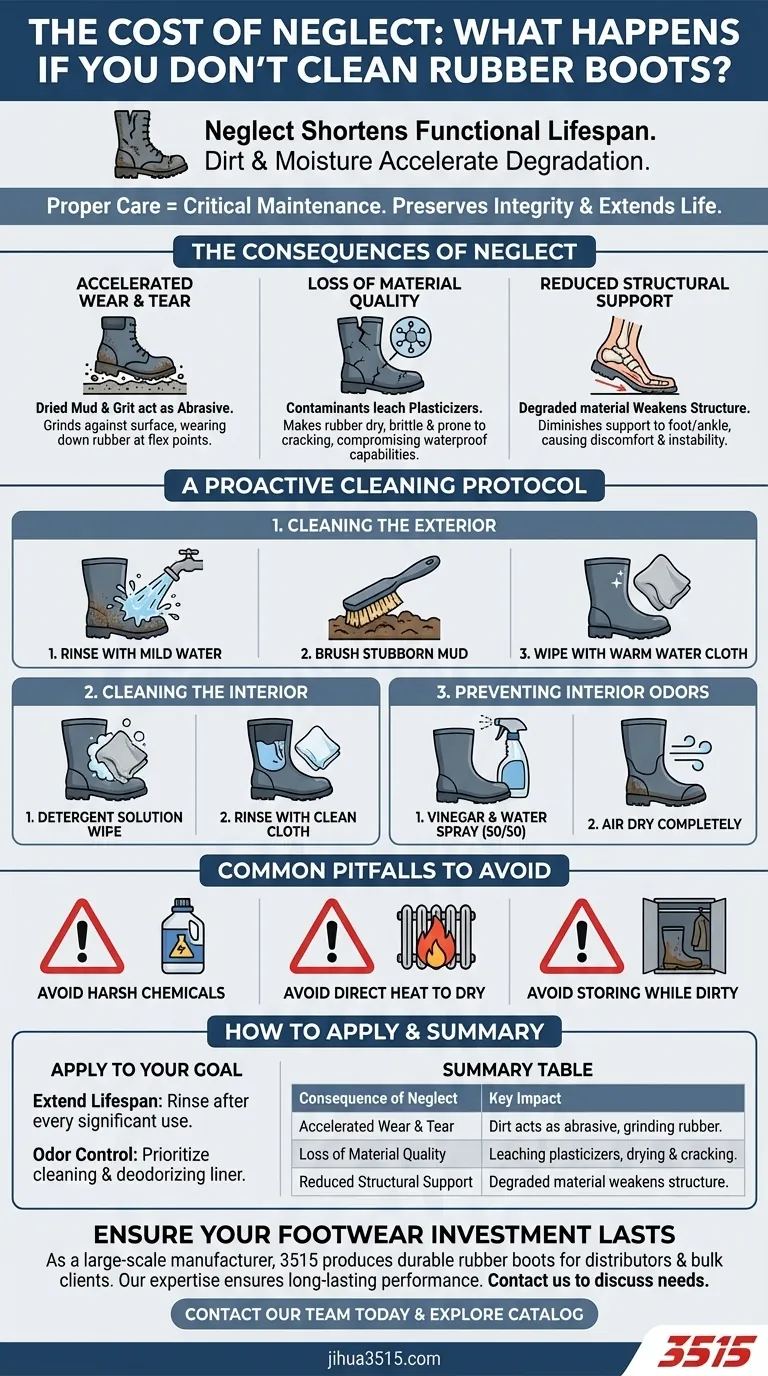
Visual Guide
Related Products
- Factory Direct Wholesale Rain Boots Durable Waterproof & Fully Customizable
- Durable Rubber Sole Outdoor Shoes Wholesale & Custom Manufacturing
- Wholesale Durable Camouflage Canvas Shoes with High-Traction Cleated Rubber Sole
- Wholesale Durable Leather Work Boots | 8-Inch Goodyear Welt Manufacturer
- Durable Goodyear Welt Leather Work Boots for Wholesale & Private Label
People Also Ask
- What are the characteristics of rain boots? A Guide to Waterproof Footwear for Every Need
- What factors should be considered when choosing rain boots? Find the Perfect Boot for Your Needs
- What are the main differences between rain boots and snow boots? Choose the Right Boot for Your Climate
- How should one decide between PVC and rubber for rain boots? A Guide to Choosing the Right Material
- Why are rain boots more flexible and comfortable than snow boots? The Key Differences Explained
















