
Wellington boots provide a superior defense against the elements by combining completely waterproof exteriors with specialized thermal insulation. For children, they offer the necessary durability and protection to maintain body heat and dryness during vigorous outdoor activities, from puddle-jumping to trekking through snow.
The core value of a wellington boot is not just keeping water out, but creating a sealed environment that retains warmth and enables movement, transforming harsh weather into an opportunity for play.
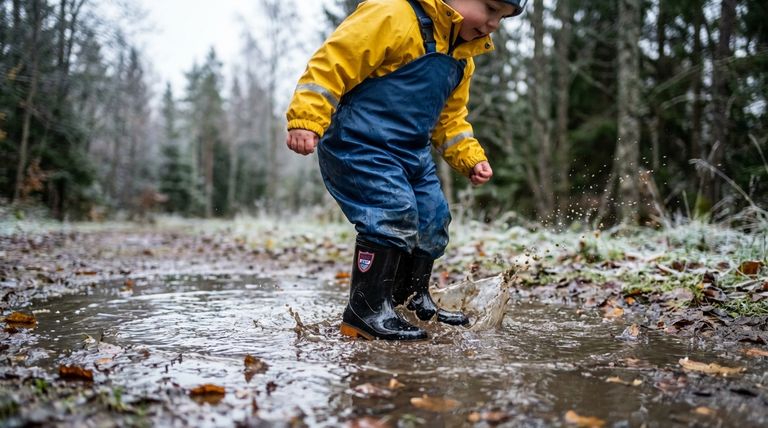
The Mechanics of Protection
To understand why wellies are effective, you must look beyond the rubber shell. The boot functions as a system that manages moisture, temperature, and terrain simultaneously.
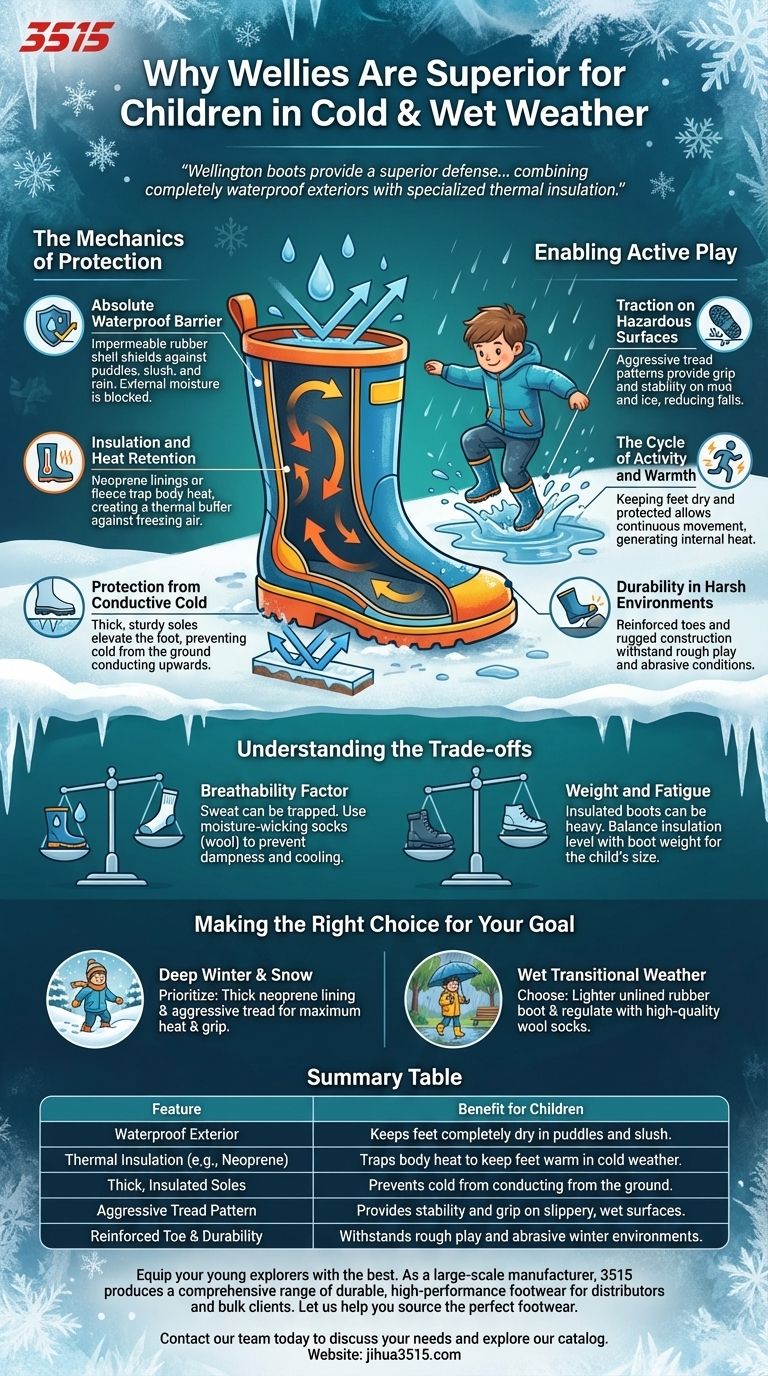
The Absolute Waterproof Barrier
Unlike "water-resistant" footwear which can eventually saturate, wellington boots are impermeable.
The outer layer, typically made of rubber or synthetic materials, provides a complete shield. This ensures that even when submerged in puddles or slush, external moisture cannot reach the child's skin.
Insulation and Heat Retention
A common misconception is that rubber alone keeps feet warm. In reality, insulation is the key factor for cold weather performance.
High-quality cold-weather wellies utilize neoprene linings, fleece, or thick cushioning materials. These layers trap body heat inside the boot, creating a thermal buffer against the freezing outside air.
Protection from Conductive Cold
The design of the sole plays a critical role in thermodynamics.
Wellies feature thick, sturdy soles that physically elevate the foot away from the ground. This separation prevents the cold from icy surfaces or frozen earth from conducting directly into the sole of the foot.
Enabling Active Play
Children generate heat through movement. Footwear that restricts activity ultimately leads to cold feet.
Traction on Hazardous Surfaces
Cold weather often brings slippery conditions like mud, ice, and wet leaves.
Wellies are engineered with aggressive tread patterns and sturdy soles for grip. This stability allows children to run and climb confidently, reducing the risk of falls on slick terrain.
The Cycle of Activity and Warmth
Stationary feet get cold quickly. Wellies are designed to withstand high-impact activities like building snowmen or woodland walks.
By keeping feet dry and protected, the boots enable continuous movement. This physical exertion generates internal body heat, which circulates to the extremities to keep toes warm.
Durability in Harsh Environments
Winter environments can be abrasive.
Features like reinforced toes protect little feet from hidden rocks or hard ice chunks. This rugged construction ensures the boot survives the season without compromising its waterproof integrity.
Understanding the Trade-offs
While wellies are exceptional for wet and cold conditions, they are not a "one-size-fits-all" solution. You must be aware of potential limitations to maximize their effectiveness.
The Breathability Factor
The same barrier that keeps rain out also keeps perspiration in.
If a child is highly active, their feet may sweat. Without moisture-wicking socks (such as wool), this internal dampness can cool the feet down, negating the boot's insulation.
Weight and Fatigue
Insulated, thick-soled wellies can be heavy.
For very small children, heavy boots may lead to fatigue during long walks. It is essential to balance the level of insulation with the weight of the boot based on the child's size.
Making the Right Choice for Your Goal
Selecting the correct boot depends entirely on the specific environment your child will face.
- If your primary focus is Deep Winter and Snow: Prioritize boots with a thick neoprene lining and aggressive tread to maximize heat retention and grip on ice.
- If your primary focus is Wet Transitional Weather: Choose a lighter unlined rubber boot and regulate warmth using high-quality wool socks to improve agility and breathability.
The right wellington boot empowers your child to explore the outdoors safely, turning a cold, wet day into an engaging adventure.
Summary Table:
| Feature | Benefit for Children |
|---|---|
| Waterproof Exterior | Keeps feet completely dry in puddles and slush. |
| Thermal Insulation (e.g., Neoprene) | Traps body heat to keep feet warm in cold weather. |
| Thick, Insulated Soles | Prevents cold from conducting from the ground. |
| Aggressive Tread Pattern | Provides stability and grip on slippery, wet surfaces. |
| Reinforced Toe & Durability | Withstands rough play and abrasive winter environments. |
Equip your young explorers with the best.
As a large-scale manufacturer, 3515 produces a comprehensive range of durable, high-performance footwear for distributors, brand owners, and bulk clients. Our production capabilities encompass all types of children's wellington boots, designed to provide superior protection and enable active play in any weather.
Let us help you source the perfect footwear for your customers. Contact our team today to discuss your needs and explore our catalog.
Visual Guide
Related Products
- Durable Waterproof Rain Boots | Custom Manufacturer for Wholesale & Brands
- Durable High-Ankle Tactical Boots Wholesale Manufacturer for Custom & Bulk Orders
- Durable Leather High-Ankle Tactical Boots for Wholesale & Custom Manufacturing
- Premium Wholesale Tactical Style Safety Shoes Boots with Quick Lacing
- Wholesale Lightweight Tactical Boots with Dial Closure OEM & Bulk Orders
People Also Ask
- What are the main materials for waterproof rain boots? Choose the Right Material for Durability & Comfort
- What is the overall recommendation for choosing rain boot materials? A Guide to Rubber vs. PVC
- How does boot height affect waterproofing? Choose the Right Height for Ultimate Protection
- Why are rain boots more flexible and comfortable than snow boots? The Key Differences Explained
- What are the best types of shoes for different gardening conditions? Find Your Perfect Match.









