
The core reason Wellington boots are cost-effective is their exceptional durability and long lifespan. This simple design results in an extremely low cost-per-wear, meaning the initial purchase price is spread out over years of reliable use, making them a practical long-term investment.
The true financial value of Wellington boots isn't their price tag, but their ability to perform a job reliably for years. By investing in durability, you are buying a tool that significantly reduces the need for future replacements.
The Core Principle: Understanding Cost-Per-Wear
Cost-per-wear is the most accurate way to measure the value of any clothing item. It provides a clear metric for understanding how an initial purchase pays for itself over time.
Defining the Metric
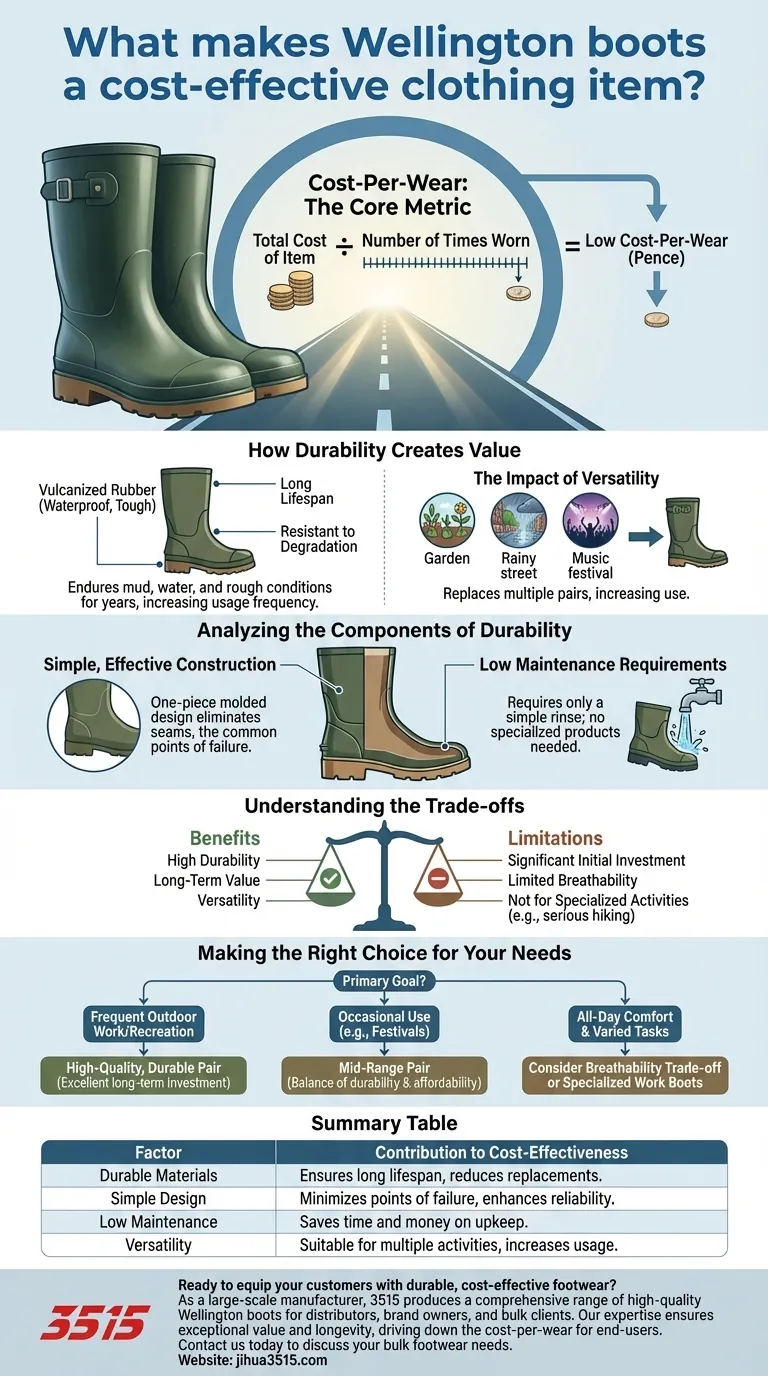
The formula is simple: Total Cost of Item ÷ Number of Times Worn. A £100 pair of boots worn 200 times has a cost-per-wear of just 50p.
This shifts the focus from the upfront price to the long-term utility, which is where Wellingtons excel.
How Durability Creates Value
The primary material, typically vulcanized rubber, is inherently waterproof, tough, and resistant to degradation. This robust construction means the boots can endure mud, water, and rough conditions for years, dramatically increasing the "number of times worn" and driving down the cost-per-wear.
The Impact of Versatility
A single pair of Wellingtons can serve multiple functions, replacing the need for separate pairs of rain boots, gardening shoes, or festival footwear. This versatility means they are used more often, further lowering their effective cost.
Analyzing the Components of Durability
The cost-effectiveness of Wellington boots is not accidental; it is a direct result of their design and material science.
Simple, Effective Construction
Most Wellingtons have a one-piece molded construction. This minimalist design eliminates seams and stitching—the most common points of failure in other types of footwear. Fewer parts mean fewer things can go wrong.
Low Maintenance Requirements
Unlike leather or technical fabrics, rubber requires minimal upkeep. A simple rinse with water is usually all that is needed to keep them functional. This saves both time and the cost of specialized cleaning or waterproofing products.
Understanding the Trade-offs
While highly practical, Wellington boots are not a perfect solution for every scenario. Understanding their limitations is key to assessing their true value for your specific needs.
The Initial Investment
High-quality, durable Wellingtons can have a significant upfront cost compared to cheap, disposable alternatives. The cost-effectiveness is only realized if you use them enough to justify that initial price.
Limited Breathability
The same rubber that makes them waterproof also makes them non-breathable. This can lead to discomfort during extended wear or in warm weather, limiting their suitability for all-day use in certain climates.
Not for Specialized Activities
While versatile for general use, they lack the support and technical features required for activities like serious hiking or running. Using them for the wrong purpose can lead to discomfort and premature wear.
Making the Right Choice for Your Needs
To determine if Wellingtons are a cost-effective choice for you, align your potential purchase with your primary goal.
- If your primary focus is frequent outdoor work or recreation: A high-quality, durable pair is an excellent investment that will pay for itself many times over.
- If your primary focus is occasional use for events like festivals: A mid-range pair offers a good balance of durability and affordability without the high initial cost.
- If your primary focus is all-day comfort for varied tasks: You may need to consider the trade-off in breathability or invest in specialized work boots instead.
By focusing on durability and utility, a good pair of Wellingtons becomes one of the most sensible investments in your wardrobe.
Summary Table:
| Factor | Contribution to Cost-Effectiveness |
|---|---|
| Durable Materials | Vulcanized rubber construction ensures long lifespan, reducing replacement frequency. |
| Simple Design | One-piece molded construction minimizes points of failure, enhancing reliability. |
| Low Maintenance | Easy cleaning with just water saves time and money on upkeep products. |
| Versatility | Suitable for multiple activities (gardening, festivals, etc.), increasing usage frequency. |
Ready to equip your customers with durable, cost-effective footwear?
As a large-scale manufacturer, 3515 produces a comprehensive range of high-quality Wellington boots for distributors, brand owners, and bulk clients. Our expertise in durable rubber footwear ensures you receive products that deliver exceptional value and longevity, driving down the cost-per-wear for end-users.
Contact us today to discuss your bulk footwear needs and benefit from our reliable manufacturing capabilities.
Visual Guide
Related Products
- Durable Waterproof Rain Boots | Custom Manufacturer for Wholesale & Brands
- Durable Goodyear Welt Leather Work Boots for Wholesale & Private Label
- Wholesale Durable Leather Work Boots | 8-Inch Goodyear Welt Manufacturer
- High-Traction Suede Tactical Boots Wholesale & Custom Manufacturing
- Premium Wholesale Tactical Style Safety Shoes Boots with Quick Lacing
People Also Ask
- What are the main materials for waterproof rain boots? Choose the Right Material for Durability & Comfort
- What is the overall recommendation for choosing rain boot materials? A Guide to Rubber vs. PVC
- How does boot height affect waterproofing? Choose the Right Height for Ultimate Protection
- Why are rain boots more flexible and comfortable than snow boots? The Key Differences Explained
- What are the best types of shoes for different gardening conditions? Find Your Perfect Match.



















