
The proper care method for rubber boots involves washing them after use with a mild, glycerine-based soap and lukewarm water, then periodically treating them with a silicone-based conditioner. This dual approach of cleaning and conditioning is essential to maintain the rubber's natural flexibility and prevent the material from drying out and cracking over time.
The core principle of rubber boot care is not just about removing dirt, but actively preserving the material. You must treat rubber like skin—it needs to be cleaned gently and moisturized regularly to prevent premature aging and failure.
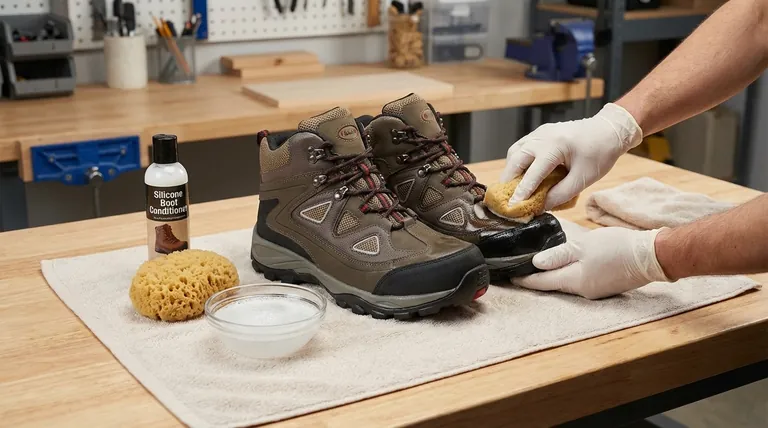
The Core Care Process: A Step-by-Step Guide
Proper care is a simple but consistent routine. Following these steps after use will dramatically extend the life of your boots.
Step 1: Clean Immediately
It's best to clean your boots right after use. Caked-on mud and other debris can draw moisture out of the rubber and contain compounds that may degrade the material over time.
Step 2: Wash with the Right Solution
Use a soft sponge or cloth with lukewarm water and a mild soap. A soap solution containing glycerine is highly recommended as it helps clean while also starting the conditioning process to keep the rubber supple.
Step 3: Dry Correctly and Completely
Towel dry the exterior, then allow the boots to air dry completely in a cool, well-ventilated area. If the inside is wet, stuff them with crumbled newspaper to absorb moisture from within.
Beyond Cleaning: Conditioning for Longevity
Cleaning is only half the battle. To prevent the cracking that signals the end of a boot's life, you must actively condition the rubber.
Why Conditioning is Non-Negotiable
Rubber contains plasticizers that keep it flexible. Over time, exposure to air, UV light, and temperature changes causes these to evaporate, leaving the rubber hard, brittle, and prone to cracking. Conditioning replenishes this protection.
The Role of Silicone
A silicone-based conditioner, often applied with a sponge or as a spray, is the ideal tool for this job. It creates a protective barrier that seals in moisture, restores flexibility, and gives the rubber a renewed finish.
How Often to Condition
For regular use, conditioning your boots once a month is a good rule of thumb. If they are used heavily in harsh conditions or stored for long periods, treat them before storage and when you take them back out.
Common Pitfalls to Avoid
Mistakes in care can do more damage than neglecting the boots entirely. Avoiding these common errors is critical.
The Danger of Harsh Chemicals
Never use industrial solvents, harsh detergents, or oil-based products on your boots. These can strip the rubber's essential oils and rapidly accelerate degradation, leading to discoloration and cracks.
Heat and Sunlight Are Your Enemies
Never dry your boots next to a direct heat source like a radiator, fireplace, or in direct sunlight. High heat and UV radiation are the fastest ways to make rubber brittle and cause it to fail.
Improper Storage Shortens Lifespan
Store your boots upright in a cool, dark, and dry place. Avoid folding or creasing the shafts, as this can create weak points in the rubber that will eventually split.
Making the Right Choice for Your Goal
Your specific use case should determine the frequency and intensity of your care routine.
- If your primary focus is daily utility (e.g., farming, gardening): A quick rinse after every use and a full conditioning treatment every few weeks is essential to combat constant exposure.
- If your primary focus is occasional use (e.g., rainy days, festivals): Always perform a thorough clean and condition before putting the boots away for any extended period to prevent them from drying out in storage.
- If your primary focus is preserving a long-term investment (e.g., high-end hunting boots): Treat them with meticulous care after every single outing and store them with boot shapers to maintain their form and integrity.
By actively maintaining your rubber boots, you ensure they remain a reliable tool for years to come.
Summary Table:
| Care Step | Key Action | Purpose |
|---|---|---|
| Cleaning | Wash with mild, glycerine-based soap and lukewarm water. | Removes dirt and debris without stripping natural oils. |
| Drying | Air dry in a cool, ventilated area; use newspaper for insides. | Prevents heat damage and moisture buildup. |
| Conditioning | Apply a silicone-based conditioner monthly. | Restores flexibility and protects against cracking. |
| Storage | Store upright in a cool, dark, dry place. | Avoids creasing and material degradation. |
Need Durable, High-Quality Rubber Boots That Are Built to Last?
As a large-scale manufacturer, 3515 produces a comprehensive range of durable footwear for distributors, brand owners, and bulk clients. Our production capabilities encompass all types of rubber boots designed to withstand harsh conditions, backed by expert knowledge on proper care. Let us provide you with reliable footwear solutions that meet your specific needs.
Contact our team today to discuss your requirements and discover how we can support your business with superior products!
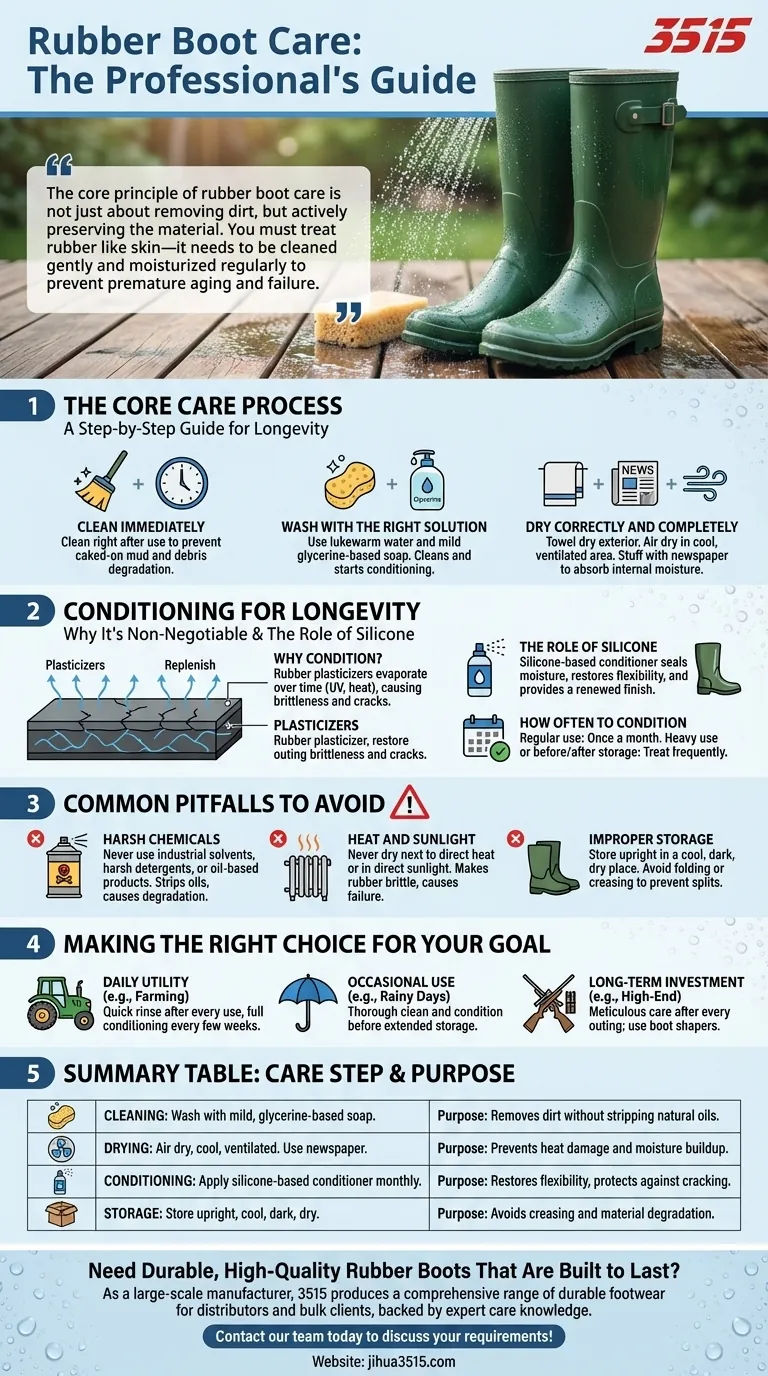
Visual Guide
Related Products
- Factory Direct Wholesale Rain Boots Durable Waterproof & Fully Customizable
- Durable Rubber Sole Outdoor Shoes Wholesale & Custom Manufacturing
- Wholesale Durable Camouflage Canvas Shoes with High-Traction Cleated Rubber Sole
- Wholesale Durable Leather Work Boots | 8-Inch Goodyear Welt Manufacturer
- Durable Goodyear Welt Leather Work Boots for Wholesale & Private Label
People Also Ask
- What are the characteristics of rain boots? A Guide to Waterproof Footwear for Every Need
- What factors should be considered when choosing rain boots? Find the Perfect Boot for Your Needs
- What are the main differences between rain boots and snow boots? Choose the Right Boot for Your Climate
- How should one decide between PVC and rubber for rain boots? A Guide to Choosing the Right Material
- Why are rain boots more flexible and comfortable than snow boots? The Key Differences Explained
















