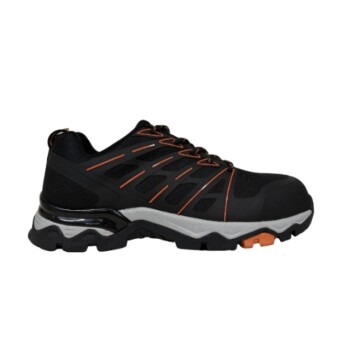
Professional Safety Shoes serve as the primary defensive barrier against the high-risk physical hazards inherent to the forge. In the context of traditional blacksmithing and heavy metal forging, these specialized boots are engineered to mitigate three specific threats: impact injuries from falling iron, punctures from sharp metal debris, and dangerous falls caused by compromised flooring.
The Core Protection Mechanism Safety shoes function as a comprehensive shield for the foot, combining reinforced structures to deflect heavy impacts with specialized sole technologies to resist punctures and maintain traction. They transform a worker's footwear from a simple covering into a piece of personal protective equipment (PPE) capable of neutralizing mechanical risks in oily, debris-laden environments.
Mitigating Impact and Crush Hazards
Deflecting Heavy Iron
In an agricultural tool manufacturing or forging environment, the most immediate threat is the accidental dropping of materials. Heavy iron stock and tools carry significant mass and can cause catastrophic crush injuries upon impact.
Professional safety shoes are engineered to absorb and deflect this energy. By providing a hardened shell around the toes and metatarsal areas, they ensure that a dropped workpiece results in a deflected blow rather than a crushed foot.
Protection Against Floor-Level Debris
Resisting Punctures
The workshop floor in a blacksmithing setting is frequently scattered with sharp metal scraps and the jagged edges of semi-finished products. Standard footwear soles are easily penetrated by these hazards.
Safety shoes utilize puncture-resistant soles designed specifically for this terrain. This reinforced layer prevents sharp metal fragments from piercing the shoe, shielding the sole of the foot from deep lacerations and puncture wounds.
Preventing Secondary Mechanical Injuries
Stability is often overlooked but is critical in heavy metal forging. Workshop floors are routinely contaminated with a mixture of dust and oil, creating a highly slippery surface.
A slip in a forge can lead to "secondary mechanical injuries"—falling into machinery or onto hot metal. The wear-resistant, anti-slip construction of professional safety shoes digs into these slick surfaces, ensuring the worker maintains a solid, stable stance while handling heavy loads.
Understanding the Trade-offs
Chemical Resistance Limitations
While standard professional safety shoes excel at physical protection, not all models are equally resistant to liquid hazards. Some specialized materials, such as rubber or neoprene, are required to resist corrosive substances or hazardous liquids effectively.
If your specific forging process involves harsh chemicals (beyond standard oils), a general-purpose safety shoe may degrade over time. It is vital to verify that the sole material provides the necessary chemical barrier to prevent burns or long-term health complications.
Making the Right Choice for Your Goal
To select the correct footwear, you must evaluate the specific risks dominant in your workshop environment.
- If your primary focus is Handling Heavy Stock: Prioritize shoes with maximum impact ratings to protect against the accidental dropping of heavy iron materials.
- If your primary focus is Workshop Stability: Ensure the footwear features aggressive, wear-resistant anti-slip treads to counteract floors contaminated with dust and oil.
Select your gear based on your environment's specific hazards to ensure your safety foundation is as strong as the metal you forge.
Summary Table:
| Hazard Category | Specific Threat | Protective Feature | Benefit in the Forge |
|---|---|---|---|
| Mechanical Impact | Dropped iron stock & tools | Hardened toe shells/caps | Deflects energy to prevent crush injuries |
| Sharp Debris | Metal scraps & jagged edges | Puncture-resistant soles | Prevents lacerations from floor-level scrap |
| Slippery Surfaces | Oil and dust contamination | Anti-slip tread construction | Ensures stability to avoid falls into machinery |
| Physical Strain | Long hours on hard floors | Wear-resistant ergonomics | Reduces fatigue during heavy metal handling |
Secure Your Workforce with Professional-Grade Footwear from 3515
As a leading large-scale manufacturer serving global distributors and brand owners, 3515 delivers the durability and protection required for high-intensity industrial environments. Our flagship Safety Shoes series is specifically engineered to withstand the rigorous demands of blacksmithing and heavy metal forging, ensuring your team stays safe from impacts, punctures, and slips.
Beyond safety footwear, 3515 offers comprehensive production capabilities for all footwear types, including tactical boots, outdoor shoes, training sneakers, and formal dress shoes to meet your diverse bulk procurement needs. Partner with us to provide your customers with the ultimate foundation of safety and quality.
Ready to elevate your inventory with industry-leading safety standards?
Contact our expert team today to discuss your bulk requirements
References
- Nurgadima Achmad Djalaluddin, Andi Mifta Farid Panggeleng. INTRODUCTION OF OCCUPATIONAL SAFETY AND HEALTH (K3) PRINCIPLES IN BLACKSMITHS VILLAGE. DOI: 10.32832/abdidos.v7i3.1908
This article is also based on technical information from 3515 Knowledge Base .
Related Products
- Premium Suede Sport Safety Shoes for Wholesale & Bulk Orders
- Premium Lightweight Safety Shoes for Wholesale & Bulk Orders
- Wholesale Anti-Smash & Puncture-Proof Safety Shoes Custom Manufacturing for Brands
- Premium KPU Injection Athletic Style Safety Shoes
- Premium Safety Shoes with Rotating Buckle Safety Sneakers
People Also Ask
- What industries have specific OSHA footwear requirements? Ensure Compliance & Protect Your Workforce
- What are the primary functions of professional safety shoes? Maximize Safety in Water Supply Confined Spaces
- What role do specialized safety shoes play in preventing falls? Engineering Stability in Industrial Environments
- What core functions do professional safety shoes serve? Enhance Construction & Industrial Safety Standards
- What are the technical advantages of integrating sensors into safety shoes? Achieve Superior Motion Capture Precision