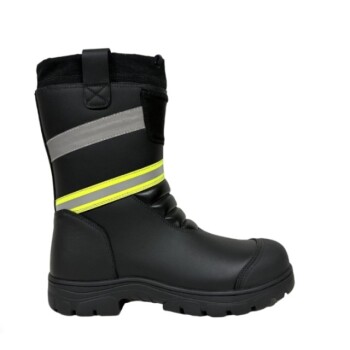
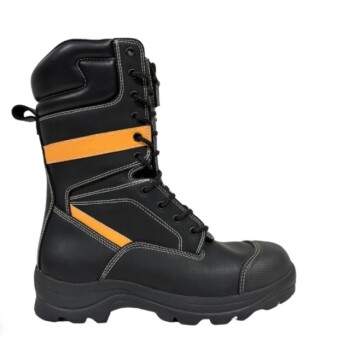
Yes, many firefighter boots can be resoled, but it is not a universal guarantee. The possibility depends entirely on the boot's specific brand, model, construction method, and its overall condition. For safety-critical equipment like this, a professional assessment is non-negotiable.
The core issue isn't just whether a new sole can be attached, but whether the rest of the boot remains structurally sound and safe for duty. Resoling is only viable if the boot's upper components are in excellent condition and the construction method allows for it.
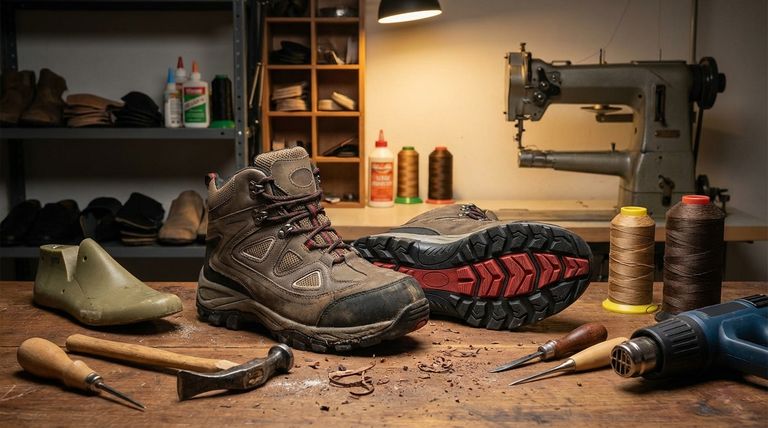
Key Factors That Determine Resoling Feasibility
The decision to resole a boot goes far beyond the condition of the tread. Several interconnected factors determine whether a repair is practical and, more importantly, safe.
The Critical Role of Construction
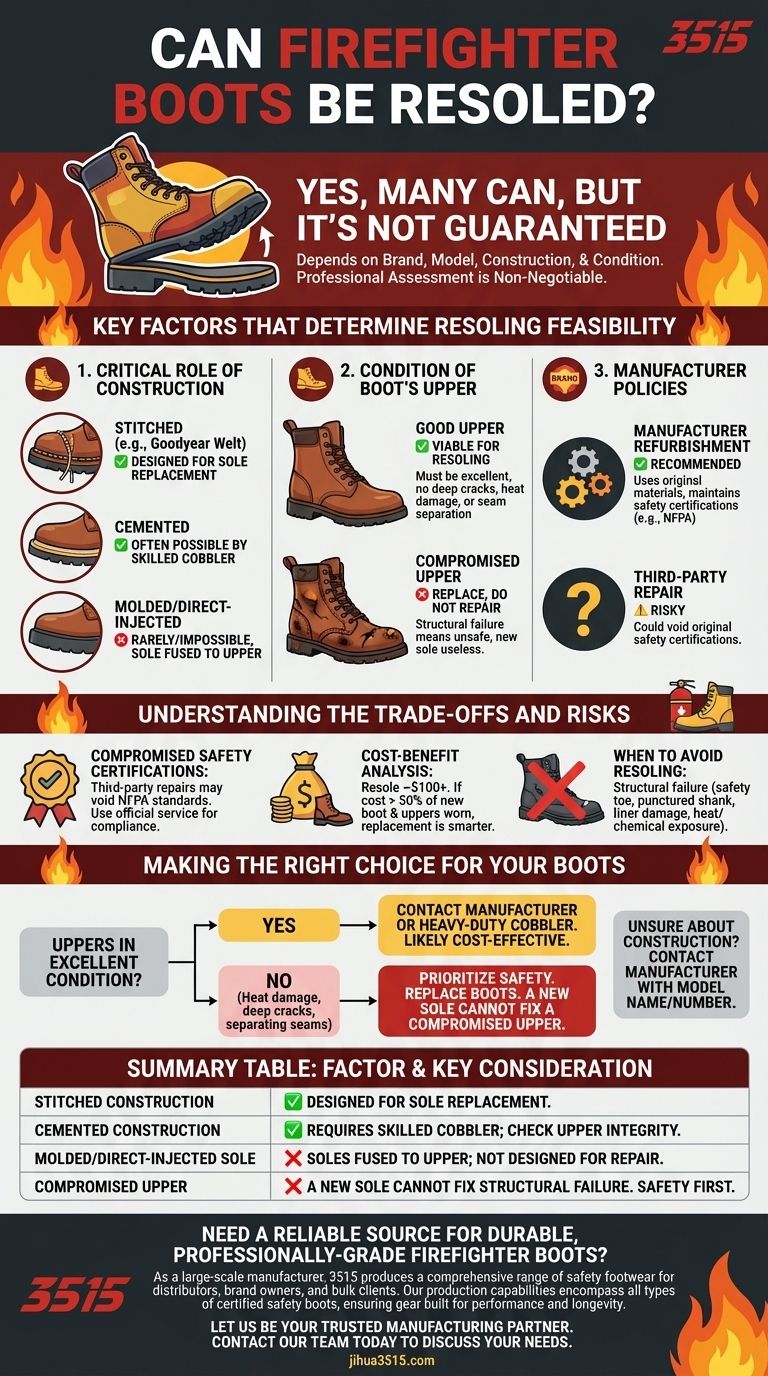
A boot's construction is the primary factor. Boots with stitched soles, like a Goodyear welt, are specifically designed for the sole to be removed and replaced without damaging the upper.
Many high-end firefighter boots use a cemented construction, where the sole is attached with a powerful adhesive. These can often be resoled by a skilled cobbler who can properly heat, remove, and re-bond a new sole.
However, some boots feature molded or direct-injected soles, which are fused directly to the upper. These are almost always impossible to resole.
The Condition of the Boot's Upper
A new sole is useless if the rest of the boot is failing. Before considering a resole, an expert must inspect the boot's upper—the leather or synthetic material that covers the foot.
Look for deep cracks, heat damage, separated seams, or excessive wear. If the structural integrity of the upper is compromised, the boot should be replaced, not repaired.
Manufacturer and Brand Policies
Many reputable manufacturers of firefighter gear offer their own resoling or complete refurbishment services. This is often the best option, as they use original materials and processes that maintain the boot's safety certifications.
Consulting the manufacturer or the retailer where you bought the boots is the most reliable first step.
Understanding the Trade-offs and Risks
Resoling is a cost-effective way to extend the life of expensive gear, but it's crucial to weigh the benefits against the potential risks, especially for professional use.
Compromised Safety Certifications
Firefighter boots must meet specific safety standards (like those from the NFPA). A third-party repair could potentially void the boot's original certification. Using a manufacturer's official repair service is the safest way to ensure compliance.
The Cost-Benefit Analysis
A professional resole can cost around $100 or more, depending on the work required. If this amount is more than half the cost of a new pair of boots, and the uppers show significant wear, replacement is often the smarter financial decision.
When to Absolutely Avoid Resoling
Do not resole a boot if it has any signs of structural failure. This includes damage to the safety toe, a punctured shank, a compromised waterproof liner, or any evidence of the upper being exposed to extreme heat or chemicals. A new sole cannot fix these fundamental safety flaws.
Making the Right Choice for Your Boots
Use these guidelines to determine your next step.
- If your boot's uppers are in excellent condition: Resoling is likely a cost-effective option, and you should start by contacting the manufacturer or a cobbler who specializes in heavy-duty work boots.
- If your boot shows signs of heat damage, deep cracks, or separating seams: You must prioritize safety and replace the boots, as a new sole cannot fix a compromised and unsafe upper.
- If you are unsure about your boot's construction: Contact the manufacturer directly with the model name or number; they can provide a definitive answer on whether it was designed to be resoled.
Ultimately, a professional assessment is the only way to ensure you are safely and effectively extending the life of your most critical gear.
Summary Table:
| Factor | Can Be Resoled? | Key Consideration |
|---|---|---|
| Stitched Construction (e.g., Goodyear Welt) | ✅ Yes | Designed for sole replacement. |
| Cemented Construction | ✅ Often | Requires skilled cobbler; check upper integrity. |
| Molded/Direct-Injected Sole | ❌ Rarely | Soles are fused to the upper; not designed for repair. |
| Compromised Upper (Cracks, Heat Damage) | ❌ No | A new sole cannot fix structural failure. Safety first. |
Need a reliable source for durable, professionally-grade firefighter boots?
As a large-scale manufacturer, 3515 produces a comprehensive range of safety footwear for distributors, brand owners, and bulk clients. Our production capabilities encompass all types of certified safety boots, ensuring you get gear built for performance and longevity.
Let us be your trusted manufacturing partner. Contact our team today to discuss your specific needs and volume requirements.
Visual Guide
Related Products
- High Performance Fire-Retardant Waterproof Safety Boots
- Premium Flame-Retardant Waterproof Safety Boots and Shoes
- Durable Military Combat Boots with Water Drainage for Wholesale & OEM
- Wholesale Lightweight Tactical Boots Custom Manufacturer for Desert & Combat Use
- High-Traction Suede Tactical Boots Wholesale & Custom Manufacturing
People Also Ask
- Why are waterproof safety boots recommended for certain work environments? Essential Protection for Wet & Hazardous Jobs
- What roles do 3D vision systems and industrial robots play in the manufacturing of fire safety boots? Smart Automation
- What is the difference between waterproof and water-resistant boots? Choose the Right Footwear for Any Condition
- What is a drawback of waterproof boots? The Hidden Cost of Trapped Sweat and Heat
- How should you maintain waterproof boots? A Simple 3-Step Guide to Long-Lasting Performance