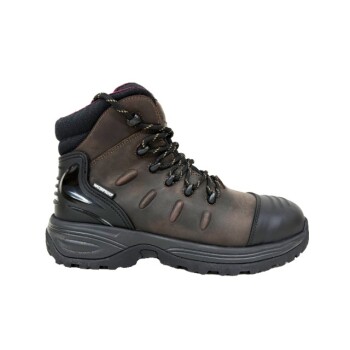
The weight of industrial safety footwear acts as a primary catalyst for physiological stress during extended work periods. Heavier boots accelerate energy metabolism and induce premature muscle fatigue in the lower limbs. This fatigue compromises the foot's dynamic support system, leading to structural instability that directly compresses the posterior tibial nerve.
Heavy safety shoes degrade the dynamic support of the foot arch by causing rapid muscle fatigue. This loss of support creates mechanical imbalances within the tarsal tunnel, significantly increasing the risk of nerve compression and the recurrence of Tarsal Tunnel Syndrome.
The Physiological Chain Reaction
Impact on Energy Metabolism
The weight specification of a shoe is not merely a comfort factor; it is a driver of energy metabolism. Moving a heavier object at the end of a lever arm (the leg) requires significantly more caloric expenditure and muscular effort.
Weakening Dynamic Support
As the lower limb muscles engage to lift heavy boots repeatedly, they succumb to premature muscle fatigue. These muscles are responsible for maintaining the dynamic support of the foot arch. When they fatigue, they can no longer actively hold the arch in its proper position during the gait cycle.
Mechanical Imbalance and Compression
The failure of the foot arch’s dynamic support leads to a collapse or shift in the foot’s structure. This change results in mechanical imbalances within the tarsal tunnel, a narrow space inside the ankle. The resulting pressure compresses the posterior tibial nerve, which is the direct cause of Tarsal Tunnel Syndrome (TTS) symptoms.
Beyond Weight: Structural Factors
The Danger of Excessive Rigidity
While weight is the primary driver of fatigue, the structural rigidity of the shoe also plays a critical role. Overly rigid soles can prevent natural foot movement, acting as an external stressor that exacerbates nerve compression. This is particularly dangerous for manufacturing personnel required to stand or walk for long shifts.
Importance of Arch Support
Safety shoes must provide robust arch support to act as a countermeasure to fatigue. Proper support reduces pressure on the medial plantar nerve, specifically for workers with pre-existing foot deformities like flat feet. Without this structural aid, the mechanical distribution of force across the foot becomes uneven and damaging.
Understanding the Trade-offs
Balancing Protection and Agility
A common pitfall in selecting safety gear is prioritizing maximum durability or heavy-duty protection without considering the weight penalty. While shoes must meet protective standards, selecting the lightest possible option that meets those standards is essential. Ignoring weight in favor of excessive ruggedness directly invites the risk of injury recurrence.
The Role of Auxiliary Measures
Even the best safety shoe may require optimization. Specialized foot pads or insoles are often necessary to bridge the gap between a standard shoe and a specific worker's anatomy. These pads fill arch gaps and disperse impact forces, preventing the micro-trauma caused when a rigid sole acts against a fatigued foot.
Making the Right Choice for Your Goal
Selecting the right footwear is a preventative health strategy. Use the following guide to prioritize your specific needs:
- If your primary focus is preventing TTS recurrence: Prioritize safety shoes that meet required protection standards while maintaining the lowest possible weight to minimize muscle fatigue.
- If your primary focus is managing existing foot pain: Ensure the footwear includes robust arch support and adequate sole flexibility to reduce pressure on the medial plantar nerve.
- If your primary focus is long-term work tolerance: Integrate specialized foot pads to disperse impact forces and cushion the foot against the rigidity of the safety shoe sole.
Optimizing footwear weight and structure is not just about comfort; it is a fundamental requirement for maintaining the mechanical integrity of the foot and preventing nerve injury.
Summary Table:
| Factor | Impact on Foot Health | TTS Risk Level |
|---|---|---|
| Excessive Weight | Accelerates muscle fatigue & metabolic strain | High |
| Structural Rigidity | Limits natural gait & increases external stress | Medium-High |
| Poor Arch Support | Causes structural collapse & nerve compression | High |
| Optimized Weight | Maintains arch stability & reduces fatigue | Low |
Optimize Your Workforce Safety with 3515 Footwear
As a large-scale manufacturer serving global distributors and brand owners, 3515 understands that the right balance between protection and weight is vital for worker health. We offer comprehensive production capabilities for all footwear types, specializing in our flagship Safety Shoes series designed to mitigate risks like Tarsal Tunnel Syndrome through advanced material engineering.
Our extensive portfolio covers work and tactical boots, outdoor shoes, training shoes, and sneakers, as well as Dress & Formal shoes to meet your diverse bulk requirements. Protect your team and enhance productivity by choosing lightweight, ergonomic solutions.
Contact 3515 today to discuss your bulk manufacturing needs!
References
- Olieve Indri LEKSMANA, Muchtaruddin Mansyur. The Effectiveness of Indonesia’s Seven - Step Return to Work Assessment on a Distal Tarsal Tunnel Syndrome : A Case Report Study. DOI: 10.7888/juoeh.46.29
This article is also based on technical information from 3515 Knowledge Base .
Related Products
- Premium Waterproof High-Cut Industrial Safety Boots for Wholesale and Bulk Orders
- Premium Wheat Nubuck Safety Shoes for Bulk Distribution
- Wholesale Mesh Steel Toe Safety Shoes with Dial Closure Factory Production
- Wholesale Anti-Smash & Puncture-Proof Safety Shoes Custom Manufacturing for Brands
- Premium KPU Athletic Safety Shoes for Wholesale
People Also Ask
- Why are oil-resistant and anti-slip properties critical for industrial safety boots? Expert Outsole Engineering Guide
- What are the primary protective functions of industrial safety boots in oil palm plantations? Master Rough Terrain Safety
- What dual characteristics do industrial safety boots exhibit? Balance Worker Protection with Health Recovery Efficiency
- Why are industrial safety boots with high-grip outsoles required for oil leaks and B3 waste? Ensure Worker Stability
- Why is professional industrial-grade safety footwear a suitable carrier for diabetic rehabilitation insoles?