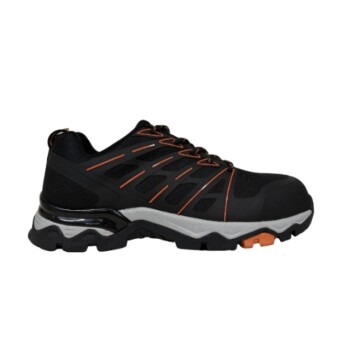
The prioritization of automated safety shoe detection stems from a critical gap in traditional monitoring: manual inspections simply cannot achieve the continuous frequency and spatial coverage required for a dynamic construction site. By leveraging high-resolution visual data and deep learning models, modern systems shift safety verification from a periodic check to a continuous, site-wide process, ensuring foot protection standards are upheld in real-time.
While human supervisors can verify compliance only when they are physically present, automated systems provide an "always-on" safety net. The core value lies in replacing sporadic checks with continuous, site-wide validation to minimize injury risks in hazardous zones.
The Limitations of Human Monitoring
The Frequency Problem
Manual inspections are inherently intermittent. A safety officer cannot physically check every worker's equipment continuously throughout the day.
This creates gaps in safety enforcement where non-compliance can go unnoticed for hours.
Spatial Coverage Gaps
Construction sites are often vast and complex, making it impossible for human personnel to cover every zone simultaneously.
Remote or high-traffic areas often receive less scrutiny, increasing the likelihood of safety breaches in those specific locations.
How Automation Closes the Safety Loop
Leveraging Deep Learning
Modern systems utilize deep learning models trained on high-resolution visual data to identify compliant footwear.
This technology allows for the precise distinction between standard footwear and required safety gear without human intervention.
Continuous Verification
Unlike a human inspector who needs rest, automated systems provide continuous verification.
This ensures that safety standards are maintained consistently across the entire timeline of the project, regardless of shift changes or staffing levels.
The Impact on Site Safety
Minimizing Injury Risks
The ultimate goal of this prioritization is the reduction of foot-related injuries in hazardous areas.
By catching non-compliance early, the system prevents workers from entering dangerous zones without proper protection.
Standardization of Standards
Automation ensures that foot protection standards are applied objectively across the entire site.
This removes the variability of human judgment, ensuring that every worker is held to the exact same safety requirement.
Understanding the Trade-offs
Line-of-Sight Dependency
Automated detection relies heavily on the quality and angle of visual data.
If a worker's feet are obscured by materials, machinery, or poor lighting, the deep learning models may fail to register compliance accurately.
The Risk of False Positives
While algorithms are efficient, they are not infallible.
Dirt, mud, or unique shoe designs might occasionally confuse the system, potentially flagging compliant gear as a violation and causing minor workflow disruptions.
Implementing Automated Detection Strategically
To effectively integrate this technology into your safety protocols, consider your specific operational goals.
- If your primary focus is total site coverage: Position high-resolution cameras at all major access points and high-risk zones to ensure no worker enters without verification.
- If your primary focus is efficiency: Use the automated data to identify patterns of non-compliance, allowing you to target safety training where it is needed most rather than performing random checks.
Automating this specific inspection transforms safety management from a reactive task into a proactive, omnipresent standard.
Summary Table:
| Feature | Manual Inspection | Automated Detection System |
|---|---|---|
| Frequency | Periodic / Intermittent | Continuous / Real-time |
| Coverage | Limited to supervisor presence | Site-wide (via visual data) |
| Objectivity | Subject to human judgment | Standardized AI verification |
| Risk Mitigation | Reactive response | Proactive prevention |
| Key Constraint | Staffing levels | Line-of-sight & lighting |
Elevate Your Fleet Safety with 3515 Footwear Solutions
As a premier large-scale manufacturer, 3515 empowers distributors and brand owners with high-performance footwear engineered for the demands of modern, automated job sites. Whether you require our flagship Safety Shoes series or our specialized tactical, outdoor, and dress footwear, we provide the durability and standardized designs necessary for seamless AI detection and worker protection.
Partner with us to secure your supply chain:
- Comprehensive Production: From safety boots to sneakers and formal footwear.
- Bulk Scalability: Tailored solutions for large-scale distribution and branding.
- Proven Reliability: Decades of expertise in footwear manufacturing.
Contact our team today to discuss your bulk requirements
References
- Yeo-Reum Lee, Han-Guk Ryu. Deep learning-based framework for monitoring wearing personal protective equipment on construction sites. DOI: 10.1093/jcde/qwad019
This article is also based on technical information from 3515 Knowledge Base .
Related Products
- Premium Suede Sport Safety Shoes for Wholesale & Bulk Orders
- Premium Lightweight Safety Shoes for Wholesale & Bulk Orders
- Wholesale Anti-Smash & Puncture-Proof Safety Shoes Custom Manufacturing for Brands
- Premium KPU Injection Athletic Style Safety Shoes
- Premium Safety Shoes with Rotating Buckle Safety Sneakers
People Also Ask
- What industries have specific OSHA footwear requirements? Ensure Compliance & Protect Your Workforce
- What are the primary functions of professional safety shoes? Maximize Safety in Water Supply Confined Spaces
- What role do specialized safety shoes play in preventing falls? Engineering Stability in Industrial Environments
- What core functions do professional safety shoes serve? Enhance Construction & Industrial Safety Standards
- What are the main components of safety shoes? A Guide to Protective Footwear Design