In a fast-paced restaurant or kitchen, slip-resistant shoes are critical personal protective equipment designed to prevent workplace accidents. They provide the necessary traction on floors that are frequently wet, greasy, or recently mopped, directly reducing the high risk of slips and falls that can cause serious injury.
The core function of slip-resistant shoes is not just about grip; it's about enabling a safer, more efficient, and focused work environment by mitigating the most common and preventable hazard in the food service industry.
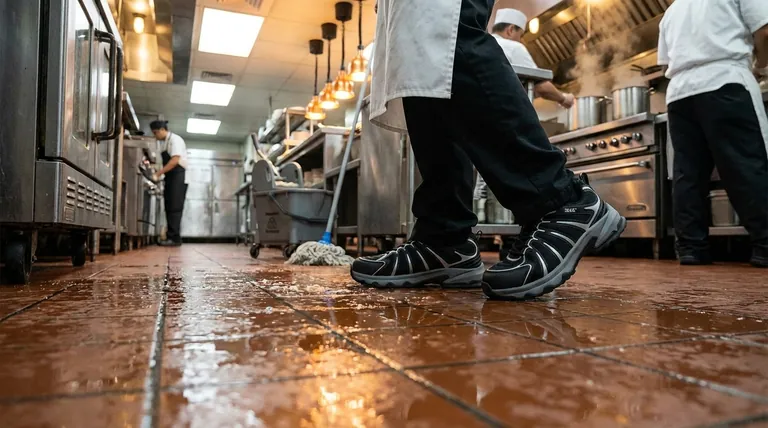
The Underlying Risks of a Kitchen Floor
A kitchen floor is a constantly changing, high-risk surface. Understanding the specific hazards reveals why standard footwear is inadequate.
Constant Presence of Liquids
Spills are an unavoidable part of any kitchen or dining room. Water from sinks, sauces from prep stations, and dropped drinks create unpredictable wet spots that drastically reduce the friction of a normal shoe sole.
The Problem of Grease
Grease and oil are particularly hazardous. Unlike water, they don't evaporate quickly and create an extremely slick film. This is common around fry stations and grills, making these areas exceptionally dangerous for slips.
The Never-Ending Cleaning Cycle
To maintain hygiene, floors are constantly being mopped. This means large areas of the workplace can be damp or wet for extended periods, even without a specific spill.
How Slip-Resistant Shoes Work
These shoes are not just regular footwear with a bit of extra tread. They are engineered specifically to counteract the hazardous conditions of a kitchen.
Specialized Outsole Design
The key is the outsole material and pattern. Slip-resistant shoes use a softer rubber compound that maintains its grip even on slick surfaces. The tread pattern is designed with many fine grooves and channels that push liquids out from under the shoe, allowing the sole to make direct contact with the floor.
Maximizing Surface Contact
The design ensures that the maximum amount of the shoe's sole connects with the ground. This dispersal of pressure helps to break through the thin layer of liquid, creating a much more stable footing than a standard shoe can provide.
Protection from Spills
Beyond just grip, many professional kitchen shoes feature clog-resistant outsoles for easier cleaning and protective linings. These elements shield the wearer's feet from hot liquids and make the shoes more durable in a demanding environment.
Understanding the Trade-offs and Misconceptions
While essential, it's important to understand the context and limitations of this specialized footwear.
"Slip-Proof" vs. "Slip-Resistant"
No shoe is truly "slip-proof." The term slip-resistant means the shoe significantly reduces the risk of slipping, but it does not eliminate it entirely. Caution and awareness are still required.
Wear and Tear Matters
The effectiveness of slip-resistant soles degrades over time. As the soft rubber wears down and the tread pattern becomes smooth, the shoe loses its ability to grip properly. They must be replaced regularly.
DIY Solutions Are Not a Substitute
Methods like applying traction spray, carving grooves, or using sandpaper on regular shoes are temporary, unreliable fixes. They do not provide the engineered safety and durability of professionally designed slip-resistant footwear and are not a safe substitute.
Making the Right Choice for Your Role
Selecting the correct footwear is a critical decision for anyone working in the food service industry.
- If your primary focus is safety and compliance: Choose a certified slip-resistant shoe designed specifically for occupational use to ensure you meet workplace safety standards.
- If your primary focus is productivity: Investing in proper footwear allows you and your team to move confidently and efficiently without the hesitation or distraction caused by a slippery floor.
- If your primary focus is preventing injury: Slip-resistant shoes are the single most effective tool for avoiding the sprains, fractures, and other serious injuries that result from slips and falls.
Ultimately, wearing the right shoes is a fundamental aspect of professional responsibility in any kitchen or restaurant.
Summary Table:
| Aspect | Key Takeaway |
|---|---|
| Primary Risk | Wet, greasy, and freshly mopped floors create constant slip hazards. |
| How They Work | Specialized soles with soft rubber and unique treads channel liquids away for better grip. |
| Limitation | They are slip-resistant, not slip-proof, and effectiveness decreases with wear. |
| Key Benefit | They are the most effective tool for preventing workplace slips, falls, and related injuries. |
Equip your team with professional-grade safety and confidence. As a large-scale manufacturer, 3515 produces a comprehensive range of certified slip-resistant footwear for distributors, brand owners, and bulk clients. Our shoes are engineered for the demanding realities of kitchen and restaurant environments, helping you protect your staff, enhance productivity, and meet safety standards. Contact us today to discuss your bulk footwear needs and request a catalog.
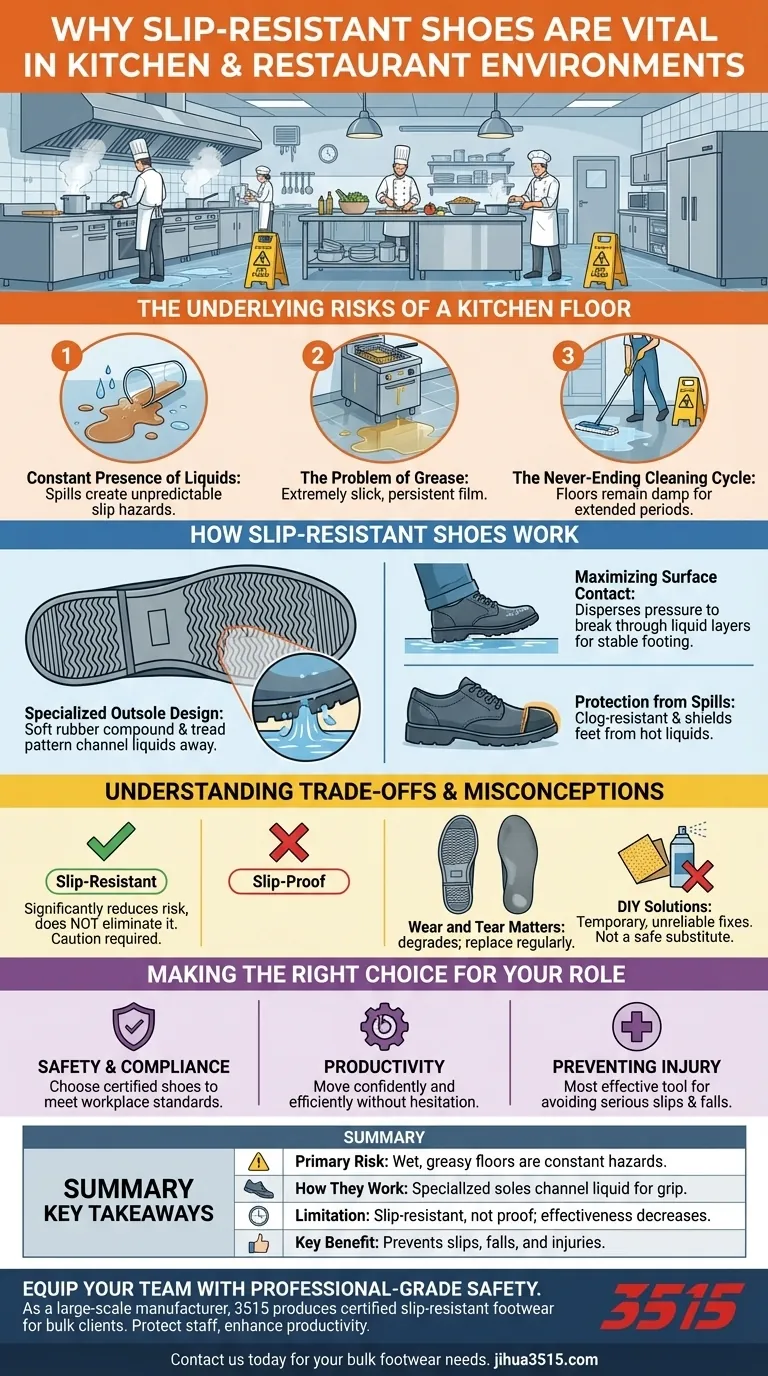
Visual Guide
Related Products
- Premium Suede Sport Safety Shoes for Wholesale & Bulk Orders
- Heavy-Duty Waterproof Nubuck Safety Boots Safety Shoes for Bulk Supply
- Advanced KPU Athletic Safety Shoe with Steel Toe Cap Anti-Slip Rotary Lacing System
- Durable High-Traction Canvas Sneakers Wholesale & Custom Manufacturing
- Durable Leather Moc Toe Work Boots for Wholesale & Custom Manufacturing
People Also Ask
- What are the primary functions of professional safety shoes? Maximize Safety in Water Supply Confined Spaces
- What industries have specific OSHA footwear requirements? Ensure Compliance & Protect Your Workforce
- What role do specialized safety shoes play in preventing falls? Engineering Stability in Industrial Environments
- Why must safety training be synchronized with the provision of physical safety shoes? Achieve Optimal Workplace Protection
- How do complex outsole tread designs in safety shoes work with coated floors? Master Slip Resistance Engineering