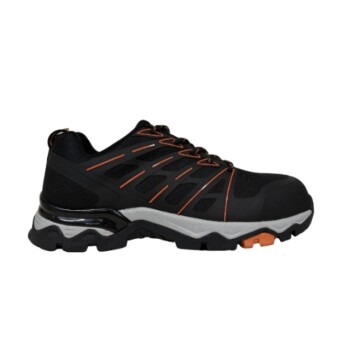
The practical significance of identifying actions like putting on or taking off shoes is the ability to automate strict adherence to Personal Protective Equipment (PPE) standards in real-time. By recognizing the specific motions associated with footwear compliance, industrial systems can instantly detect when a worker becomes vulnerable—such as removing safety boots in a hazard zone—and trigger immediate alerts to prevent injury.
Real-time action recognition shifts safety monitoring from a passive, periodic inspection model to an active, continuous protection system that respects worker privacy through depth-sensing technology.
Automating PPE Compliance through Action Recognition
Moving Beyond Static Inspection
Traditional safety checks often rely on visual confirmation that a worker is currently wearing gear. Action recognition goes deeper by monitoring the workflow itself.
By tracking the specific gestures of putting on or taking off shoes, the system validates that safety protocols are being followed throughout the entire shift, not just at the entrance.
Detecting Non-Compliance as It Happens
The critical value lies in the immediacy of the data. If a worker begins the action of removing tactical boots or safety shoes in a restricted area, the system identifies this as a non-compliance event.
This triggers an automated alert, allowing safety managers to intervene before an accident occurs, rather than documenting the violation after the fact.
The Role of Privacy and Technology
Utilizing Depth-Sensing for Anonymity
A major barrier to video monitoring in industrial settings is the invasion of worker privacy. The primary reference highlights the use of depth-sensing technology to solve this.
This method focuses on the geometry of movement and the presence of objects (like shoes) rather than capturing high-resolution facial features.
Maintaining Privacy While Improving Safety
Because the system targets the action (the movement of the shoe) rather than the identity of the person via facial recognition, it effectively balances safety requirements with privacy concerns.
This encourages wider acceptance of the monitoring system among the workforce, as it is viewed as a safety tool rather than a surveillance device.
Understanding the Trade-offs
The Necessity of Precise Definitions
While powerful, action recognition relies on identifying specific, pre-trained movements.
If a worker adjusts their footwear in a way that does not mimic the standard "taking off" or "putting on" motion, the system may fail to register the event.
Contextual Limitations
The system excels at flagging the physical action, but it cannot determine the intent behind it.
An alert may be triggered even if a worker is removing a shoe for a legitimate reason, such as checking for an injury. Therefore, human oversight remains necessary to interpret the alerts contextually.
Making the Right Choice for Your Goal
To implement this technology effectively, align the system's capabilities with your specific safety objectives:
- If your primary focus is accident prevention: Prioritize the system's ability to issue real-time alerts the moment a "taking off" action is detected in a hazardous zone.
- If your primary focus is workforce acceptance: Emphasize the use of depth-sensing technology to demonstrate that safety compliance is being monitored without compromising individual privacy.
By focusing on the specific actions of compliance, you transform safety equipment from a static requirement into a dynamic, verifiable process.
Summary Table:
| Feature | Significance in Industrial Safety |
|---|---|
| Real-Time Compliance | Instantly detects if safety boots are removed in hazardous zones. |
| Proactive Protection | Shifts from passive inspection to active, continuous injury prevention. |
| Privacy Preservation | Uses depth-sensing to focus on movement geometry instead of facial identity. |
| Workflow Validation | Ensures safety protocols are followed throughout the shift, not just at entry. |
Elevate Your Workforce Safety with 3515 Footwear Solutions
As a premier large-scale manufacturer serving global distributors and brand owners, 3515 provides the high-quality foundation for any safety monitoring system. Our comprehensive production capabilities cover all footwear types, from our flagship Safety Shoes and Tactical Boots to specialized training shoes and formal dress wear.
We understand that reliable action recognition starts with high-performance gear that workers can trust. Partner with 3515 to access durable, compliant footwear produced to the highest standards.
Ready to secure your bulk supply? Contact us today to discuss your requirements and see how our footwear expertise can support your safety objectives.
References
- A. Sánchez-Caballero, Mohammad Ibrahim Sarker. 3DFCNN: real-time action recognition using 3D deep neural networks with raw depth information. DOI: 10.1007/s11042-022-12091-z
This article is also based on technical information from 3515 Knowledge Base .
Related Products
- Premium Suede Sport Safety Shoes for Wholesale & Bulk Orders
- Premium Lightweight Safety Shoes for Wholesale & Bulk Orders
- Wholesale Anti-Smash & Puncture-Proof Safety Shoes Custom Manufacturing for Brands
- Premium KPU Injection Athletic Style Safety Shoes
- Premium Safety Shoes with Rotating Buckle Safety Sneakers
People Also Ask
- What are the primary functions of professional safety shoes? Maximize Safety in Water Supply Confined Spaces
- What industries have specific OSHA footwear requirements? Ensure Compliance & Protect Your Workforce
- What role do specialized safety shoes play in preventing falls? Engineering Stability in Industrial Environments
- What are the main components of safety shoes? A Guide to Protective Footwear Design
- How do gait analysis algorithms ensure accuracy in footwear? Master Step Length Precision for Boots & Sneakers