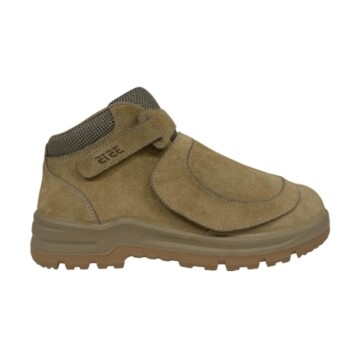
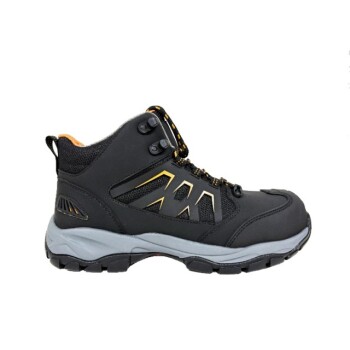
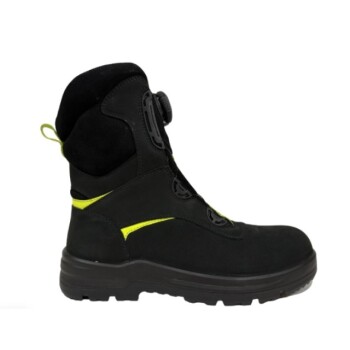
To function effectively with custom orthotics, professional safety shoes and tactical boots requires specific internal volume attributes. Specifically, these boots must feature removable original insoles to create space, alongside deepened and widened heel cups that allow the orthotic device to seat correctly without altering the fit of the upper boot.
Effective integration of custom orthotics into rigid safety footwear relies on managing internal space. The boot must allow the orthotic to rest flush against the sole to provide arch support without compressing the top of the foot (instep), a critical factor for long-term wear and post-surgical recovery.
The Critical Role of Internal Volume
The Necessity of Removable Insoles
To accommodate a custom medical device, the footwear's factory lining cannot be permanent. Removable original insoles are the first requirement for compatibility.
Removing the factory insole creates the necessary void to insert the custom orthotic. Without this feature, adding an orthotic significantly reduces the interior volume, making the boot virtually unwearable.
Deepened and Widened Heel Cups
Standard boots often taper at the heel, which conflicts with the structure of corrective devices. Compatible footwear must feature deepened and widened heel cups.
This specific geometry ensures the orthotic can sit flat rather than riding up the sides of the boot. It provides the physical space required for the device to stabilize the rearfoot effectively.
Biomechanical Alignment and Comfort
Flush Fit for Carbon Fiber
High-performance orthotics, particularly those made of carbon fiber, require a stable base. The shoe’s design must allow these rigid materials to fit snugly against the sole.
If the internal shape does not mirror the orthotic, the device may rock or slide. A snug fit ensures the mechanical energy is transferred correctly to support the arch.
Protecting the Instep
A common failure point in safety footwear is vertical space. The design must provide arch support without compressing the instep.
When an orthotic lifts the foot, the top of the foot (the instep) rises toward the laces or protective toe cap. Compatible boots offer enough vertical depth to prevent painful pressure points in this sensitive area.
Understanding the Trade-offs
Weight vs. Accommodation
To provide widened heel cups and extra depth, manufacturers often increase the overall bulk of the boot. While this ensures the orthotic fits, it can result in a slightly heavier piece of footwear.
Rigidity vs. Gait Mechanics
Safety boots are inherently rigid to provide protection. Adding a custom orthotic introduces a second layer of rigidity.
It is vital to ensure that this combination does not lock the foot so tightly that it prevents natural movement. Proper gait alignment relies on the boot having just enough internal tolerance to allow the foot to function naturally while supported.
Selecting the Right Protective Footwear
- If your primary focus is preventing pain: Ensure the boot features a deep instep area to accommodate the lift of the orthotic without crushing the top of your foot.
- If your primary focus is stability: Prioritize boots with a widened heel cup that matches the exact width of your carbon fiber insert to prevent sliding.
Selecting safety footwear with these specific volumetric attributes allows you to maintain professional protection standards without sacrificing orthopedic support.
Summary Table:
| Feature | Requirement for Orthotics | Benefit to the Wearer |
|---|---|---|
| Insole Type | Fully Removable | Creates necessary internal volume for custom inserts. |
| Heel Cup | Deepened & Widened | Ensures the orthotic sits flush and stabilizes the rearfoot. |
| Vertical Depth | High Instep Clearance | Prevents painful pressure points on the top of the foot. |
| Sole Interface | Flat, Stable Base | Prevents carbon fiber or rigid devices from rocking/sliding. |
Partner with 3515 for Professional-Grade Footwear Solutions
As a large-scale manufacturer serving distributors and brand owners, 3515 offers comprehensive production capabilities for all footwear types, anchored by our flagship Safety Shoes series. We understand the technical requirements for specialized footwear, including orthotic-compatible designs that prioritize both protection and biomechanical health.
Our extensive portfolio covers work and tactical boots, outdoor shoes, training shoes, and sneakers, as well as Dress & Formal shoes to meet diverse bulk requirements. Whether you are looking to scale your brand with high-performance tactical gear or durable safety footwear, 3515 provides the engineering expertise and manufacturing scale you need.
Ready to elevate your product line? Contact us today to discuss your wholesale or custom manufacturing needs!
References
- Andrei-Daniel Bolovan, Elena Amăricăi. Comparison between Exercise Program–Foot Orthoses Treatment and Exercise Program Alone after Pilon Fracture Surgery: Study Protocol for a Randomized Controlled Trial. DOI: 10.3390/life13112187
This article is also based on technical information from 3515 Knowledge Base .
Related Products
- Wholesale Durable Safety Boots Manufacturer Customizable Steel Toe Work Boots
- Puncture-Resistant Velcro Safety Boots for Wholesale & Custom Manufacturing
- Premium Suede Metatarsal Guard Safety Boots Work Shoes
- Durable Leather Safety Boots for Wholesale & Custom OEM Manufacturing
- Wholesale Customizable Safety Boots Durable & Protective Footwear Manufacturing
People Also Ask
- What are the pros and cons of steel toe work boots? A Guide to Maximum Protection vs. Comfort
- What are the different types of steel toe work boots? Choose the Right Boot for Your Job
- What is the history of steel toe work boots? From German Invention to Modern Safety Standard
- How much weight can steel toe work boots withstand? Unpacking the 3,372 lb. Safety Standard
- What are some common myths about steel toe work boots? Debunked for Modern Workers