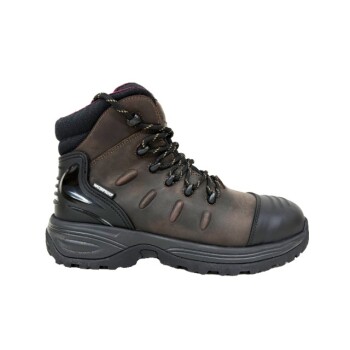
Construction environments at ground level or below grade present a unique, biological friction challenge. Basements and ground floors typically suffer from consistent water accumulation combined with a distinct lack of sunlight. This environment fosters the rapid growth of moss, creating severely slick surfaces where standard footwear fails, making industrial-grade slip-resistant outsoles a non-negotiable requirement for preventing traumatic falls.
While general construction risks involving impact and punctures are well-known, the specific danger of basements lies in the "moisture-moss nexus." Professional safety shoes are essential here not just for protection, but for providing the specialized traction required to maintain physical stability on organic, low-friction surfaces.
The Unique Hazard of Lower-Level Construction
The Moisture-Moss Factor
Unlike upper floors, basements and ground levels trap moisture. The primary reference highlights that this dampness, paired with the absence of UV light, accelerates the growth of moss.
Why Standard Treads Fail
Moss creates a microscopic, lubricant-like layer over concrete or earth. Standard work boots may lack the specific tread patterns or rubber compounds necessary to cut through this biological film, leading to immediate loss of balance.
The Role of Professional Outsoles
Industrial-grade shoes feature slip-resistant outsoles engineered for these exact conditions. They utilize specialized tread geometries to channel fluids away and bite into the underlying surface, providing the necessary grip to navigate damp, mossy environments safely.
Beyond Traction: Biomechanics and Physical Barriers
Stabilizing Biomechanics
Working on slippery or uneven ground forces the body to make constant micro-adjustments to maintain balance. Professional safety shoes offer structural support and shock absorption that stabilize lower limb biomechanics.
Reducing Fatigue and Strain
By stabilizing the foot, these shoes reduce the need for compensatory movements. This directly lowers the risk of lower limb fatigue and prevents abnormal exertion in other parts of the body, such as the wrists or back, which often bear the brunt of awkward postures.
The Defensive Barrier
Basements are often collection points for debris. High-quality safety shoes include puncture-resistant midsoles and reinforced toe caps. This shields the foot from common ground-level hazards like rusty nails, steel scraps, and falling heavy objects.
Psychological Security
There is a mental component to safety equipment. Knowing their footwear serves as a robust barrier against toxins, punctures, and slips alleviates psychological anxiety regarding hazards, allowing workers to focus entirely on the task at hand.
Understanding the Trade-offs
Weight vs. Agility
Industrial-grade protection comes with mass. The inclusion of steel caps, puncture plates, and heavy-duty outsoles increases the weight of the shoe, which can contribute to leg fatigue over extremely long shifts compared to lighter, non-protective footwear.
Flexibility Limitations
To provide stability and puncture resistance, the soles of these shoes are often stiffer than recreational footwear. This rigidity safeguards the foot but may slightly limit range of motion or "ground feel," requiring a brief adjustment period for the wearer.
Making the Right Choice for Your Goal
When selecting safety footwear for your specific construction environment, consider the primary hazards you face:
- If your primary focus is basement or ground-level work: Prioritize shoes with high-grade slip-resistant outsoles specifically rated for wet and oily conditions to counteract moss and standing water.
- If your primary focus is demolition or site cleanup: Prioritize footwear with puncture-resistant midsoles and composite toe caps to protect against sharp debris like nails and glass.
The right safety shoe is not just a uniform requirement; it is a fundamental engineering control that anchors the worker to the ground, ensuring that environmental hazards do not become personal injuries.
Summary Table:
| Hazard Factor | Impact on Worker | Key Safety Shoe Feature |
|---|---|---|
| Moisture & Moss | High slip risk on organic film | Industrial Slip-Resistant Outsoles |
| Sharp Debris | Foot punctures from nails/steel | Puncture-Resistant Midsoles |
| Slippery Surfaces | Muscle fatigue & instability | Stabilizing Biomechanics & Support |
| Falling Objects | Impact injuries to toes | Reinforced Toe Caps (Steel/Composite) |
Secure Your Workforce with 3515’s Professional Footwear Solutions
As a premier large-scale manufacturer serving global distributors and brand owners, 3515 delivers the durability and specialized traction required for the toughest construction environments. Our flagship Safety Shoes series is engineered to combat the unique hazards of lower-level sites, providing unmatched slip resistance and puncture protection.
From tactical boots and training shoes to sneakers and formal dress shoes, we offer comprehensive production capabilities to meet your bulk requirements. Partner with a manufacturer that prioritizes safety and stability in every stitch.
Contact us today to discuss your bulk order and custom needs
References
- Eka Rakhmat Kabul, Farid Yafi. HIRARC METHOD APPROACH AS ANALYSIS TOOLS IN FORMINGOCCUPATIONAL SAFETY HEALTH MANAGEMENT AND CULTURE. DOI: 10.24198/sosiohumaniora.v24i2.38525
This article is also based on technical information from 3515 Knowledge Base .
Related Products
- Durable Leather Moc Toe Work Boots for Wholesale & Custom Manufacturing
- Heavy-Duty Waterproof Nubuck Safety Boots Safety Shoes for Bulk Supply
- Premium Suede Sport Safety Shoes for Wholesale & Bulk Orders
- Wholesale Durable Safety Boots | Custom Steel Toe & Puncture-Resistant Manufacturing
- Advanced KPU Athletic Safety Shoe with Steel Toe Cap Anti-Slip Rotary Lacing System
People Also Ask
- What are moc toe work boots designed for? Superior Comfort and Mobility for Tradespeople
- What are the key features to look for when purchasing moc toe boots? A Guide to Durability & Fit
- How did moc toe boots originate? A Legacy of Workwear Durability and Style
- What clothing items complement the Outdoorsman/Heritage Look with moc toe boots? Build a Timeless, Rugged Wardrobe
- What types of outfits can moc toe boots be worn with? Versatile Style Guide