
In the field and on the trail, a horse's legs are exposed to a variety of environmental risks. Horse boots are primarily designed to protect against physical hazards encountered during riding, such as direct impact from rocks, tree limbs, and brush, which can cause bruising, scrapes, and lacerations.
While often seen in performance disciplines, the core function of horse boots in natural environments is to serve as a physical shield, mitigating the risk of injury from the unpredictable obstacles you encounter outside of a controlled arena.
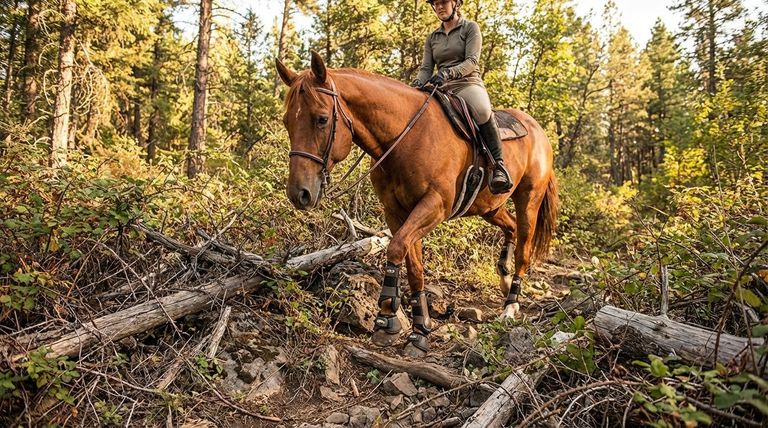
The Primary Environmental Threats
The world outside a manicured ring is filled with variables. Boots provide a crucial first line of defense against the most common physical hazards that can lead to injury.
Impact and Concussion
On trails or in open fields, a horse's lower legs are vulnerable to direct impact from stationary objects.
Boots with a hard outer shell are engineered to absorb and distribute the force from striking rocks, fallen logs, or roots, reducing the chance of serious bruising or bone injury.
Abrasions and Lacerations
Thick brush, thorns, and sharp or jagged rocks present a constant threat of cuts and scrapes.
A well-fitted boot creates a durable barrier between the horse's skin and these environmental hazards, preventing the minor wounds that can lead to infection or discomfort.
Navigating Uneven Terrain
While not a substitute for proper conditioning, boots offer a degree of protection against the consequences of a misstep on uneven ground.
They can deflect contact with trail obstacles during a stumble, preventing what might have been a significant cut or contusion from becoming anything more than a minor event.
Understanding the Limitations and Trade-offs
No piece of equipment is a perfect solution. Understanding the limitations of horse boots is just as important as knowing their benefits to ensure you are truly protecting your horse.
They Are Not Puncture-Proof
Standard riding boots are designed to protect against blunt impact and scrapes. They offer little to no protection against sharp, penetrating objects like a nail, broken glass, or a sufficiently sharp stick.
The Risk of Overheating
A critical trade-off is heat retention. Some protective boots, especially those with less breathable materials like neoprene, can trap significant heat around the tendons. Over time and during strenuous exercise, this can be detrimental to tendon health.
An Improper Fit Creates New Hazards
A boot that is too loose can slip, creating a tripping hazard or allowing debris to become trapped inside, causing rubs and sores. A boot that is too tight can restrict blood flow and cause significant discomfort or pressure sores.
Making the Right Choice for Your Ride
Selecting the appropriate boot requires a clear-eyed assessment of the environment you plan to ride in and the work you'll be doing.
- If your primary focus is aggressive trail riding or cross-country: Prioritize boots with maximum coverage and a durable, strike-resistant outer shell to defend against high-impact risks.
- If your primary focus is casual riding on moderate trails: A versatile brushing or splint boot that protects against scrapes from light brush is often sufficient and may offer better breathability.
- If your primary focus is riding in hot, humid conditions: Actively seek out boots designed with perforated materials and advanced ventilation to minimize dangerous heat buildup around the tendons.
Ultimately, selecting the right boot is about accurately assessing the specific environmental risks your horse will face on each ride.
Summary Table:
| Environmental Hazard | How Boots Protect | Key Considerations |
|---|---|---|
| Impact & Concussion (rocks, logs) | Absorbs and distributes force with a hard shell. | Prevents bruising and bone injuries. |
| Abrasions & Lacerations (brush, thorns) | Creates a durable barrier against cuts and scrapes. | Reduces risk of infection from minor wounds. |
| Uneven Terrain (stumbles, missteps) | Deflects contact with obstacles. | Mitigates severity of potential injuries. |
| Heat Retention | - (Limitation) | Some materials can trap heat, risking tendon health. |
| Penetrating Objects | - (Limitation) | Not puncture-proof against nails or sharp sticks. |
Ensure Your Horse Has the Right Protection for Every Trail
As a large-scale manufacturer, 3515 produces a comprehensive range of durable and breathable equestrian boots for distributors, brand owners, and bulk clients. Our production capabilities encompass all types of protective horse boots designed to meet the specific demands of trail riding, from high-impact shells to ventilated designs for hot climates.
We help you provide superior leg protection by offering:
- Customizable Designs: Tailor boots for specific disciplines and environmental risks.
- Bulk Order Efficiency: Scale your inventory with reliable, consistent quality.
- Expert Manufacturing: Leverage our expertise to create products that horse owners trust.
Ready to equip your customers with the best defense against trail hazards? Contact our team today to discuss your manufacturing needs and how we can support your brand.
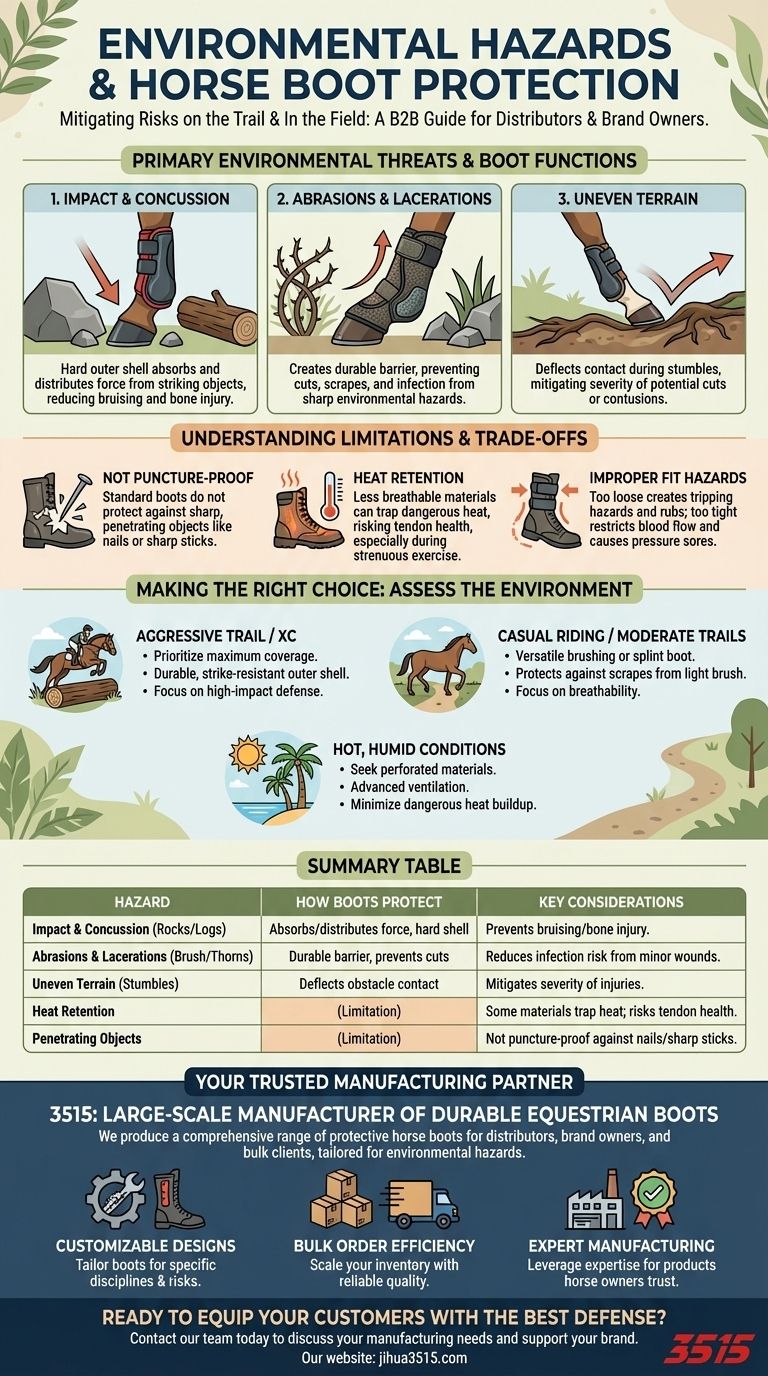
Visual Guide
Related Products
- Wholesale Tactical Boots High-Traction & Reflective for Bulk & Brand Orders
- Wholesale Lightweight Tactical Boots Custom Manufacturer for Desert & Combat Use
- Durable Goodyear Welt Leather Work Boots for Wholesale & Private Label
- Wholesale High-Traction Camo Boots - Custom Manufacturer for Brands
- Durable Leather Tactical Boots Wholesale & Custom Manufacturing for Brands
People Also Ask
- How do tactical boots protect against injuries? Discover the Integrated Safety System
- Are tactical boots suitable for hiking? Discover the Ultimate Footwear for Rugged Trails
- Importance of Professional Tactical Boots in Loess Gully Regions: Ensure Safety and Precision for Field Monitoring
- How does creative short video content support functional footwear sales? Boost Trust and Traffic with Visual Proof
- What are the primary characteristics of tactical boots? Lightweight, Agile, and Built for All-Day Missions

















