
At its core, a walking shoe with maximum arch support is designed to provide a stable foundation for your entire body. Its primary benefits are to promote proper joint alignment from the ankle up, relieve pain from conditions like plantar fasciitis, and provide exceptional stability by preventing the foot from rolling inward.
The central goal is not simply to maximize arch support, but to match the level of support to your foot’s unique biomechanical needs. The right support corrects misalignment and prevents pain, while the wrong support can create new problems.
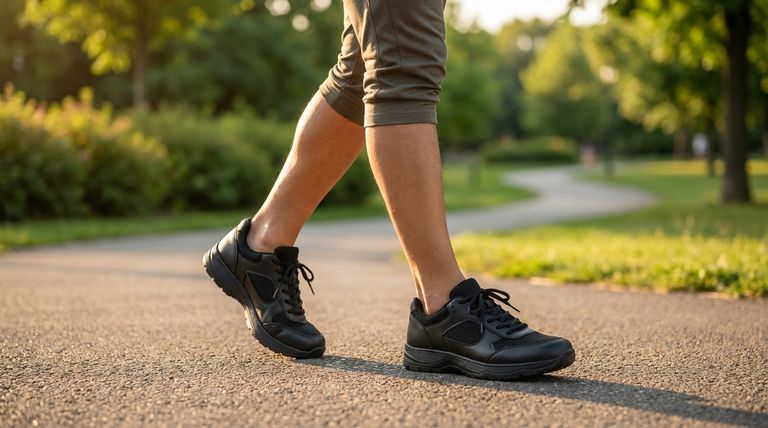
How Arch Support Fundamentally Works
Understanding the mechanics of arch support reveals why it is so critical for comfort and long-term health, especially for those who spend significant time on their feet.
Promoting Proper Alignment
Your foot's arch is a natural shock absorber. When it functions correctly, it helps align the ankle, which in turn affects the positioning of your knees and hips.
Maximum arch support acts like a buttress, preventing the arch from collapsing under your body's weight. This ensures your entire leg remains in a more biomechanically efficient and neutral position.
Distributing Pressure Evenly
Without adequate support, particularly for those with low arches, the foot can flatten and roll inward (overpronation). This concentrates pressure on the heel and the ball of the foot.
A well-designed arch support distributes this pressure more evenly across the entire surface of the foot, reducing strain on these vulnerable areas.
Enhancing Stability and Balance
A stable arch creates a solid platform for walking, standing, and balancing.
By supporting the bottom of the foot, these shoes provide a wider and more reliable base. This counteracts the instability that leads to fatigue and potential injury over time.
Who Benefits Most from Maximum Support?
While beneficial for many, walking shoes with maximum arch support are a targeted solution for specific foot conditions and lifestyle demands.
Individuals with Overpronation or Flat Feet
This is the primary group for whom maximum support is designed. The structured arch prevents the excessive inward roll of the foot, correcting gait and reducing stress on the ankles and knees.
Alleviating Plantar Fasciitis
Plantar fasciitis is a painful inflammation of the ligament running along the bottom of the foot.
Firm arch support helps by slightly lifting and supporting this ligament, which reduces the daily strain and allows it to heal. This is a key feature for pain management and recovery.
People Standing for Long Periods
Constant standing causes foot fatigue and can lead to the gradual collapse of the arches.
Shoes with robust cushioning and a thick midsole wedge, common in maximum support models, provide the necessary structure to maintain comfort and prevent pain throughout the day.
Understanding the Trade-offs: Is More Always Better?
The concept of "maximum" support can be misleading. The ideal shoe is one that supports your specific foot type, and overtreating can be as problematic as undertreating.
The Risk for High or Neutral Arches
If you have high or neutral arches, a shoe with "maximum" support can push your foot into an unnatural position.
This can force the foot to roll outward (underpronation or supination), shifting pressure to the outer edge of the foot and potentially causing a different set of alignment issues.
Built-in Support vs. Inserts
Shoes with well-designed, built-in arches typically offer the most integrated and stable solution.
If you must use inserts, avoid generic off-the-shelf options. A professional fitting at a specialty store will ensure the insert addresses your specific pressure points without disrupting the shoe's overall design.
The Importance of a Proper Fit
No amount of technological support can compensate for a shoe that is the wrong size.
Arch support must be positioned correctly under your foot to be effective. Ensure the shoe's arch aligns perfectly with your own for targeted comfort.
How to Choose the Right Support for Your Foot
Making an informed decision begins with understanding your own feet. A simple way to assess your arch is the "wet test": wet your foot, step onto a piece of paper or concrete, and examine the footprint. A full, wide footprint suggests a low arch, while a very thin print indicates a high arch.
- If your primary focus is correcting flat feet or overpronation: A walking shoe with maximum arch support and a stable platform is the correct choice to provide control and alignment.
- If your primary focus is managing plantar fasciitis or heel pain: You need firm, targeted arch support that actively reduces strain on the inflamed ligament.
- If your primary focus is all-day comfort with neutral or high arches: Seek shoes with moderate, cushioned support that complements your natural arch shape rather than aggressively reshaping it.
Ultimately, the best walking shoe is one that works in harmony with your body's natural mechanics.
Summary Table:
| Benefit | Key Feature | Ideal For |
|---|---|---|
| Pain Relief | Firm arch support reduces strain on the plantar fascia ligament. | Individuals with plantar fasciitis or heel pain. |
| Proper Alignment | Prevents the arch from collapsing, aligning ankles, knees, and hips. | People with flat feet or who overpronate. |
| Enhanced Stability | Creates a solid platform, improving balance and reducing fatigue. | Those who stand or walk for long periods. |
Need the perfect walking shoe for your customers?
As a large-scale manufacturer, 3515 produces a comprehensive range of footwear with specialized arch support for distributors, brand owners, and bulk clients. Our production capabilities encompass all types of shoes and boots, ensuring you get durable, comfortable, and biomechanically sound products tailored to your market's needs.
Contact us today to discuss your specific requirements and leverage our expertise in supportive footwear manufacturing.
Visual Guide

Related Products
- Wholesale Durable Camo Canvas Shoes with High-Traction Rubber Soles
- Wholesale Durable Camouflage Canvas Shoes with High-Traction Cleated Rubber Sole
- Durable Rubber Sole Outdoor Shoes Wholesale & Custom Manufacturing
- Wholesale Breathable Perforated Leather Derby Shoes with Modern Comfort Sole
- Premium Suede Sport Safety Shoes for Wholesale & Bulk Orders
People Also Ask
- Can canvas shoes be worn in rainy conditions? The Truth About Water Resistance
- What are the properties of canvas as a shoe material? A Guide to Lightweight Comfort & Style
- Why is the selection of high-strength fabric materials necessary in the production of canvas shoes and training shoes?
- What are the characteristics of canvas as a shoe material? A Guide to Lightweight, Breathable Footwear
- What are the benefits and limitations of using canvas as a primary material for footwear? Key B2B Manufacturing Insights






