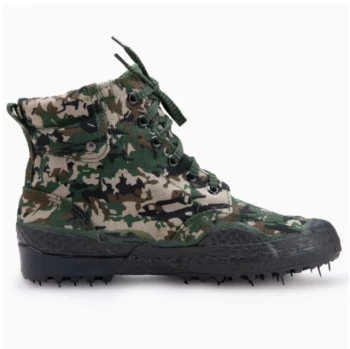
To properly store your hunting boots for the off-season, you must first clean and dry them completely, apply any necessary conditioners or waterproofing treatments, and place them in a cool, dry, dark location. This simple process is the key to preventing material degradation and ensuring your boots are in mission-ready condition for the next season.
The fundamental goal of off-season storage is to create a stable environment that halts the aging process of your boots. Improper storage in a humid attic or sunny garage can inflict more permanent damage in a few months than an entire season of hard use.
The Pre-Storage Protocol: Why Preparation is Everything
Before you even think about where to put your boots, a proper preparation routine is non-negotiable. Skipping these steps is the primary cause of off-season damage.
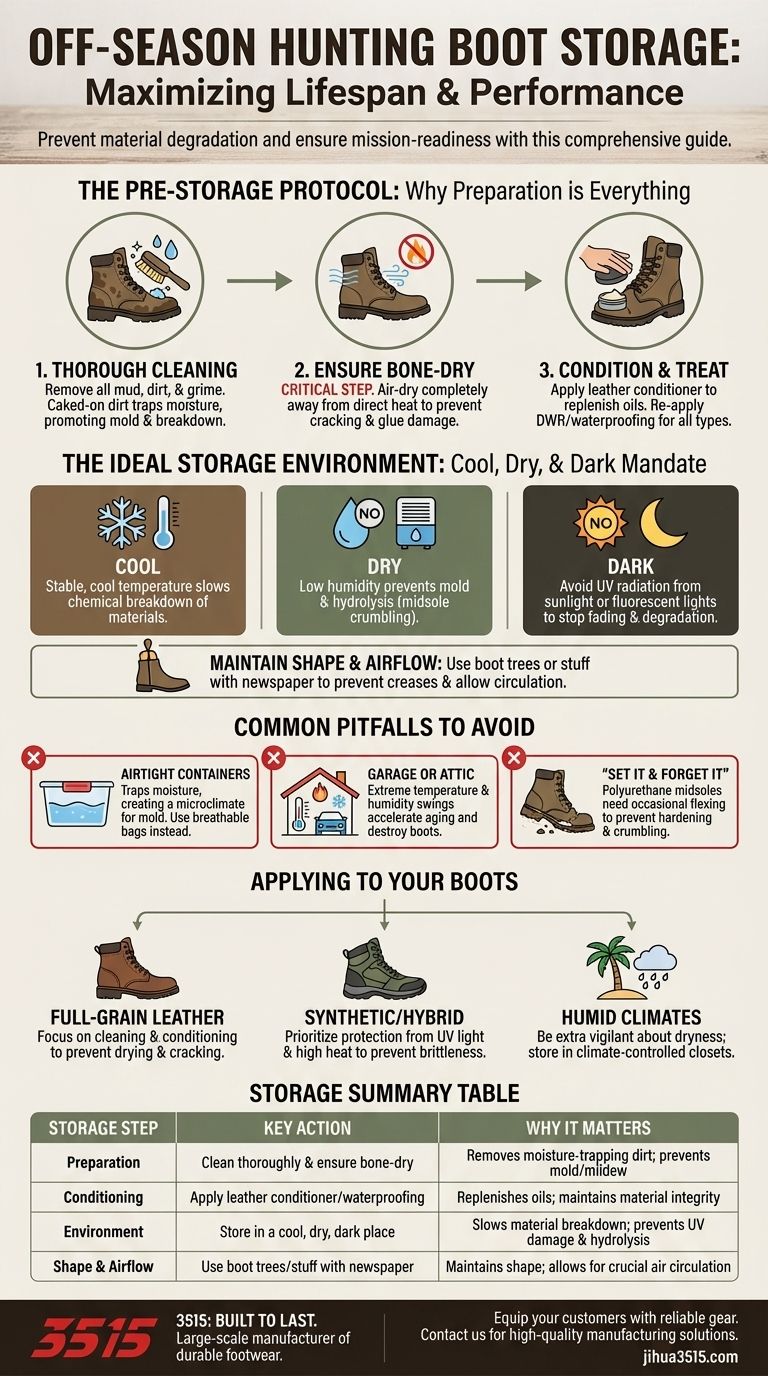
Step 1: A Thorough Cleaning
You must remove all mud, dirt, and grime from every part of the boot. Caked-on dirt traps moisture against the boot's materials, promoting the growth of mold and mildew. It can also break down leather and synthetic fabrics over time.
Step 2: Ensure They Are Bone-Dry
This is the single most critical step. Any lingering moisture inside or outside the boot is a catalyst for mold, mildew, and the decomposition of adhesives and sole materials. Always air-dry your boots away from direct heat sources like vents or fires, which can crack leather and weaken glues.
Step 3: Condition and Treat
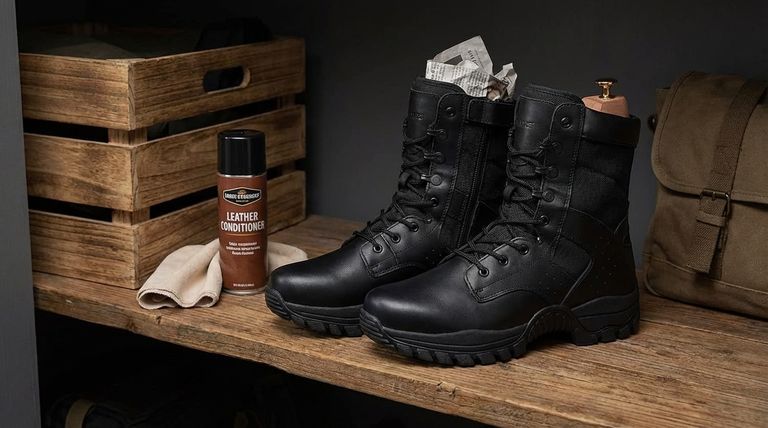
For leather boots, applying a high-quality leather conditioner replenishes oils and prevents the material from drying out and cracking. For all boot types, this is also the ideal time to re-apply any DWR (Durable Water Repellent) or waterproofing treatments.
Creating the Ideal Storage Environment
Where you store your boots is just as important as how you prepare them. The environment dictates the rate at which your boots will age.
The "Cool, Dry, and Dark" Mandate
This isn't just a suggestion; it's a rule based on material science.
- Cool: A stable, cool temperature slows the natural chemical reactions that cause materials to break down and become brittle.
- Dry: Low humidity is the ultimate defense against mold, mildew, and a chemical process called hydrolysis, where water molecules break down the polyurethane in midsoles, causing them to crumble.
- Dark: Direct sunlight and even prolonged fluorescent light emit UV radiation that degrades leather, fades fabrics, and makes rubber rands brittle.
Maintaining Shape and Airflow
Use a boot tree or stuff your boots with newspaper to help them maintain their proper shape and prevent deep creases from forming. This also helps ensure air can circulate inside the boot. Proper airflow is essential for preventing any residual moisture from becoming a problem.
Common Pitfalls That Ruin Expensive Boots
Avoiding common mistakes is crucial for protecting your investment. Storing your boots incorrectly can lead to irreversible damage.
The Airtight Container Trap
Never store your boots in a plastic bag or a sealed plastic bin. While it seems like a good way to keep dust off, it traps any latent moisture and creates a perfect microclimate for mold and sole decomposition. If you must use a container, choose a breathable fabric bag.
The Garage or Attic Mistake
Garages, attics, and storage sheds are among the worst places to store boots. They experience extreme temperature swings and high humidity, which dramatically accelerates the aging process and can destroy a pair of boots in a single off-season.
The "Set It and Forget It" Problem
Polyurethane (PU) midsoles, common in high-end boots, need to be flexed occasionally to remain durable. Storing them without use for a year or more can cause the PU to harden and crumble. If possible, wear the boots for a short walk once or twice during the off-season to keep the materials pliable.
How to Apply This to Your Boots
Your specific actions should be guided by your gear and your environment.
- If you have full-grain leather boots: Your primary focus must be on cleaning and conditioning to prevent the leather from drying out and cracking during storage.
- If you have synthetic or hybrid boots: Your priority is protection from UV light and high heat, as these elements can make synthetic materials and adhesives brittle and cause them to fail.
- If you live in a humid climate: Be extra vigilant about ensuring your boots are completely dry, and consider storing them indoors in a climate-controlled closet rather than a basement.
Proper off-season care is the single most effective way to maximize the lifespan and performance of your most critical piece of gear.
Summary Table:
| Storage Step | Key Action | Why It Matters |
|---|---|---|
| Preparation | Clean thoroughly & ensure bone-dry | Removes moisture-trapping dirt; prevents mold/mildew |
| Conditioning | Apply leather conditioner/waterproofing | Replenishes oils; maintains material integrity |
| Environment | Store in a cool, dry, dark place | Slows material breakdown; prevents UV damage & hydrolysis |
| Shape & Airflow | Use boot trees/stuff with newspaper | Maintains shape; allows for crucial air circulation |
Ensure Your Hunting Boots Are Built to Last
As a large-scale manufacturer, 3515 produces a comprehensive range of durable footwear for distributors, brand owners, and bulk clients. Our production capabilities encompass all types of hunting boots designed to withstand the elements—when paired with proper care, their lifespan is maximized.
Let us help you equip your customers with reliable gear. Contact our team today to discuss our manufacturing solutions and how we can support your business with high-quality, long-lasting footwear.
Visual Guide
Related Products
- Wholesale Lightweight Tactical Boots Custom Manufacturer for Desert & Combat Use
- High-Traction Suede Tactical Boots Wholesale & Custom Manufacturing
- Durable Leather Tactical Boots Wholesale & Custom Manufacturing for Brands
- Durable Military Combat Boots with Water Drainage for Wholesale & OEM
- Durable Spiked Camouflage Boots Wholesale & Factory Production
People Also Ask
- What are the common types of combat boots? Find the Right Boot for Your Mission
- What specialized protections do tactical boots offer? Maximize Endurance with High-Performance Footwear
- How does additive manufacturing equipment reduce environmental risks? Sustainable Tactics for Modern Footwear Production
- What are the different types of tactical boots available? Find the Right Boot for Your Mission
- What is the role of high-frequency acquisition hardware in technical skill analysis for outdoor and tactical boots?