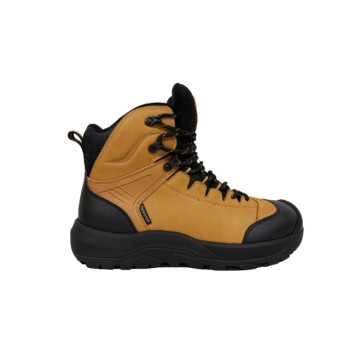
At their core, 3M Thinsulate snow boots are defined by their ability to provide exceptional warmth without the bulk of traditional insulation. The key features are a high warmth-to-weight ratio, inherent moisture resistance, and a range of insulation grades (measured in grams) tailored to different levels of cold and activity. This technology results in boots that are lighter, less fatiguing, and highly effective at keeping your feet warm and dry in harsh winter conditions.
The true advantage of 3M Thinsulate isn't just about providing warmth; it's about providing it efficiently. By trapping more air in less space, it delivers superior insulation in a lighter, thinner profile, directly enhancing comfort and mobility.

Deconstructing Thinsulate's Core Advantages
To understand why Thinsulate is a benchmark for winter footwear, we need to examine its fundamental properties. It is a synthetic insulation made of extremely fine microfibers that work together to create a high-performance system.
The Warmth-to-Weight Ratio Explained
Thinsulate fibers are far finer than most other synthetic or natural insulations. This allows them to trap more insulating air in less space.
The result is a material that provides the same or better warmth as bulky down or felt, but with a significantly thinner and lighter profile. This makes the boot less cumbersome and reduces fatigue over a long day.
Resisting Moisture from Within and Without
Unlike natural fibers like down, Thinsulate is hydrophobic, meaning it absorbs less than 1% of its own weight in water.
This is critical for two reasons. First, it helps prevent external moisture from compromising the insulation. Second, it allows perspiration from your feet to escape, keeping the insulation effective and your feet drier from the inside.
Durability Under Pressure
The synthetic fibers in Thinsulate are highly resilient and resistant to compression.
Inside a boot, where your foot is constantly flexing and putting pressure on the material, this resilience ensures the insulation doesn't pack down and lose its insulating air pockets, maintaining warmth over the life of the boot.
How to Choose the Right Insulation Grade
Thinsulate's effectiveness is quantified in grams, which refers to the weight of the insulation material per square meter. Choosing the right gram count is essential for matching the boot to your environment and activity level.
200g: For High Activity or Cool Days
This is a lighter level of insulation, ideal for situations where your body is generating significant heat, such as active winter hiking or snowshoeing. It's also suitable for everyday use in moderately cold, non-frigid conditions.
400g: The All-Purpose Standard
This is the most common weight found in versatile, all-around winter boots. It provides substantial warmth for cold temperatures and is perfect for a mix of activity and standing still, such as shoveling snow, commuting, or light hiking.
600g+ : For Extreme Cold or Low Activity
Higher gram counts (600g, 800g, or even 1000g+) are designed for arctic conditions or stationary activities. If you'll be sitting for long periods in the cold, such as when ice fishing or watching an outdoor event, this level of insulation is necessary to counteract the lack of body heat being generated.
Understanding the Trade-offs
While Thinsulate is a superior insulation, it's crucial to see it as one component of a complete system. Its performance can be limited by other factors.
Thinsulate is Not the Entire Boot
The best insulation is useless without a well-constructed boot. Look for a waterproof outer shell (like leather or nylon), a padded midsole for comfort, and a durable outsole with deep lugs for traction on ice and snow. Thinsulate provides the warmth, but the rest of the boot provides the protection and stability.
Breathability Depends on the System
While the insulation itself is breathable, the boot's overall ability to manage sweat is determined by its waterproof membrane and outer materials. A boot with a less breathable shell can still feel damp during high exertion, even with Thinsulate inside.
Specialized Boots for Specialized Needs
General snow boots with Thinsulate are not a replacement for activity-specific footwear. For example, snowboard boots are intentionally stiff and bulky to provide ankle support for use with bindings, a function a flexible Thinsulate winter boot is not designed to fulfill.
Making the Right Choice for Your Goal
Select your boot based on a clear understanding of your primary use case.
- If your primary focus is active winter sports: Choose a boot with a lower gram count (200g-400g) to prioritize breathability and prevent overheating.
- If your primary focus is everyday winter wear: A 400g boot offers the best balance of warmth and comfort for a wide range of conditions and activities.
- If your primary focus is maximum warmth in extreme cold: Select a boot with 600g or more to ensure your feet stay warm during periods of low activity.
Ultimately, choosing the right Thinsulate boot is about matching the level of insulation technology to your specific winter demands.
Summary Table:
| Feature | Key Benefit | Ideal For |
|---|---|---|
| High Warmth-to-Weight Ratio | Exceptional warmth without bulk; lighter, more comfortable boots. | All-day wear, reducing fatigue. |
| Moisture Resistance | Hydrophobic fibers (<1% water absorption); stays warm when wet. | Wet snow conditions, active use. |
| Durable & Resilient | Fibers resist compression, maintaining warmth over the boot's life. | Long-term performance and value. |
| Insulation Grades (200g-1000g+) | Tailored warmth for different activity levels and temperatures. | Matching specific cold-weather needs. |
Ready to supply high-performance winter boots?
As a large-scale manufacturer, 3515 produces a comprehensive range of footwear for distributors, brand owners, and bulk clients. Our production capabilities encompass all types of insulated shoes and boots, including models featuring advanced materials like 3M Thinsulate.
We can help you deliver the perfect balance of warmth, comfort, and durability to your customers. Contact our team today to discuss your manufacturing needs and get a quote.
Visual Guide

Related Products
- Premium Insulated Safety Boots and Shoes for Wholesale & Bulk Orders
- Factory Direct Wholesale Rain Boots Durable Waterproof & Fully Customizable
- Premium Wholesale Tactical Style Safety Shoes Boots with Quick Lacing
- Durable Leather Tactical Boots Wholesale & Custom Manufacturing for Brands
- Durable High-Ankle Tactical Boots Wholesale Manufacturer for Custom & Bulk Orders
People Also Ask
- What are the recommended insulation ratings for mild winter conditions? A Guide for Active & Stationary Workers
- How does insulation thickness correlate with temperature ranges? A Guide to Choosing the Right Warmth
- What insulation level is needed for severe cold and stationary work? 1200g or Higher is Essential
- What safety advantages do insulated boots offer beyond warmth? Dielectric Protection & Superior Grip
- How does fleece lining contribute to the warmth of insulated boots? Trapping Air for Superior Cold Protection