
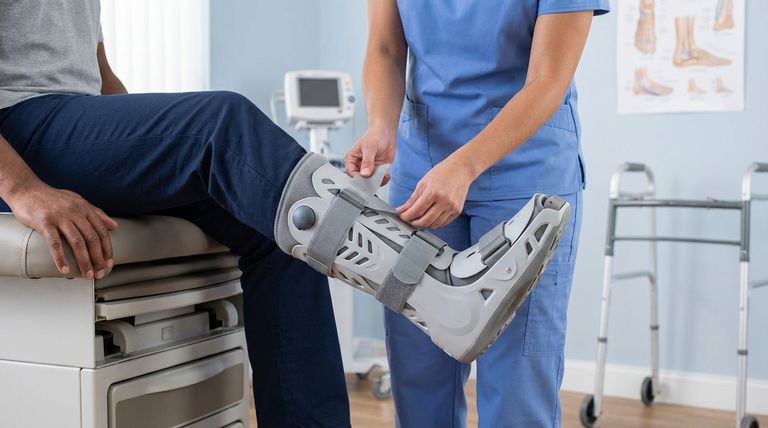
In a medical context, a walking boot is primarily prescribed as an orthopedic device to immobilize the foot and ankle following a severe injury. It is a standard treatment for conditions like severe ankle sprains and stable fractures, providing a crucial balance of support and controlled mobility to facilitate healing.
The core purpose of a medical walking boot is to serve as a functional middle ground between a traditional, rigid cast and no support at all. It provides essential protection and immobilization while allowing for safe, limited weight-bearing and movement, which can be critical for an effective recovery.
The Core Function: How a Walking Boot Aids Recovery
A walking boot, often called a CAM (Controlled Ankle Motion) boot, is engineered to create a stable environment for healing. Its design directly addresses the physical needs of an injured lower leg.
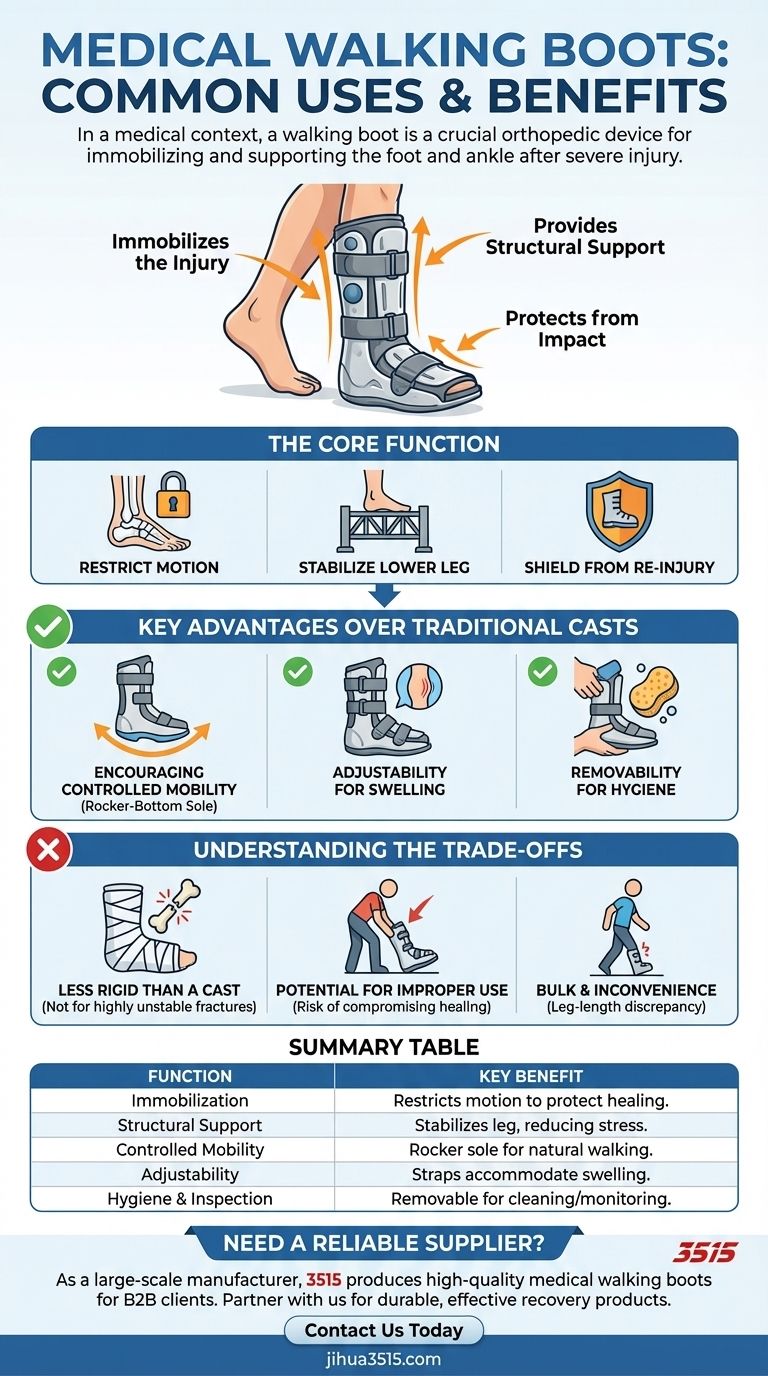
Immobilizing the Injury
The boot's primary job is to restrict motion at the ankle joint. By keeping the foot and ankle in a fixed position, it allows torn ligaments or broken bones to begin healing without being subjected to the stress of movement.
Providing Structural Support
The rigid shell and supportive frame of the boot act like an external skeleton. This structure stabilizes the entire lower leg, reducing the load on the injured area when you stand or walk.
Protecting from Impact
The hard outer casing shields the injured foot and ankle from accidental bumps and impacts. This protection is vital for preventing re-injury during the vulnerable recovery period.
Key Advantages Over Traditional Casts
While plaster or fiberglass casts offer maximum immobilization, walking boots provide several distinct advantages that often make them a preferred choice for specific types of injuries.
Encouraging Controlled Mobility
Most walking boots feature a rocker-bottom sole. This curved design helps you roll through your step in a more natural walking pattern, which can help prevent muscle atrophy and joint stiffness associated with complete immobilization.
Adjustability for Swelling
Injuries are almost always accompanied by swelling, which can fluctuate. The adjustable straps on a walking boot allow you or your doctor to modify the fit to accommodate these changes, ensuring consistent support without compromising circulation.
Removability for Hygiene
Unlike a permanent cast, a walking boot can be removed. This allows for cleaning the skin, changing dressings, and inspecting the injury site, which significantly improves hygiene and comfort during weeks of recovery.
Understanding the Trade-offs
While highly effective, walking boots are not a universal solution. Understanding their limitations is key to using them correctly.
Less Rigid Than a Cast
For highly unstable fractures that require absolute, unwavering immobilization, a traditional cast is often superior. A walking boot allows for micro-movements that might be detrimental to the healing of certain complex breaks.
Potential for Improper Use
The boot's removability is also its biggest risk. Patients may be tempted to remove it too often or fail to tighten it properly, which can compromise the healing process and delay recovery. Following medical advice precisely is non-negotiable.
Bulk and Inconvenience
Walking boots are undeniably bulky and can be awkward to wear. They create a leg-length discrepancy that can sometimes affect your gait and potentially cause secondary discomfort in your hips or back over time.
How to Apply This to Your Recovery
The decision to use a walking boot is made by a medical professional based on the specific nature of your injury. Your goal during recovery determines how you should view the boot's function.
- If your primary focus is healing a severe ankle sprain: The boot's main benefit is providing rigid support to protect healing ligaments while allowing you to bear weight much sooner than you otherwise could.
- If your primary focus is recovering from a stable fracture: The boot acts as a protective shield that immobilizes the fracture site, ensuring the bone heals in the correct alignment while permitting essential movement for daily living.
Ultimately, a walking boot is a sophisticated tool designed to balance the critical need for protection with the practical demands of rehabilitation.
Summary Table:
| Function | Key Benefit |
|---|---|
| Immobilization | Restricts motion to protect healing ligaments and bones. |
| Structural Support | Stabilizes the lower leg, reducing stress on the injury. |
| Controlled Mobility | Rocker sole allows for a safer, more natural walking pattern. |
| Adjustability | Straps can be tightened or loosened to accommodate swelling. |
| Hygiene & Inspection | Removable design allows for cleaning and monitoring the injury site. |
Need a Reliable Supplier for Medical Walking Boots?
As a large-scale manufacturer, 3515 produces a comprehensive range of high-quality orthopedic footwear, including medical walking boots, for distributors, brand owners, and bulk clients. Our production capabilities ensure durable, effective products that support patient recovery.
Partner with us to provide your customers with the support they need.
Contact our team today to discuss your requirements and receive a competitive quote.
Visual Guide
Related Products
- Durable Military Combat Boots with Water Drainage for Wholesale & OEM
- Wholesale Waterproof Tactical Boots Custom Suede & High-Traction Soles
- Wholesale Safety Boots Manufacturer for Custom & Private Label Orders
- Heavy-Duty Waterproof Nubuck Safety Boots Safety Shoes for Bulk Supply
- High-Traction Suede Tactical Boots Wholesale & Custom Manufacturing
People Also Ask
- Why must gait validation for military applications be conducted in combat boots? Ensure Data Accuracy for Soldiers
- What are the common types of combat boots? Find the Right Boot for Your Mission
- What factors should be considered when choosing military boots for hiking? Durability vs. Weight for Your Terrain
- What are the key considerations when choosing military boots? Prioritize Compliance, Environment & Fit
- How should the midfoot and heel fit in military boots? Achieve a Snug, Secure Fit for Blister Prevention


















